

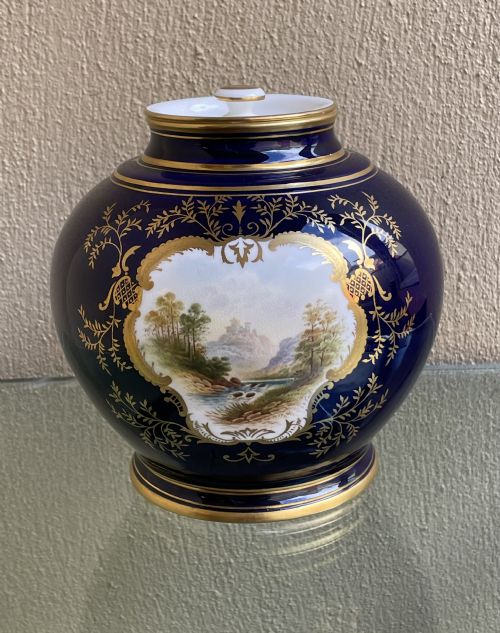


Lidded China Jar
A lidded china jar is a covered ceramic vessel designed to hold dry goods or scent, and you buy one for its hand-painted finish and form.
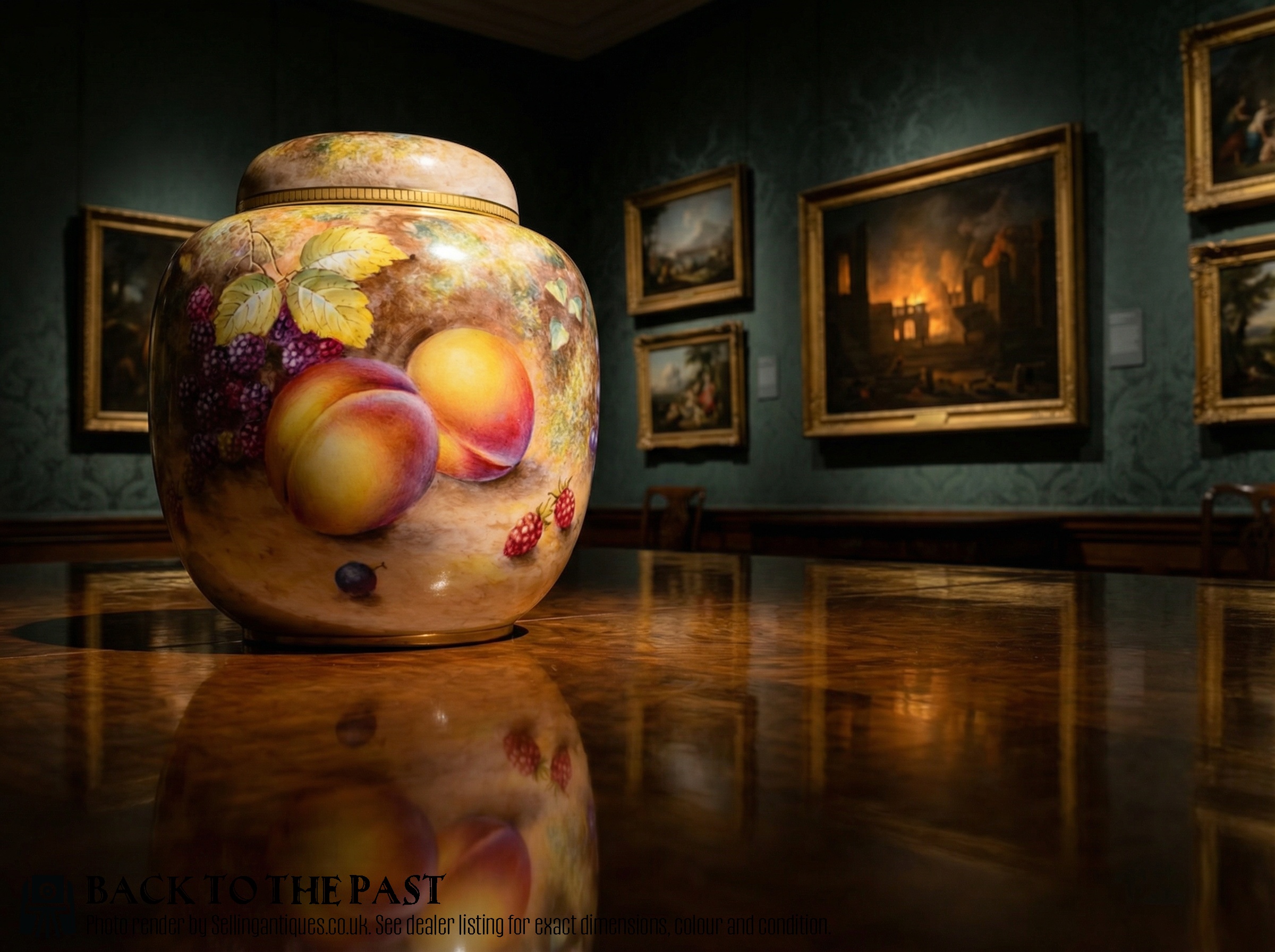
Lidded China Jar
A lidded china jar is a covered ceramic vessel designed to hold dry goods, potpourri or personal items, and you will find them shaped as ginger jars, urns and pot pourri vases across this selection. The pieces span multiple centuries, including Georgian, Victorian, Edwardian and mid-century examples.
The version you are most likely to meet on this page is a bone china or porcelain jar featuring hand-painted fruit or Imari patterns, often paired with a matching cover. Makers such as Royal Worcester, Mason's Ironstone and Coalport dominate the forms available here, showing traditional English porcelain techniques.
What varies in quality
The sophistication of the hand-painted decoration determines the standing of a piece, with named artist signed fruit scenes sitting above standard factory transfer prints. Precision in the gilding and the crispness of the enamel work set the finer examples apart.
The weight and refinement of the ceramic body also vary, from robust ironstone to translucent bone china and porcelain. A well-fitted cover that sits flush with the neck of the jar indicates careful manufacture.
Listings feature porcelain, bone china and ironstone bodies decorated with enamel and gold leaf gilding.
Royal Worcester·Royal Crown Derby·Coalport·Spode·Mason's Ironstone·Losol
The Lidded China Jar Glossary
- Pot pourri vase
- A lidded vessel perforated to release the scent of dried flowers and spices placed within. These often feature decorative piercing on the cover.
- Imari
- A decorative style characterised by rich underglaze blue and overglaze iron red, complemented by gold leaf gilding. It originated in Japan and was widely adopted by English potteries.
- Bone china
- A type of soft-paste porcelain incorporating animal bone ash, producing a strong, milky-white ceramic body. It allows for thin, refined vessel walls.
- Ironstone
- A heavy, durable earthenware patented in the nineteenth century to imitate Chinese porcelain. It offers great resistance to chipping while taking enamel decoration well.
Lidded China Jar: Frequently Asked Questions
What were lidded china jars used for originally?
These covered vessels served multiple domestic purposes, acting as storage containers for dry goods, ginger or sweetmeats, or holding aromatic plant mixtures as potpourri to freshen rooms.
Larger versions functioned purely as decorative ornaments on mantelpieces and side tables, often displayed as matched pairs or part of garniture sets.
How do I care for a painted china jar?
Dust the exterior gently with a dry, soft cloth and avoid using chemical cleaners or abrasive materials that might damage the overglaze enamel or gold leaf.
Keep the vessel out of direct sunlight to prevent the hand-painted fruit scenes and colours from fading over time.
How do I distinguish between porcelain and ironstone?
Porcelain is typically more refined, translucent when held to the light, and rings clearly when tapped gently.
Ironstone is a heavier, opaque earthenware designed for durability, possessing a dense body that feels substantial for its size.
Are the covers original to the jars?
Most pieces retain their matching covers formed from the same ceramic batch, maintaining a consistent glaze and decorative scheme.
Check that the proportions of the lid match the collar of the base and that the gilding or pattern aligns where the two parts meet.