
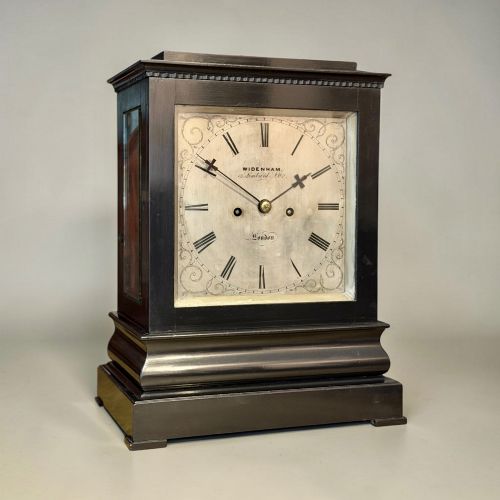
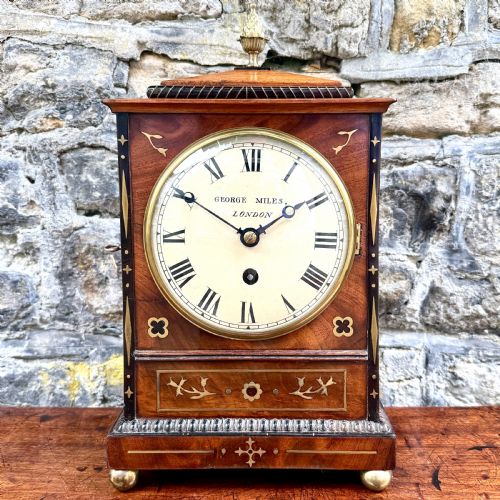
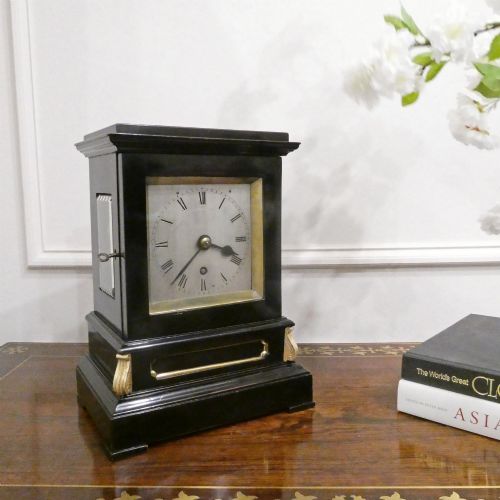
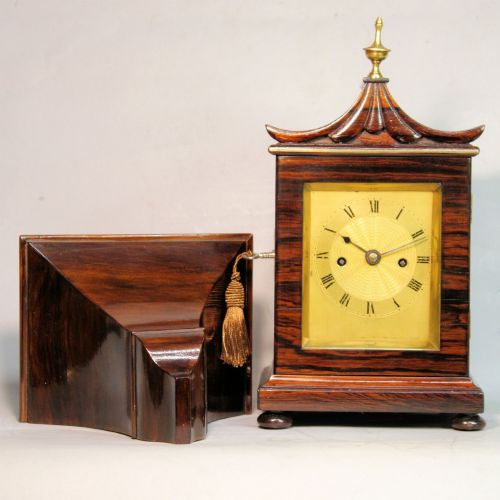


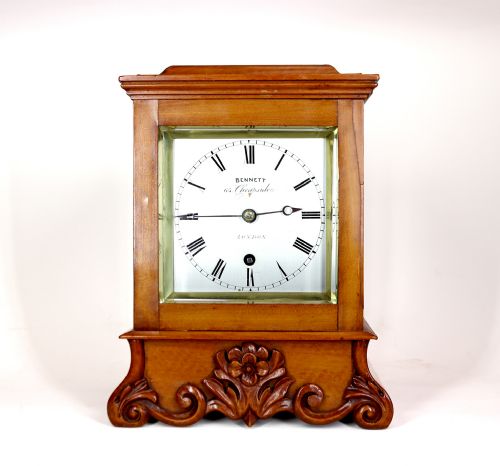


Library Table Clock
A library table clock is a precision timepiece designed for desks and surfaces, bringing mechanical rhythm and period character to a room.
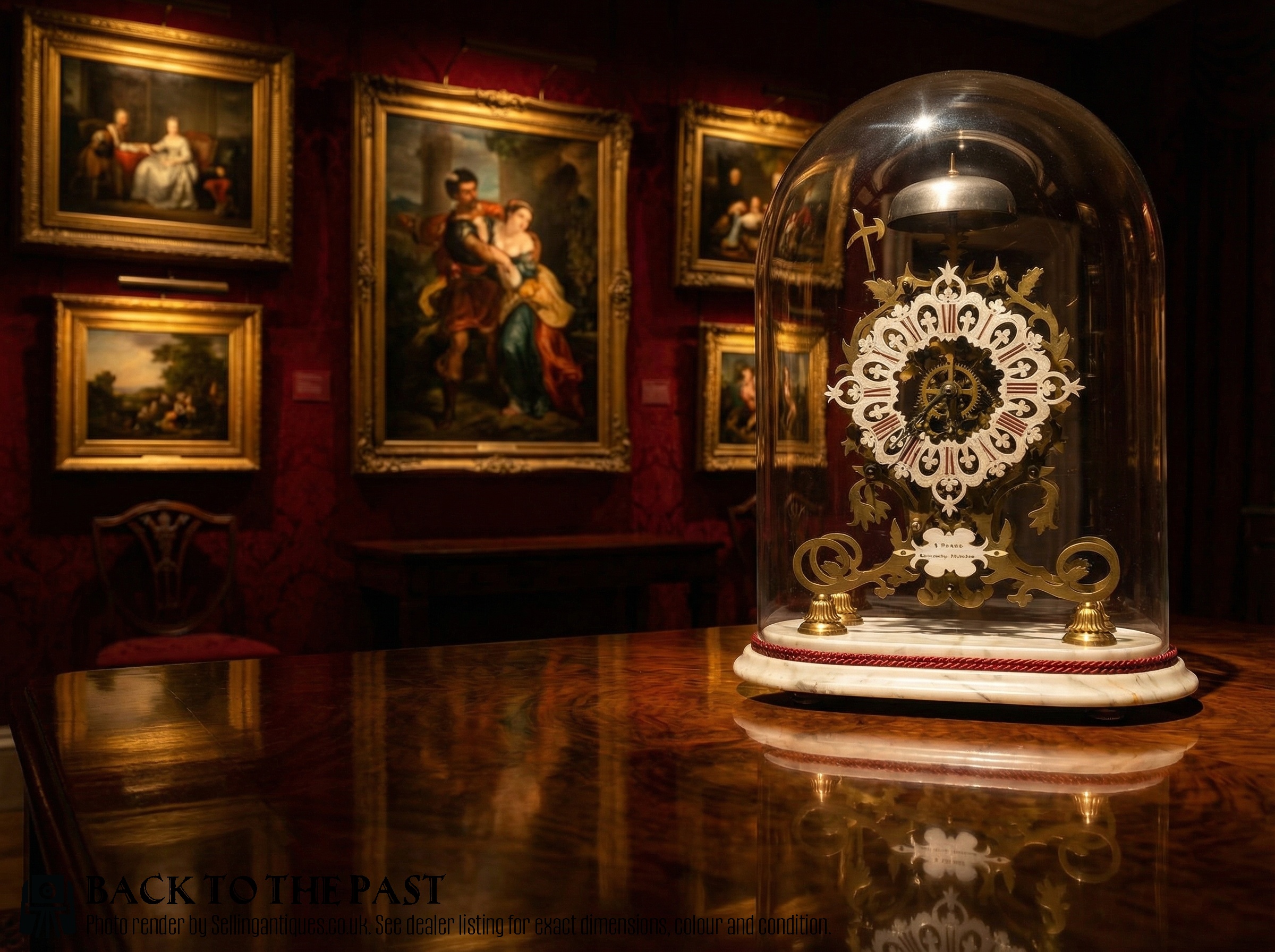
Library Table Clock
A library table clock provides a reliable timekeeper for interior desks and tables, drawing on Georgian, Regency, and Victorian traditions. These objects encompass mantel clocks, bracket clocks, and desk clocks housed within compact wooden or glass structures.
The selections here frequently present single fusee movements enclosed in mahogany, rosewood, or ebonised wood cases. Five glass models and bracket formats appear regularly across the nineteenth-century periods.
Regional British makers and London workshops dominate the inventory, accompanied by French mantel variations and skeleton clock forms. Buyers encounter both restrained mahogany timepieces and ornate ormolu or satinwood designs.
Distinctions in quality
The refinement of a library table clock rests upon the precision of its movement and the execution of its casework. Finely cut timber veneer, crisp engine-turned gilding on the dial, and well-finished fusee mechanisms distinguish finer examples from standard production.
Signatures from notable London makers or established French foundries add historical weight to a piece. The integrity of the glass panels, original dials, and movement components largely govern the standing of an individual clock.
Listings feature movements driven by single fusee and chain fusee mechanisms housed in glass, brass, mahogany, and rosewood.
Widenham of London·Bush of London·Webster Cornhill London·Sir John Bennett·Phillips Brothers·Arnold and Frodsham·Samuel Marti·McCabe London·Plumbly and Tupman·Barraud and Lunds·John Massey London·Leith of London·T Boxell Brighton·Japy Freres
The Library Table Clock Glossary
- Fusee
- A conical pulley used in mechanical clocks to equalise the torque of the mainspring as it unwinds. This mechanism ensures consistent force is applied to the gear train for accurate timekeeping.
- Bracket clock
- A portable clock originally designed to sit upon a wall bracket or table surface. Many examples feature robust carrying handles and classical architectural cases.
- Four glass clock
- A timepiece encased in four glass panels that expose the movement from multiple angles. These often incorporate mercury pendulums and brass frames.
- Escapement
- The mechanical linkage that converts rotational force into impulse to maintain the swing of the pendulum or balance wheel. Platform escapements allow portable clocks to operate without a fixed vertical pendulum.
Library Table Clock: Frequently Asked Questions
How do fusee movements work?
A fusee movement uses a conical pulley connected to the mainspring by a chain or cord. As the spring loses tension, the chain moves to a wider section of the cone to maintain steady power.
This mechanism helps the clock run at a consistent rate throughout its winding cycle.
Where should I place a library clock?
These clocks suit stable flat surfaces such as desks, sideboards, or library tables where they remain level. Placing them away from direct sunlight and drafts protects the wood case and delicate interior metalwork.
Many smaller bracket and desk clocks fit easily into study or living spaces.
How do I identify a Victorian library clock?
Victorian library clocks often feature ebonised wood, rosewood, or mahogany cases with single fusee movements. Design details can include five glass panels, enamel dials, and platform escapements characteristic of the mid to late nineteenth century.
Maker signatures on the dial or movement backplate often provide specific attribution.