
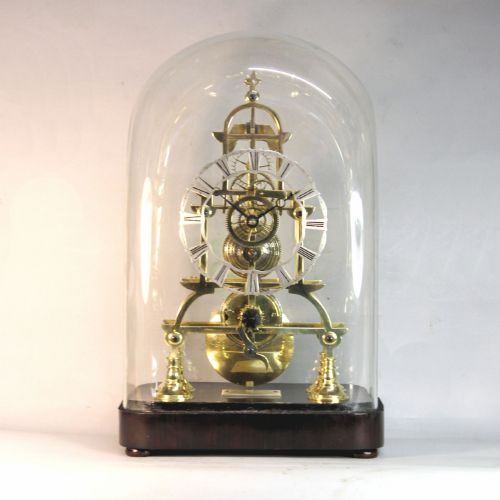


Gothic Skeleton Mantel Clock
These gothic skeleton mantel clock pieces reveal the intricate brass architecture of nineteenth-century timekeeping beneath glass domes.
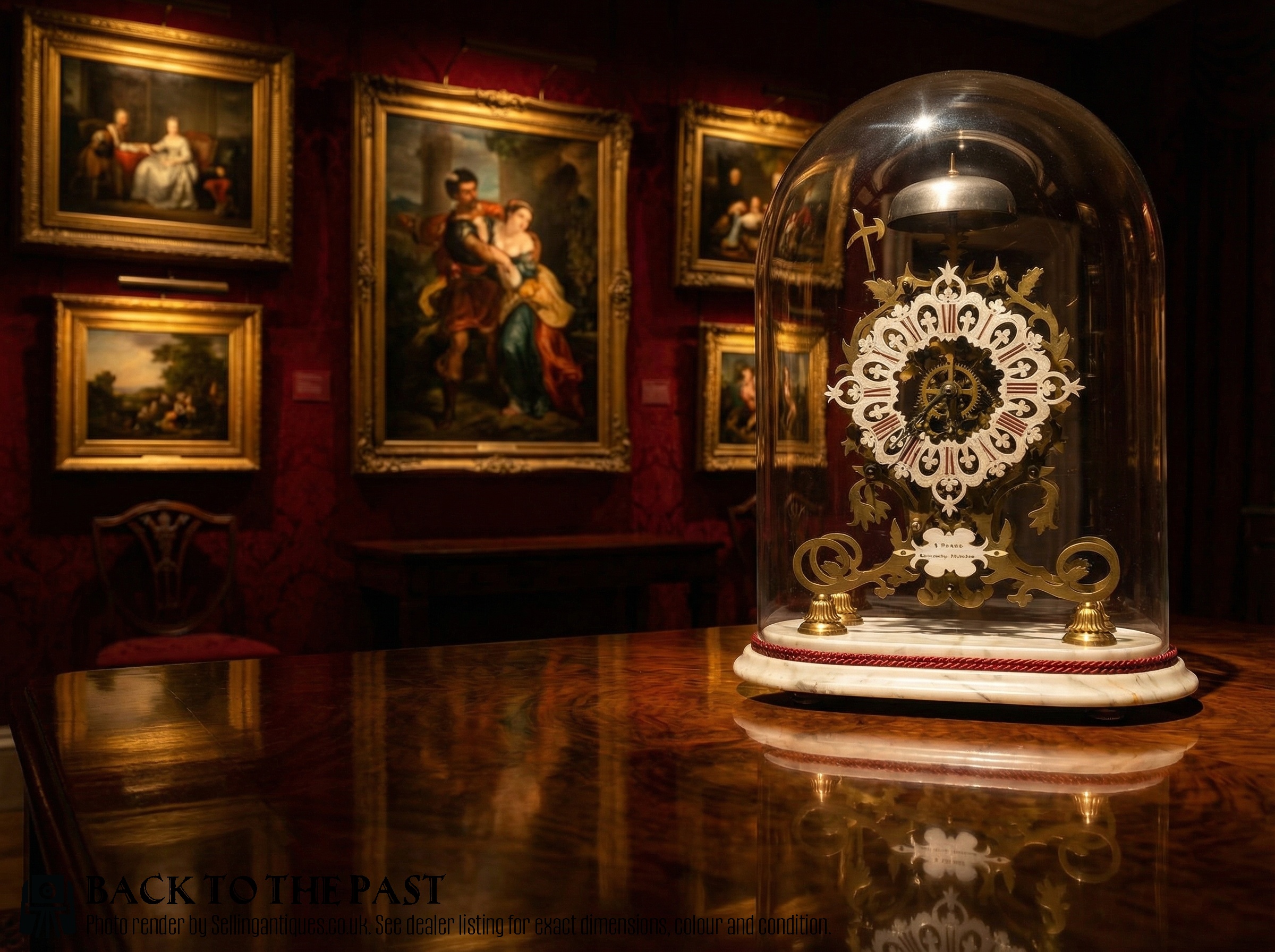
Gothic Skeleton Mantel Clock
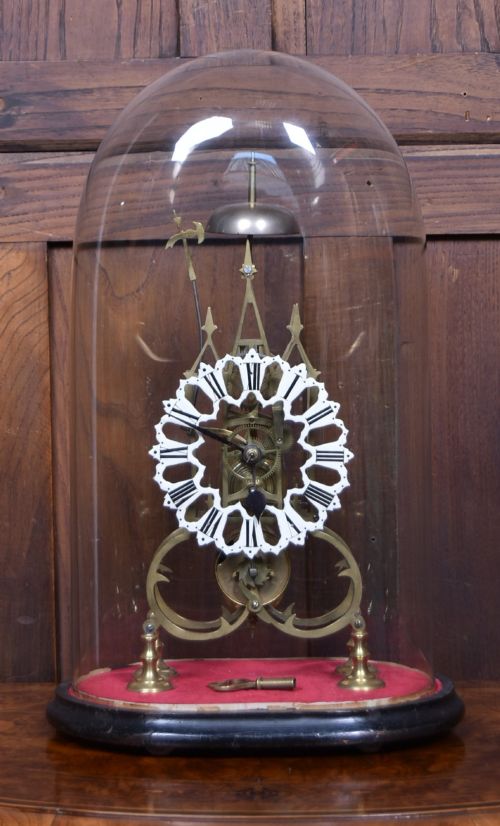
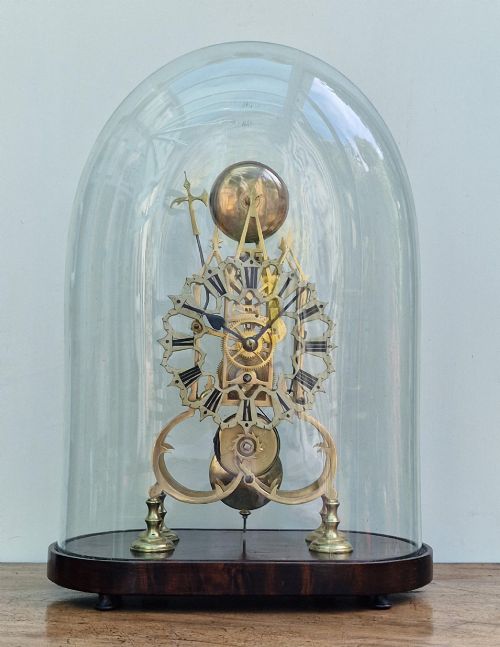
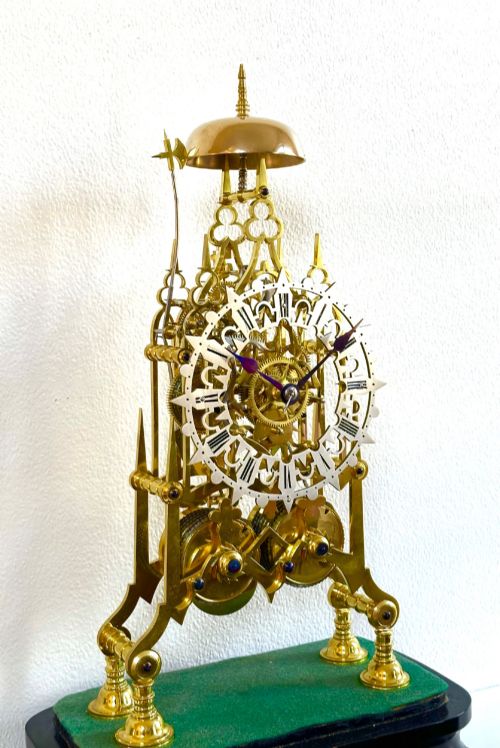
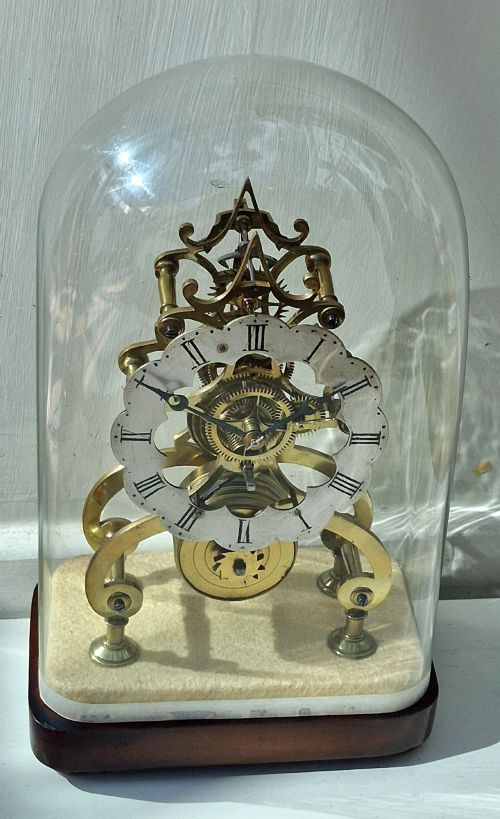
A gothic skeleton mantel clock exposes its entire brass gear train and escapement to view rather than hiding them behind a solid dial, following the architectural tastes of the Victorian Gothic Revival.
The form typically rests upon a wooden base, such as mahogany or ebonised wood, and is protected by a glass dome to keep dust from the delicate steel and brass mechanisms.
Examples on this page span the nineteenth century, featuring cathedral-style brass frames and memorial designs that reference famous buildings or historical events.
How they were made
Maker-craftsmen cut brass plates into openwork architectural shapes, filing the fretwork by hand to mimic pointed arches and buttresses.
Movements were built with fusee or passing strike mechanisms using brass wheels and steel pinions, mounted securely onto plinths of marble or wood.
Some nineteenth-century makers even turned memorial clocks into miniature brass cathedrals for the parlor mantel.
What varies in quality
The intricacy of the brass openwork and the presence of specialised movements, such as a double fusee train, separate standard timepieces from ambitious workshop productions.
The survival of original components, including the glass dome and fitted wooden or velvet-lined base, defines the integrity of the piece.
Richard Winter of Chieveley·Thwaites of London·E White Of Manchester·Ferdinand Barbedienne
The Gothic Skeleton Mantel Clock Glossary
- Skeleton clock
- A clock with an open frame that exposes the gear train and movement to view. This design became popular in the nineteenth century for domestic mantels.
- Fusee
- A conical pulley used with a cord or chain to equalize the decreasing power of the mainspring as it unwinds. This mechanism helps maintain steady timekeeping.
- Gothic Revival
- An architectural and decorative style that revives medieval forms like pointed arches and tracery. It heavily influenced Victorian clock design.
- Passing strike
- A clock mechanism that strikes a single blow on a bell or gong on the hour without counting the hours. It provides a subtle acoustic marker.
Gothic Skeleton Mantel Clock: Frequently Asked Questions
Why do these clocks have glass domes?
Glass domes protected the exposed brass mechanisms from dust and airborne soot in nineteenth-century homes heated by coal fires.
Keeping the delicate steel pinions and open gear train covered ensured the clock required less frequent cleaning and oiling.
How do fusee movements work?
A fusee uses a conical pulley connected to a chain or cord that winds the mainspring power.
As the spring uncoils and loses tension, the chain moves to a wider section of the cone to maintain consistent torque on the gear train.
Where were mantel clocks placed?
These clocks were designed to sit upon the mantelpiece of a Victorian drawing room, library, or parlour.
Their open architecture and glass domes allowed guests to watch the moving brass gears from various angles in the room.
What distinguishes Gothic Revival designs?
Gothic Revival pieces borrow architectural motifs from medieval churches, including pointed arches, rose windows, and flying buttresses.
Clockmakers translated these stone elements into pierced brass frames and cathedral-shaped plates.