


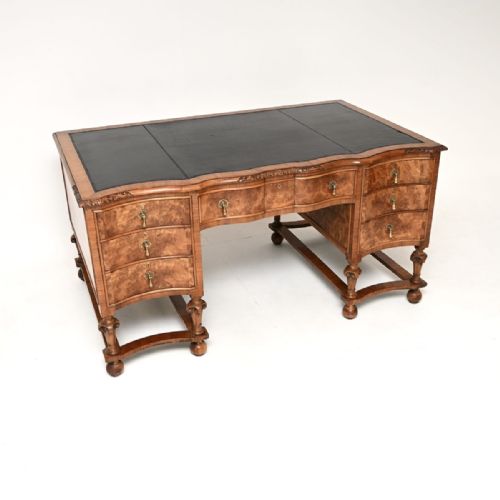
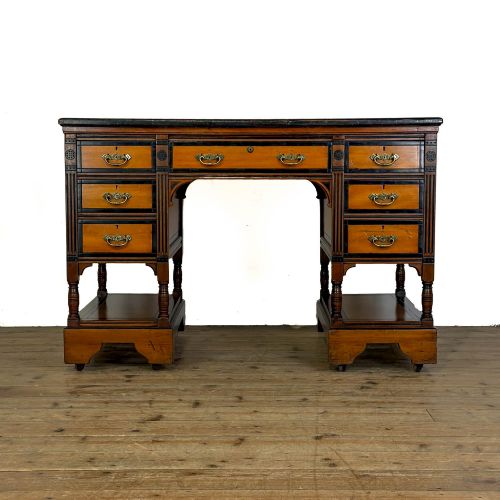
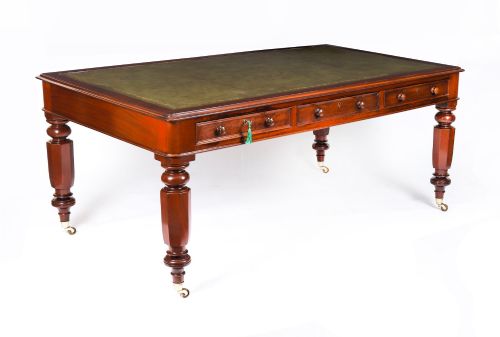
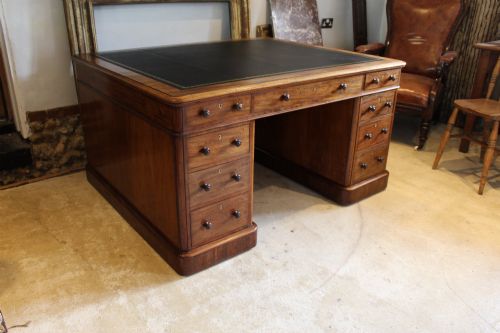
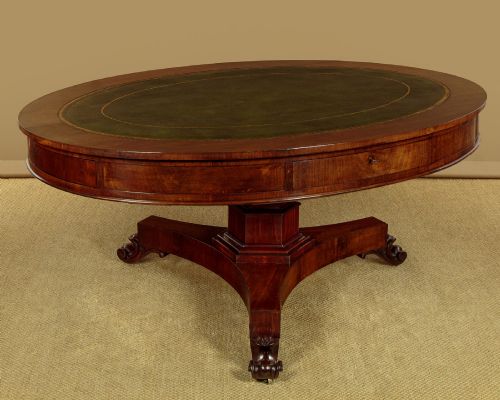
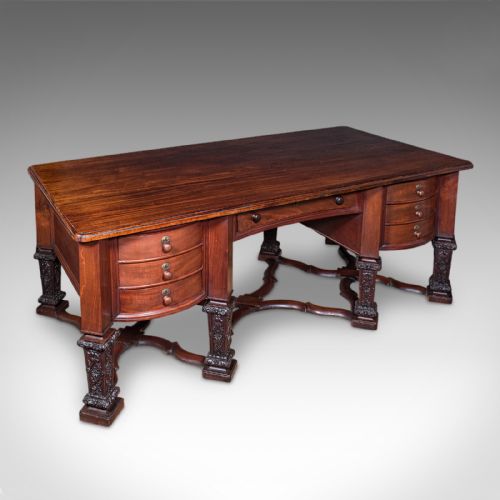
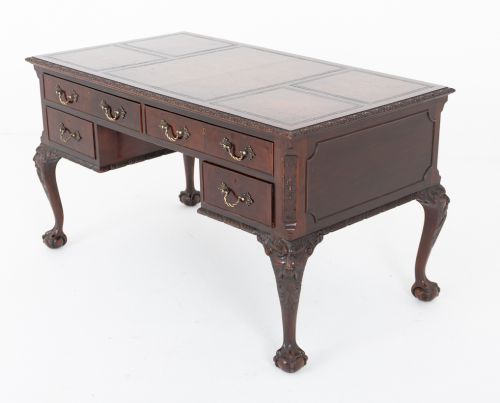
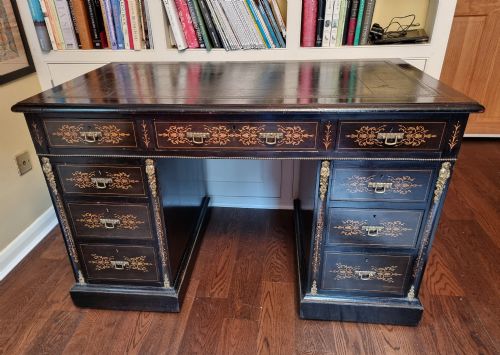
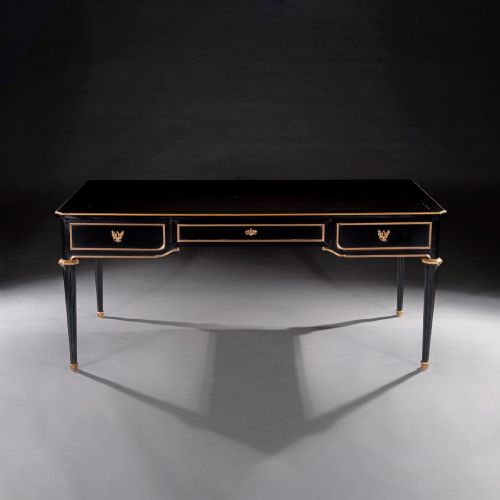
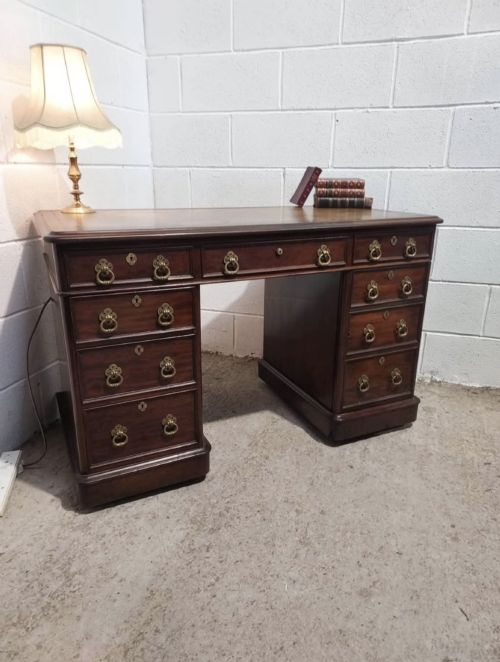
Library Partners Desk
A library partners desk provides twin workspaces designed for two people to sit opposite each other.
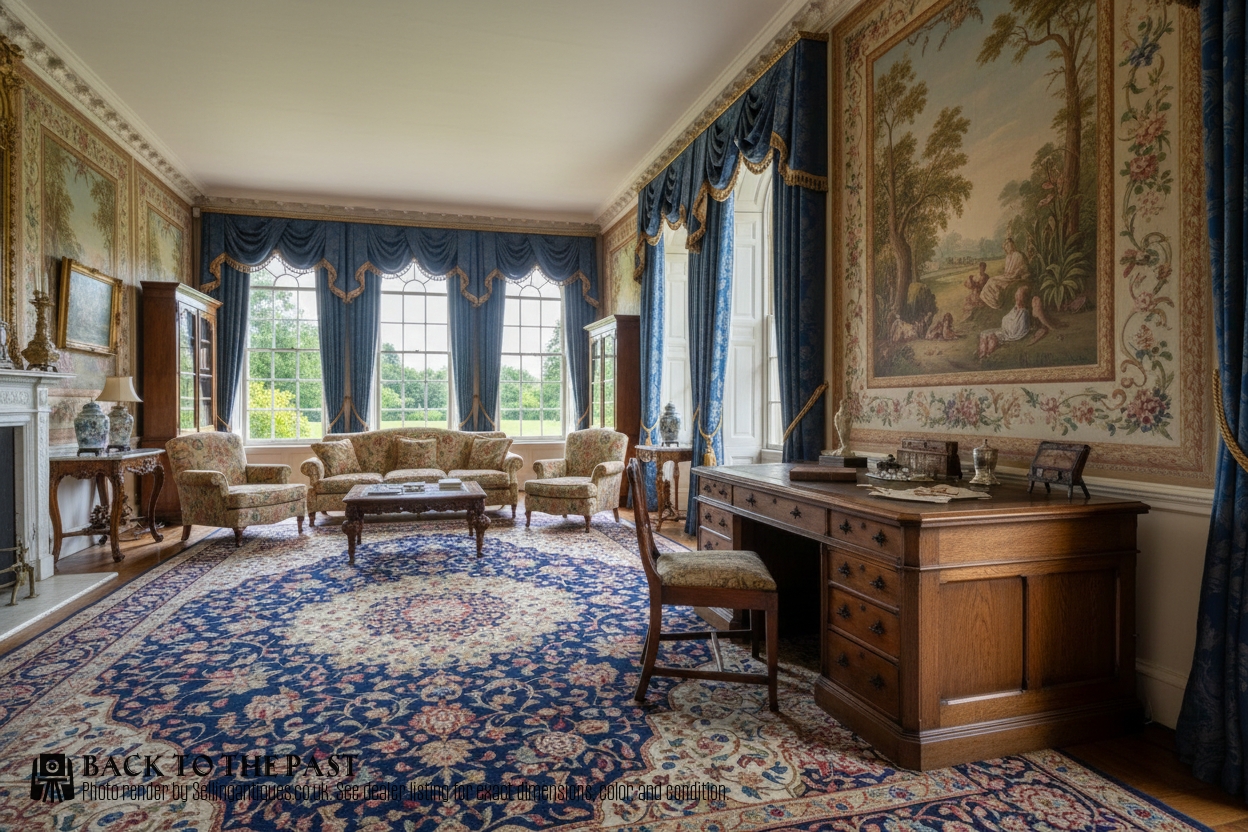
Library Partners Desk
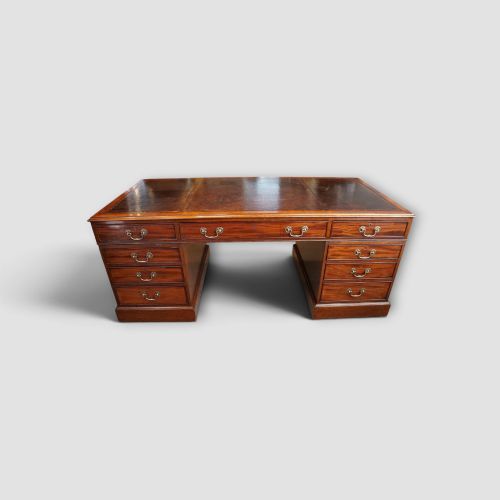
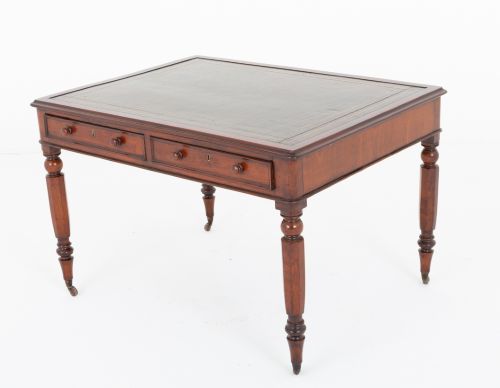
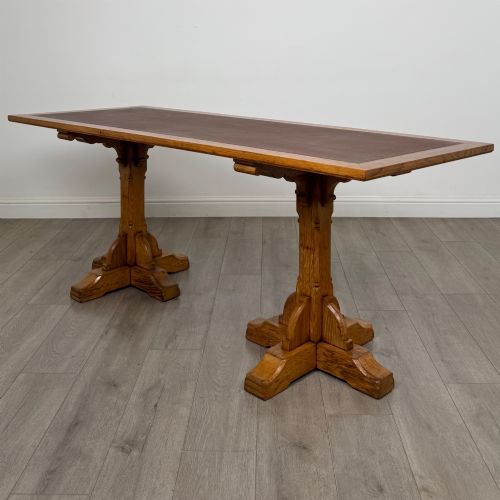
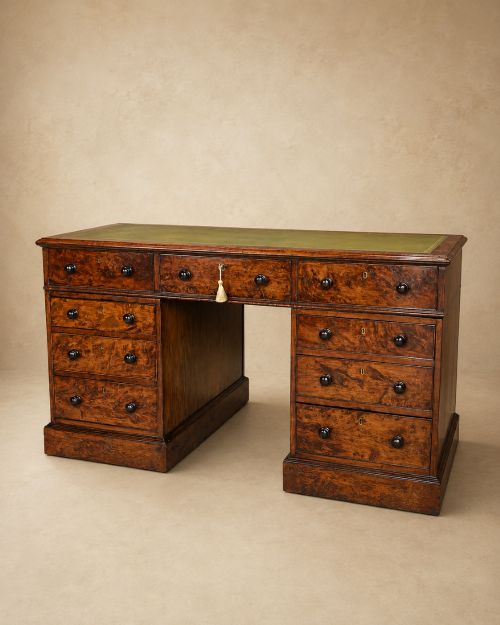
A library partners desk is a substantial double-sided piece designed for two users to work face-to-face with matching drawers and cupboards on both elevations. The most common examples seen here date from the Victorian and Georgian periods, constructed as heavy pedestal units or large writing tables.
Makers often built these tables in mahogany, oak, or walnut, frequently incorporating inset leather writing surfaces on the top. The underlying design reflects formal 18th-century and 19th-century study rooms, accommodating simultaneous administrative tasks in large domestic or institutional libraries.
Materials and construction methods
Timbers such as solid and veneered mahogany, figured walnut, and heavy oak form the structural carcasses, joined with traditional cabinetmaking techniques. Secondary woods appear inside drawer linings, whilst leather hides are glued and blind-tooled to create the writing surfaces.
Brass hardware, including drop handles and key escutcheons, secures the functional storage compartments across both sides of the pedestal or table base.
Some partners desks include hidden compartments behind secret locking panels designed for storing confidential ledgers away from prying eyes.
Evaluating craftsmanship and proportion
Quality rests upon the selection of timber veneers, such as burr walnut or figured mahogany, and the crispness of hand-carved mouldings or lion paw feet. Superior pieces maintain symmetry and depth on both sides without compromising legroom in the central kneehole.
The integration of original working locks, fine dovetail joints in the drawers, and well-preserved leather inserts distinguish workshops associated with notable cabinetmakers from standard commercial output.
Trollope and sons·Maple and Co·Charles Andrea Nosotti·Edwards and Roberts·Whytock and Reid·Lamb of Manchester·Gillows
The Library Partners Desk Glossary
- Pedestal desk
- A form comprising two banks of drawers or cupboards supporting a desktop, allowing the user to sit between them.
- Kneehole
- The central space beneath the desktop designed to accommodate the sitter's legs.
- Escutcheon
- A protective brass plate surrounding a keyhole on a drawer or cupboard door.
- Dovetail
- An interlocking joint used in drawer construction that provides high tensile strength.
- Bureau plat
- A freestanding writing table fitted with drawers, originating in France.
Library Partners Desk: Frequently Asked Questions
What is a library partners desk?
A library partners desk is a large double-sided writing table featuring drawers and cupboards on opposing faces. This layout allowed two people to work opposite each other in a shared room.
Most surviving examples date from the Georgian and Victorian eras, constructed from dense hardwoods like mahogany and oak to serve heavy administrative use.
How do I date a partners desk?
Dating relies on observing structural timbers, hardware styles, and overall cabinetmaking details. Georgian pieces often display simpler linear proportions, whereas Victorian examples introduce heavier carved motifs and figured walnut veneers.
Secondary woods inside the drawer boxes and the construction of the dovetails also help confirm the manufacturing period.
Are partners desks double-sided?
Yes, true partners desks are fully finished on both elevations. This means drawers or faux-drawer fronts appear on both sides of the pedestals.
They were specifically manufactured so two individuals could sit facing one another while utilising the same surface area and storage.
What wood was used for partners desks?
Makers predominantly utilised mahogany, oak, and walnut for these large tables. Finer iterations incorporated burr walnut, rosewood, or pollard oak veneers to enhance the visual grain on the primary surfaces.
Secondary timbers like pine or oak were typically reserved for internal components such as drawer linings and framing.