

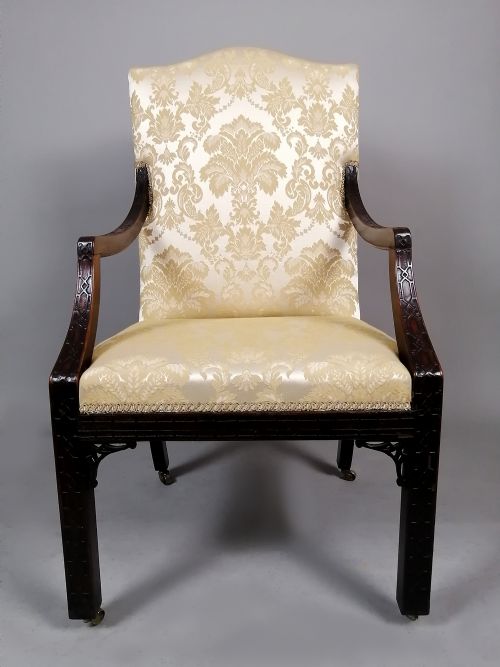
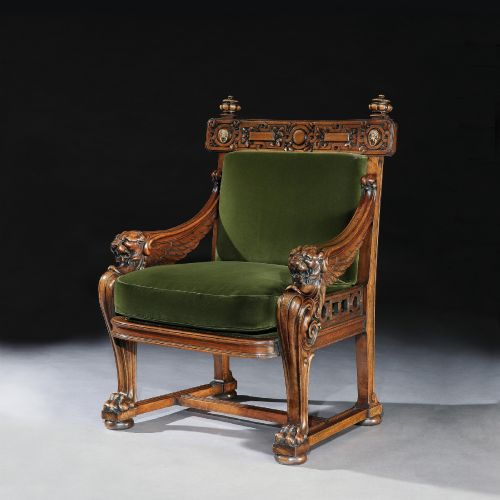
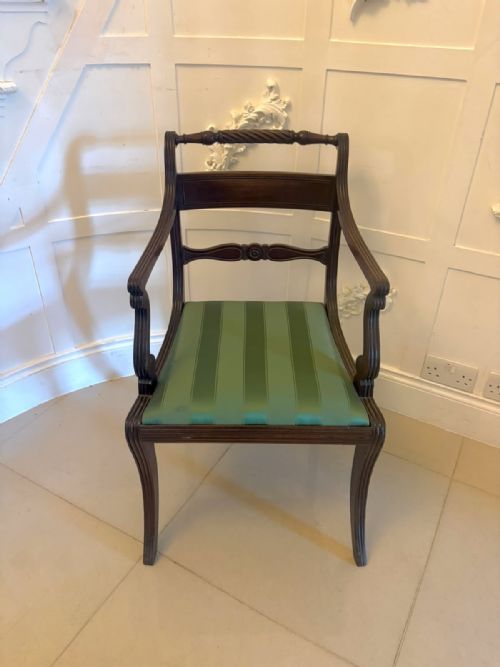
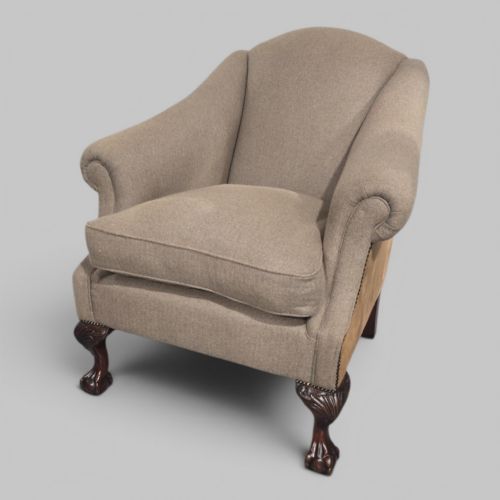


Library Armchair Dark Wood
A library armchair dark wood delivers solid structural presence and deep-seated comfort, anchoring a study or reading room with functional historic weight.
Library Armchair Dark Wood
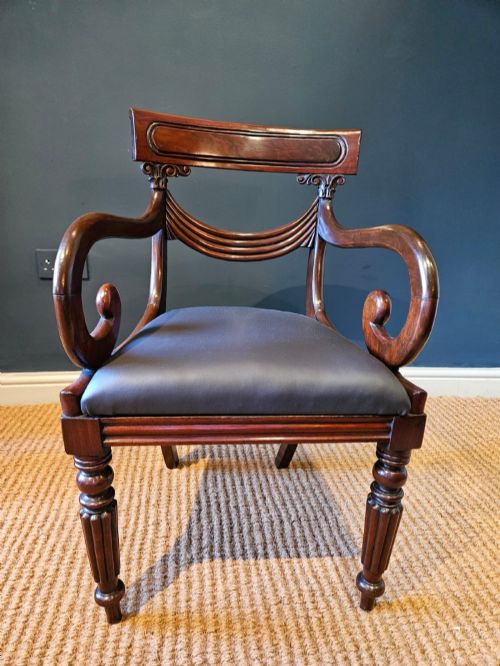
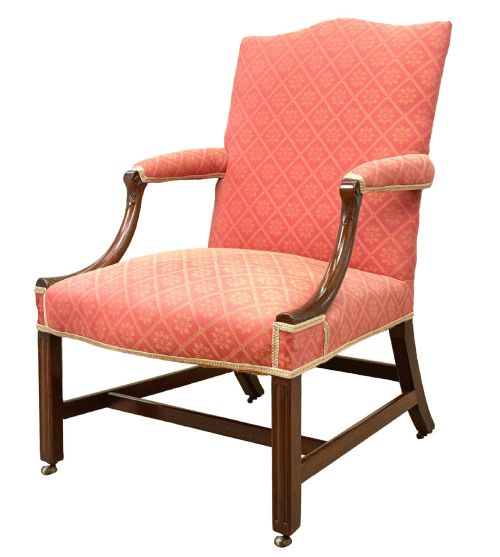
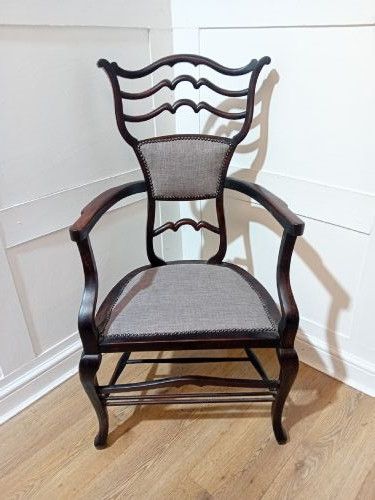
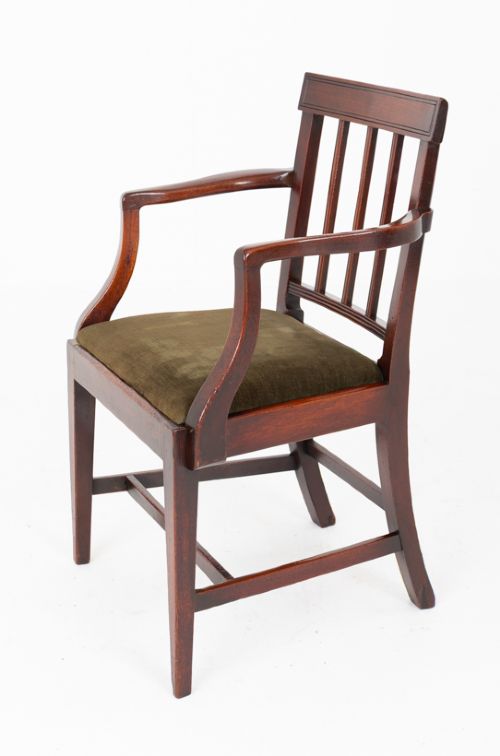
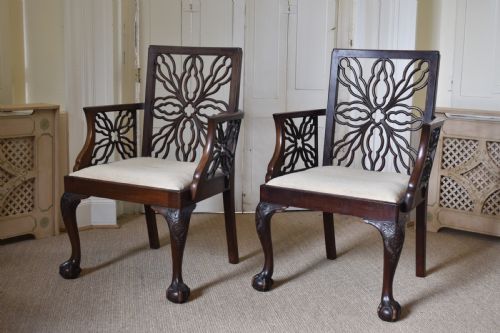
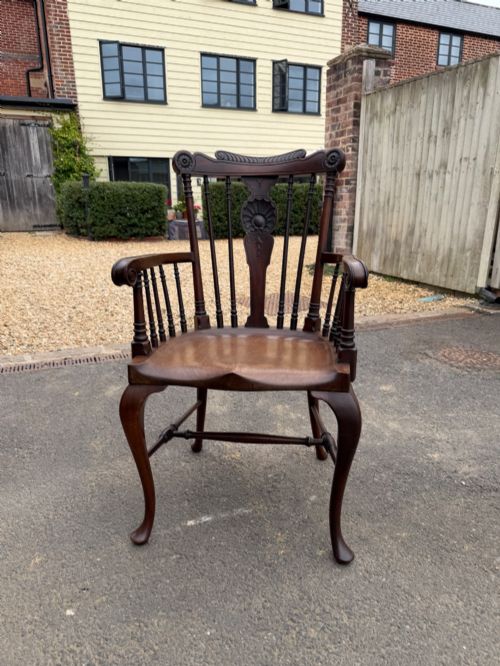
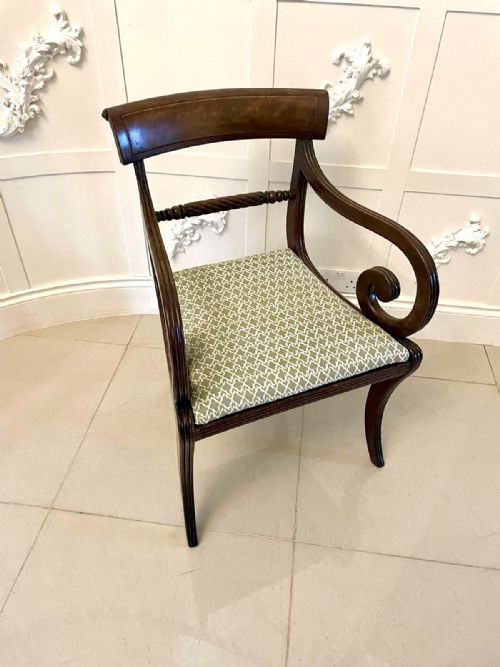
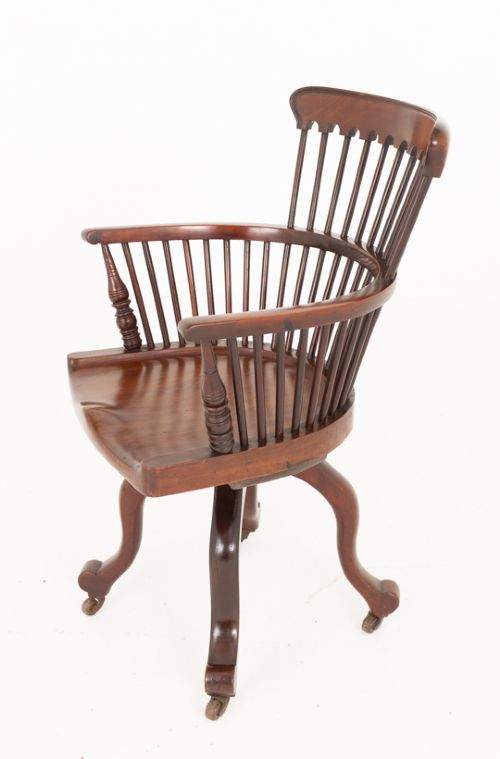
When searching for a library armchair dark wood, buyers encounter substantial seating designed for prolonged reading, writing, or study. These pieces typically function as heavy desk chairs or deep armchairs intended for libraries, offices, and studies.
The selections on this page span several centuries, with nineteenth-century and Regency examples appearing most frequently alongside eighteenth-century and Edwardian variants. Forms range from open armchairs and desk chairs to bergères and swivel seats.
Originating predominantly from British workshops and revival periods, these chairs combine functional utility with architectural presence. The dominant timber framework sets a serious tone suitable for traditional interiors.
How they were made
Cabinetmakers constructed these frames primarily from dense hardwoods like mahogany, rosewood, and oak, often enriching the darker surfaces with brass inlays, carved armorial details, or delicate woodwork. Timber selection prioritized structural integrity to support regular use at desks and tables.
Upholstery completed the seating, utilising leather, velvet, and traditional woven fabrics fastened to padded seats and backs. Joinery techniques varied from rigid dowelled frames to specialised sliding and swivel mechanisms introduced in later nineteenth-century models.
Listings feature eighteenth-century Georgian models alongside nineteenth-century Regency, Victorian, and early twentieth-century Edwardian examples.
What varies in quality
The distinction between standard utility seating and exceptional library chairs rests upon the crispness of timber carving, the harmony of proportions, and the integrity of the underlying frame. Superior examples display refined joinery and well-figured grain within the dark wood.
Original elements, such as period brass fittings, undisturbed leather panels, and untouched patination, elevate the standing of a piece. Later alterations or heavy restorations shift a chair away from its historic baseline.
Thomas Hope
The Library Armchair Dark Wood Glossary
- Bergère
- An enclosed upholstered armchair with exposed wooden framing and a solid or caned back and sides. This French-inspired form provides a comfortable seat for reading.
- Monopodia
- A carved furniture support resembling a single lion's leg or paw. This decorative feature appears frequently on Regency library chairs influenced by classical design.
- Gainsborough chair
- A wide-seated, open-armed armchair with a padded back and seat, typically dating from the eighteenth century. It was designed specifically for writing desks and libraries.
- Smokers bow
- A sturdy, low-backed Windsor-style armchair with turned spindles and a bentwood rail. These comfortable chairs often utilised elm timber for added resilience.
- Bobbin turned
- A style of furniture leg or stretcher shaped by a lathe into a series of rounded, spool-like spheres. This decorative turning technique appears across various nineteenth-century seating forms.
Library Armchair Dark Wood: Frequently Asked Questions
How do I identify a Regency library chair?
Regency library chairs frequently display classical architectural motifs such as brass inlay, scroll arms, and lion monopodia supports. They reflect an early nineteenth-century taste for ancient Roman and Greek aesthetics.
Makers utilised dark timbers like mahogany and rosewood, often pairing them with leather upholstery suited for desk work or reading.
Are these chairs comfortable for daily desk work?
Many of these pieces were engineered precisely for prolonged sitting at a partner desk or library table. Deep seats and supportive upholstered backs provide ergonomic utility.
Adjustable height mechanisms and swivel bases also appear in later nineteenth and early twentieth-century variants designed for office use.
What is the difference between a desk chair and a library chair?
Desk chairs typically feature lower profiles, swivel bases, or more compact frames to allow easy movement around a workspace. Library chairs often prioritize a wider, more enveloping upholstered seat for relaxation.
Both categories overlap significantly in historic inventories, frequently utilising similar dark woods and upholstery materials.
How do I care for antique wood and leather?
Maintaining dark wood frames requires regular dusting and occasional applications of appropriate furniture wax to preserve the finish. Leather upholstery benefits from specialised conditioners to prevent drying and cracking.
Keep these pieces away from direct heat sources and strong sunlight to protect the natural materials.