
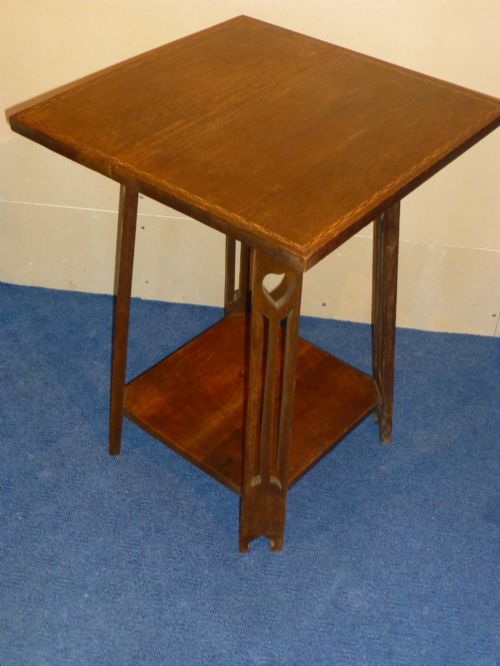
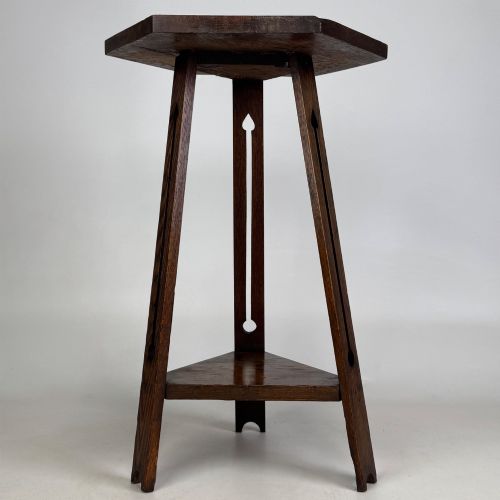
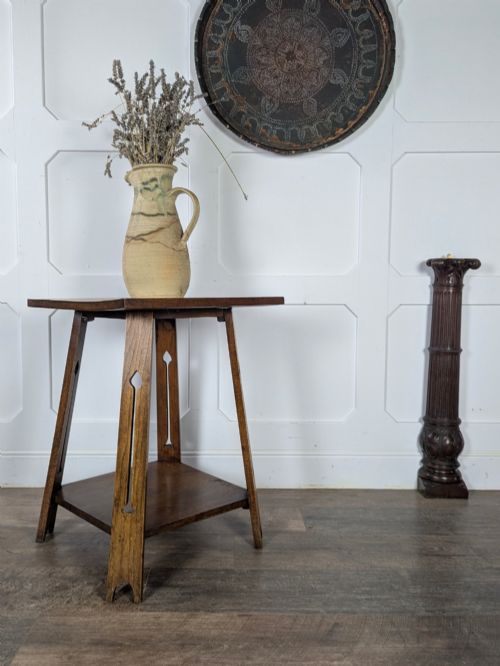
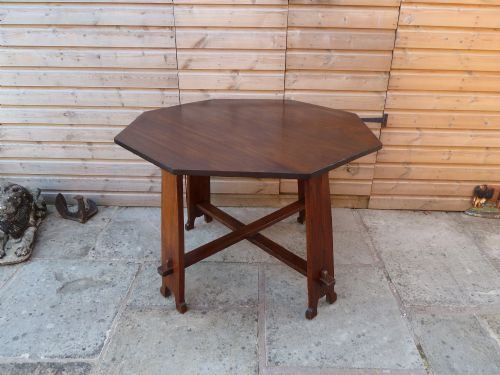


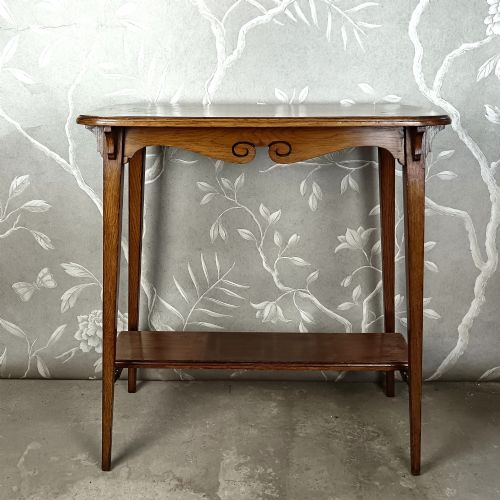

Liberty Oak Side Table
These pieces carry the unmistakable rectilinear restraint and honest joinery of a genuine liberty oak side table, built for domestic utility with artistic ambition.

Liberty Oak Side Table
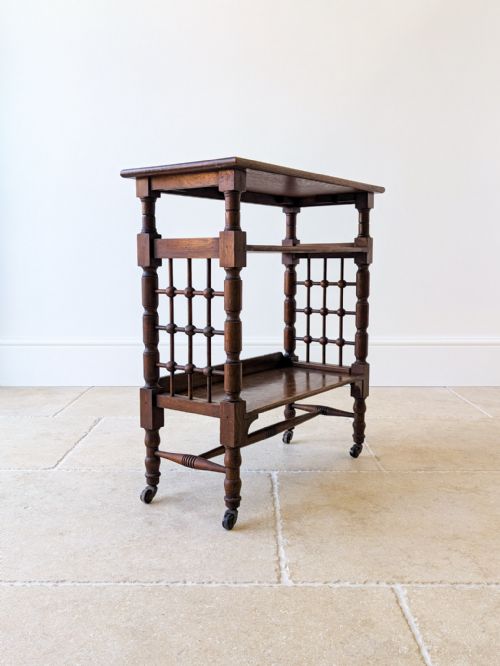
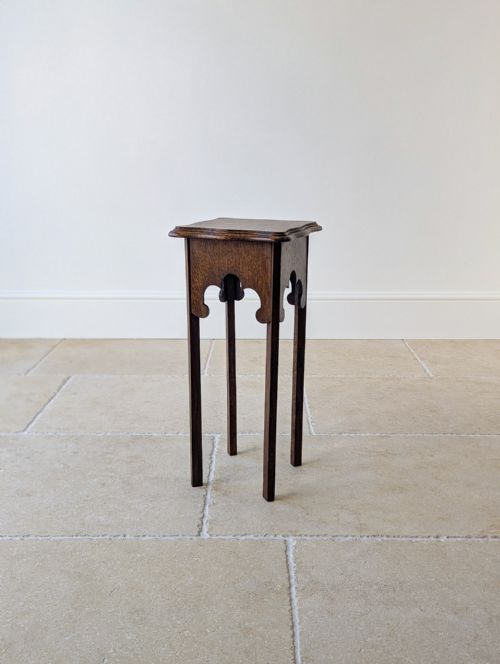
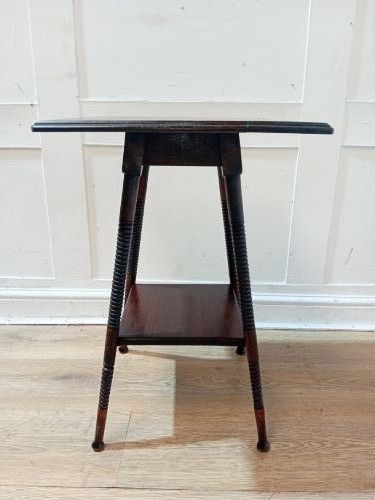
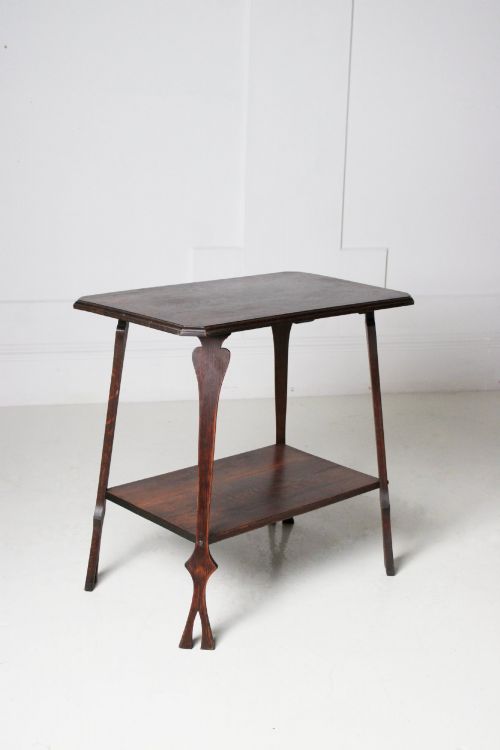
A liberty oak side table appears most frequently in forms designed for practical living, spanning occasional tables, plant stands, and two-tier designs from the late nineteenth and early twentieth centuries. These works emerge from the intersection of the Arts and Crafts movement and the commercial vision of Liberty and Co., often reflecting broader stylistic currents such as Art Nouveau or Anglo-Japanese design.
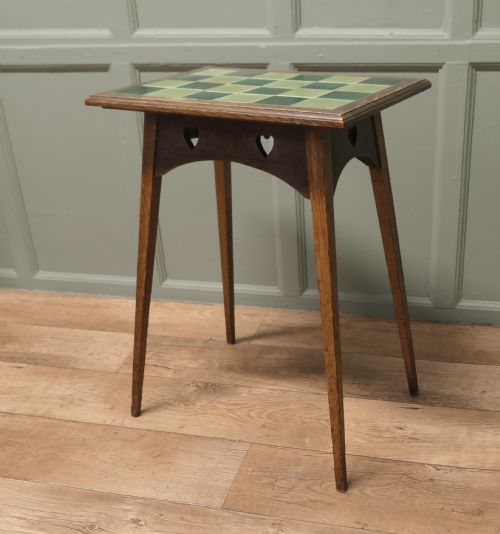
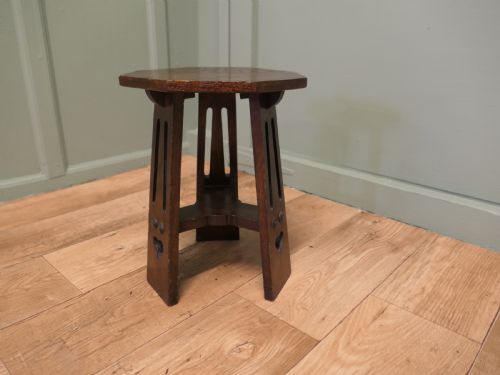
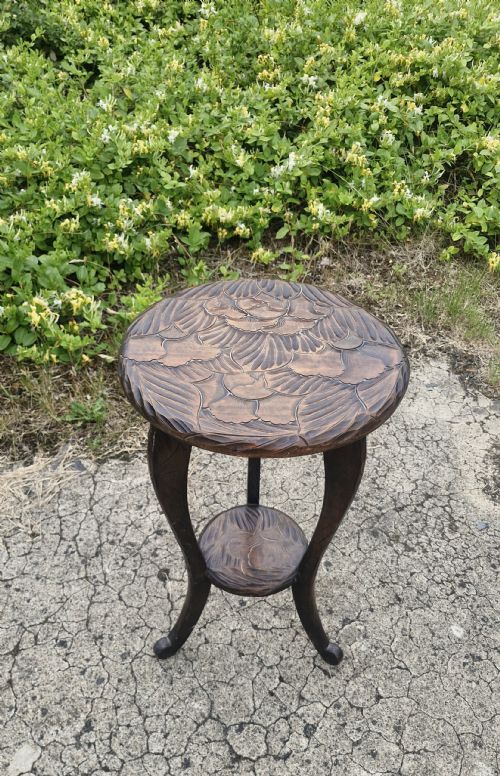
Makers and designers working within this idiom produced compact tables intended to serve as lamp stands, coffee tables, or small display surfaces in domestic interiors. The surviving examples demonstrate how standard forms were adapted through thoughtful carving, distinctive heart motifs, or octagonal geometries.
The material vocabulary centres firmly on solid oak and hardwood, sometimes enhanced with contrasting ceramic tiles, copper insets, or chequered wood inlay. Pieces from this tradition avoid excessive ornamentation in favour of exposed construction and functional integrity.
Materials and construction
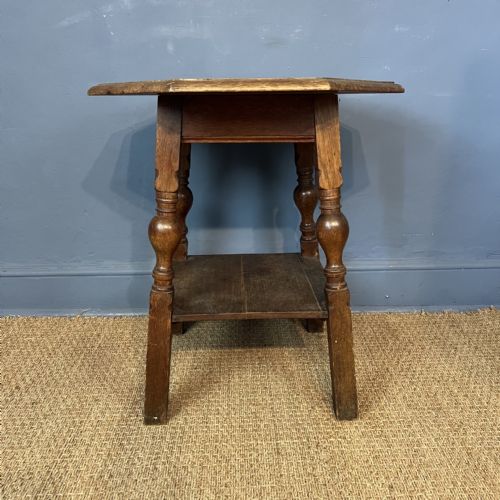
Craftsmen built these tables using solid oak and seasoned hardwood, selecting timber for its visible grain and structural stability. Joinery relied on traditional pegged or tenoned joints rather than concealed metal fasteners, ensuring the frame remained rigid under daily use.
Surface decoration frequently incorporated hand-carved motifs, particularly heart shapes, alongside inset copper panels or glazed ceramic tiles. Wood inlay and chequered banding added geometric contrast to the warm tone of the polished timber.
Octagonal tops and two-tier configurations appear across multiple decades from the Victorian period through the Edwardian era.
Evaluating design and execution
The distinction between standard commercial output and exceptional workshop production lies in the crispness of the hand-carved details and the integration of secondary materials like copper or ceramic tiles. Tables bearing specific attribution to known designers or makers display superior proportions and more deliberate placement of decorative motifs.
Structural honesty and timber selection separate finer examples from simpler provincial interpretations. A well-preserved piece maintains tight joinery, balanced weight, and a rich patina developed through decades of careful maintenance.
Liberty & Co.·William Birch·Baillie Scott·Leonard Wyburd
The Liberty Oak Side Table Glossary
- Arts and Crafts
- A design movement promoting hand craftsmanship, traditional materials, and reform in response to industrial manufacturing. This philosophy prioritised honest construction and simple, functional forms over superfluous ornamentation.
- Occasional table
- A small, movable table designed for a specific, temporary use in a room, such as holding a lamp, book, or plant. These pieces were essential to the flexible room arrangements of late Victorian and Edwardian interiors.
- Chequered inlay
- A decorative technique where small alternating squares of light and dark wood are embedded flush into the surface of the primary timber. This creates a contrasting geometric border that highlights the edge of a table top.
- Plant stand
- A tall, slender piece of furniture designed to elevate potted plants for better light and display. In the Arts and Crafts period, these often shared the octagonal tops and sturdy uprights of contemporaneous side tables.
Liberty Oak Side Table: Frequently Asked Questions
How do I identify a genuine piece?
Look for characteristic proportions, honest oak construction, and subtle decorative touches such as carved heart motifs or exposed pegged joints. Many bear the stylistic hallmarks associated with Liberty's retail output from the turn of the twentieth century.
Context also matters, as documented attributions to designers like Leonard Wyburd or makers like William Birch provide the strongest confirmation of origin.
Where should I place these tables?
Their compact dimensions make them exceptionally versatile for corners, hallways, or beside armchairs as lamp supports. The lower tiers or shelves on certain models provide convenient storage for small books or decorative objects.
Avoid placing them in direct sunlight or near strong heat sources to protect the aged oak surface and any embedded ceramic tiles.
How should I care for the wood?
Maintain the finish by dusting regularly with a soft, dry cloth and applying occasional natural beeswax to nourish the timber. Avoid liquid polishes containing silicones, which can build up and dull the historic patina.
If the table incorporates copper or ceramic inserts, clean those areas with materials appropriate to the specific medium without wetting the surrounding wood.
What styles influenced these designs?
These tables draw heavily from the British Arts and Crafts movement while absorbing influences from Japanese aesthetics and Moorish geometry. This cross-cultural dialogue produced clean architectural lines combined with exotic decorative details.
The resulting hybrids reflect the eclectic yet restrained taste promoted by London retailers during the Edwardian era.