
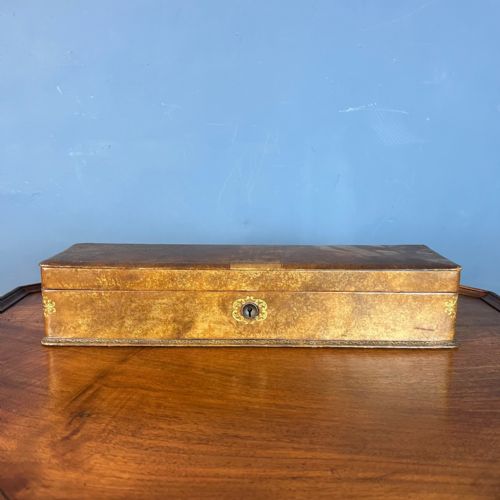


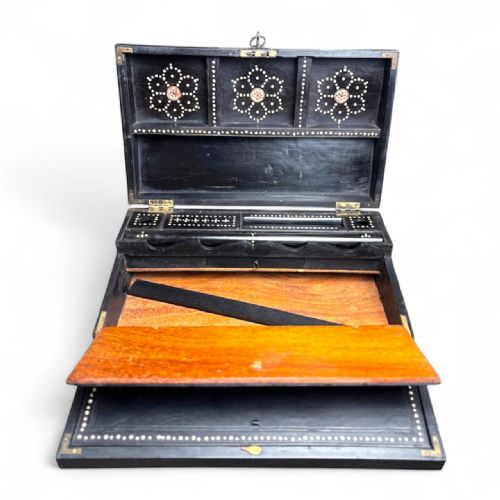


Leather Writing Desk Box
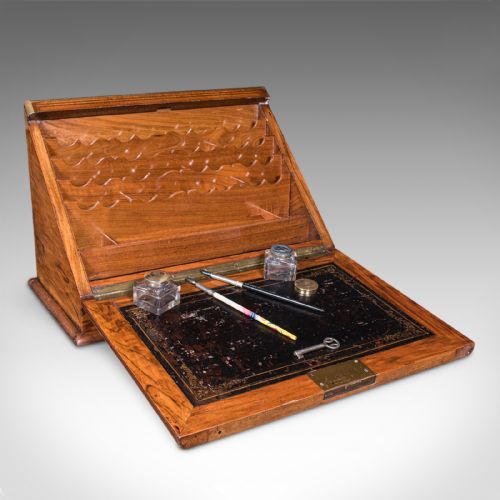
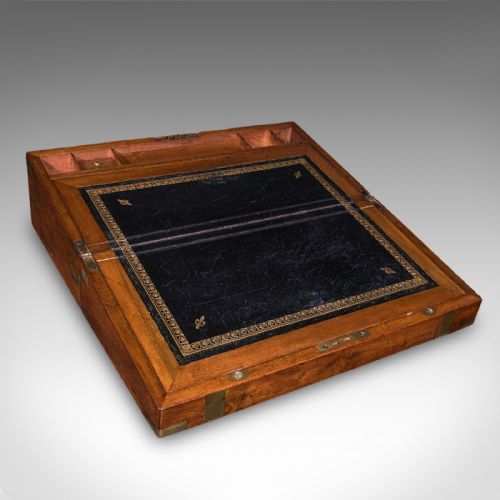
A leather writing desk box is a portable desk or stationary container designed for correspondence, and buyers choose them for tactile desktop utility and period character.
Leather Writing Desk Box
When you search for a leather writing desk box, you encounter portable writing slopes, stationary cases, and correspondence boxes spanning the Regency and Victorian eras into the twentieth century. These objects served travellers, officers, and writers who needed a firm writing surface and secure storage for paper, pens, and ink.
The Victorian period supplies the greatest variety of these pieces on this page, often surfaced in tooled leather or built as folding slopes with brass binding. Walnut, mahogany, and exotic woods frequently form the core structure beneath the leather outer covering.
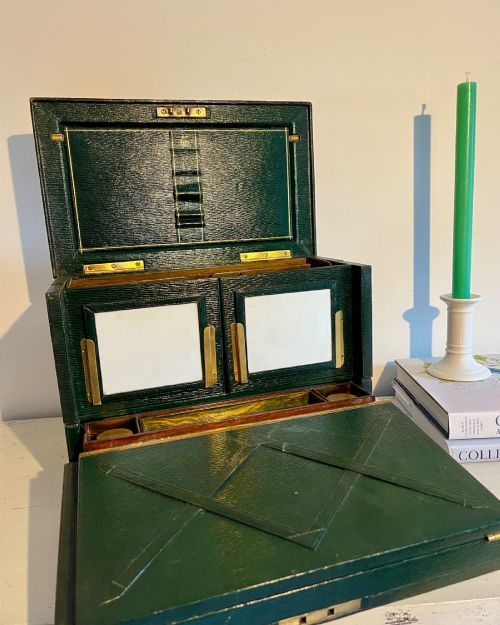
Beyond standard slopes, the selections include specialised forms such as campaign boxes, lecterns, drop-front cabinets, and double-opening letter racks. Each variant reflects the specific organizational habits of nineteenth-century and early twentieth-century desk work.
Materials and construction
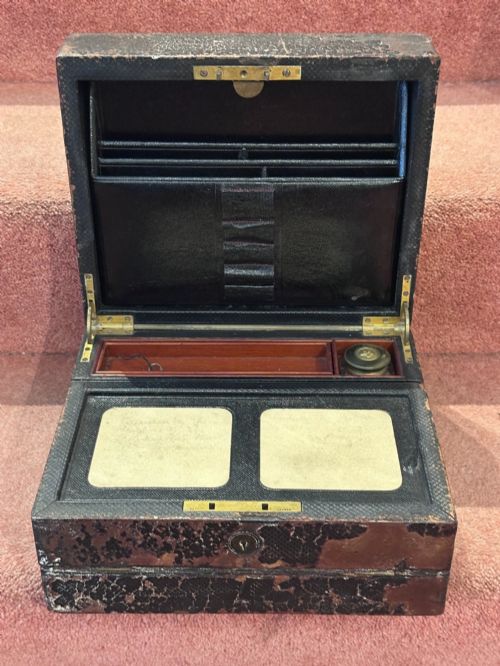
Cabinetmakers built the structural carcases of these boxes using dense timbers like mahogany, walnut, oak, and rosewood, providing a rigid frame for daily use. Exterior surfaces were then wrapped in leather or crocodile skin, frequently decorated with blind tooling or gold embossing.
Brass corners, straps, and flush carrying handles reinforced the edges of campaign styles designed for transit. Interiors utilised secondary woods, velvet or silk linings, glass inkwells, and internal compartments fitted for stationery and pens.
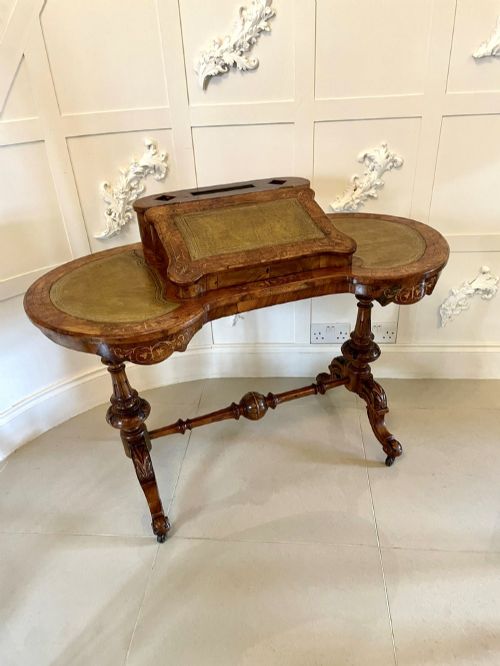
Several boxes manage to combine writing duties with sewing and work table functions, proving that nineteenth-century desks knew how to multitask.
Distinctions in quality
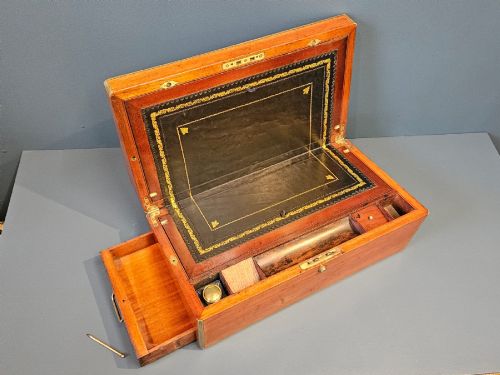
Quality rests in the precision of the joinery and the integrity of the fitted interior compartments, where hidden drawers and secret panels demonstrate superior craftsmanship. The choice of primary timber beneath the leather and the weight of the brass hardware signal the original tier of production.
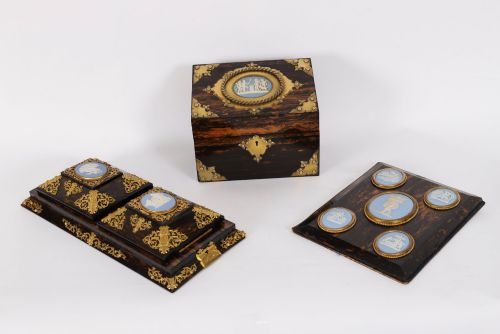
Exhibition pieces display finer leather tooling, superior locking mechanisms with working keys, and integrated accessories such as porcelain or glass components. Simpler utilitarian travelling boxes prioritize robust leather and plain brass reinforcement over decorative embellishment.
P and F Shafer·Liberty of London·Lund of London
The Leather Writing Desk Box Glossary
- Writing Slope
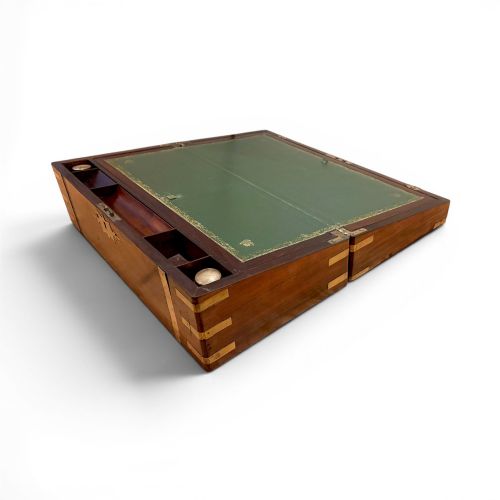
- A box with an inclined lid that opens to reveal a sloping surface for writing and storage compartments beneath. Victorian examples often fold flat to provide a dual-plane writing bed.
- Campaign Box
- A portable desk reinforced with brass corners and flush handles designed for military officers on active service. These pieces prioritize structural durability during travel.
- Stationery Case
- A desktop cabinet or box configured to hold envelopes, paper, and writing implements upright. They often feature multiple tiers or drop-front doors.
- Blind Tooling
- An impressed decorative technique applied to leather using heated metal tools without gold leaf. This method creates subtle patterns and borders across the hide.
- Brass Bound
- Furniture or boxes edged with brass strips and corner pieces to protect vulnerable wooden or leather surfaces from impact. This treatment is common on nineteenth-century campaign items.
Leather Writing Desk Box: Frequently Asked Questions
How do I use a writing slope today?
These boxes function well on modern desks for storing stationery, notebooks, and writing instruments while adding historical texture to a room.
The sloping lids also provide a functional, angled surface for reading or writing correspondence by hand.
How do I date an antique leather box?
Dating relies on combining stylistic evidence, such as the Regency or Victorian characteristics, with the construction methods and wood types visible inside.
Hardware details like lock mechanisms, hinge types, and the presence of makers' stamps or brass plaques also help narrow the manufacturing period.
Were these boxes made for travel?
Many examples, particularly those described as campaign or officers' boxes, were constructed specifically for transport during nineteenth-century journeys.
Other variants served as stationary desktop accessories intended to remain in a fixed position within a library, study, or drawing room.