

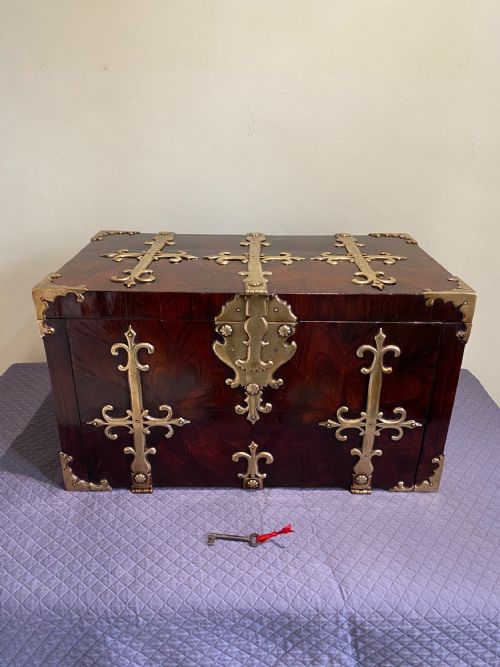


Brass Mounted Document Box
A brass mounted document box secures letters and paper with metal corners and straps.
Brass Mounted Document Box
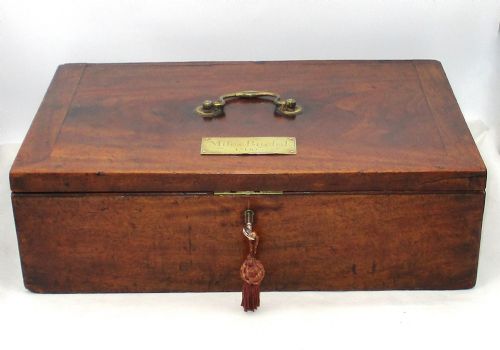
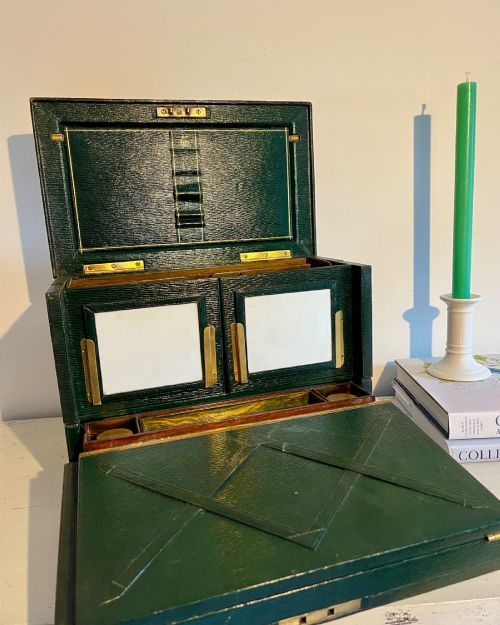
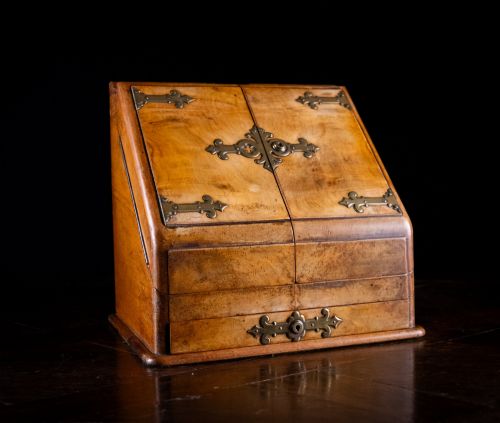
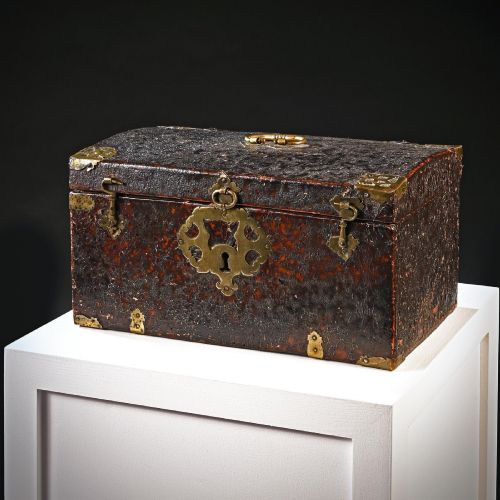
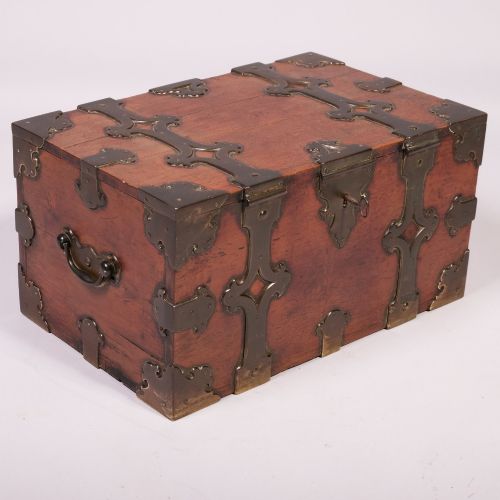
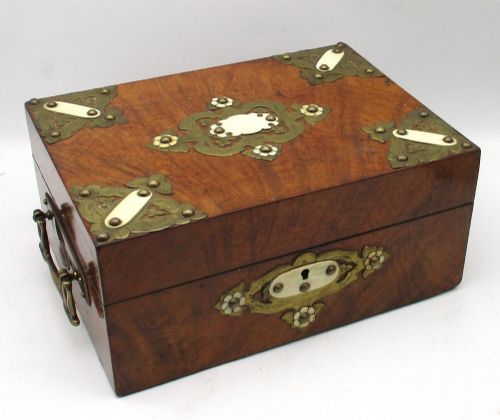
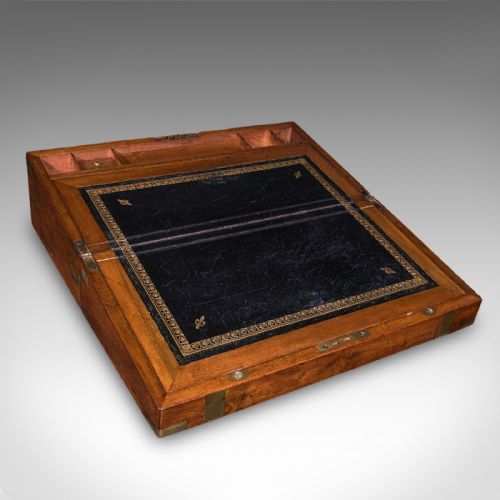
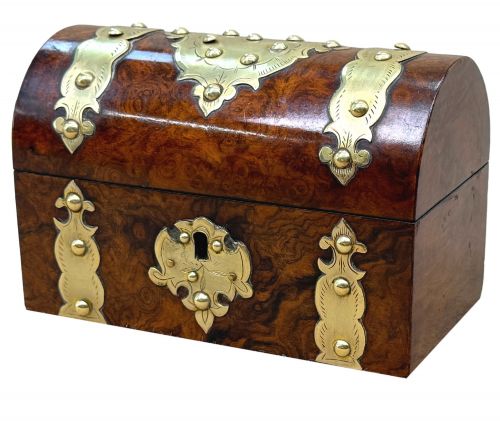
A brass mounted document box serves as a portable container for correspondence, stationery, and valuable papers, constructed from timber or leather and reinforced with metal corners, bands, and escutcheons. These containers appear in several distinct forms across the listings, spanning compact desktop stationery cabinets, folding writing slopes, and travelling chests.
Materials and construction methods
Cabinet makers constructed these containers from hardwoods such as mahogany, oak, and walnut, frequently applying decorative veneers like burr walnut and exotic coromandel to the exterior surfaces. Selected pieces feature leather bindings or applied lacquer, whilst others incorporate structural framing in camphor wood or elm.
Brass mountings, hinges, lock plates, and corner brackets are fastened to the wooden bodies using small brass pins or screws, securing the joints against heavy use. Interior fittings involve fitted compartments, velvet or leather lined writing surfaces, and secret drawers concealed within the primary carcass.
Certain nineteenth-century specimens secretly reveal hidden spring-loaded drawers when you press a concealed wooden pin behind the letter rack.
Distinctions in quality and execution
Quality separates standard utilitarian containers from pieces commissioned for prominent retailers or wealthy clients through the precision of the joinery and the thickness of the brass hardware. Superior examples display tightly fitted internal stationery partitions, heavy cast brass mounts, and well-executed locking mechanisms with original working keys.
The selection of timber grain heavily influences the character of the piece, with richly figured burr walnut and dense coromandel indicating higher status than plain deal or standard mahogany. Furthermore, documented maker signatures on locks or leather interiors elevate historical interest above unsigned vernacular items.
Houghton and Gunn·Mappin & Webb·Rodman and co·P&F Shafer
The Brass Mounted Document Box Glossary
- Escutcheon
- A protective brass plate surrounding a keyhole that prevents the surrounding wood from wearing away through repeated use of the key.
- Campaign
- A style of portable furniture designed for military officers, featuring recessed brass handles, reinforced corners, and robust construction for travel.
- Coromandel
- A dense, heavy tropical hardwood featuring dark brown and black streaking, highly prized by nineteenth-century cabinet makers for luxury boxes.
- Stationery box
- A desk accessory fitted with tiered compartments and dividers specifically organised to hold envelopes, writing paper, and letters upright.
- Writing slope
- A hinged box that opens to reveal an angled writing surface lined with leather or velvet, alongside storage wells for inkwells and pens.
Brass Mounted Document Box: Frequently Asked Questions
What is a brass mounted document box?
A brass mounted document box is a secure lidded container reinforced with metal hardware, designed to protect and organise correspondence and legal papers on a desk or during travel.
These pieces range from modest wooden containers to elaborate Victorian stationery cabinets with multiple internal compartments and fitted leather surfaces.
How were these boxes used historically?
Owners used these boxes to store letters, important documents, stationery, and sometimes personal valuables while working at a desk or travelling between residences.
The inclusion of locks, campaign handles, and fitted interior tiers allowed users to transport confidential papers securely in carriages and on ships.
How do I care for a wooden box?
Maintaining a wooden box involves keeping the piece away from direct heat sources and dramatic humidity changes to prevent the timber and veneers from warping or cracking.
Gentle dusting with a dry cloth preserves the finish, whilst occasional application of appropriate wax feeds the antique wood without building up heavy residues.
How can I tell the period?
Dating relies on observing the timber choices, construction techniques, lock types, and brass mount styles relative to established decorative periods like the Regency or Victorian eras.
Later Victorian interpretations often feature elaborate coromandel finishes and spring-loaded stationery tiers, whereas earlier Georgian and Regency examples favour simpler mahogany or rosewood forms.