


Antique Despatch Box
An antique despatch box is a sturdy receptacle designed for carrying important documents, offering a tangible link to Victorian correspondence.
Antique Despatch Box
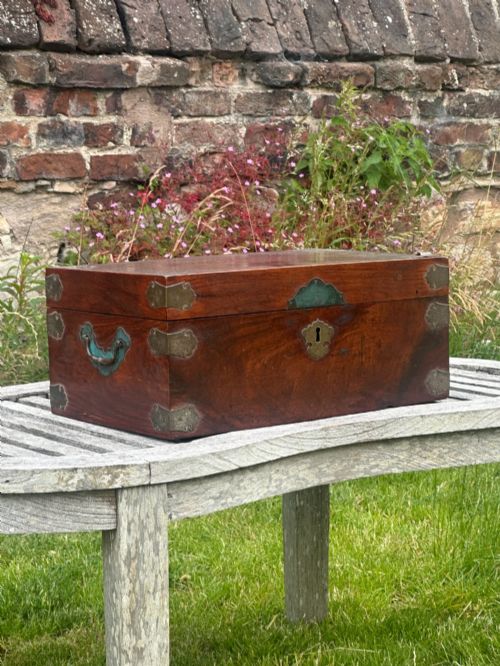
When you search for an antique despatch box, you are looking at utilitarian containers built to secure letters, deeds, and official papers. These pieces span the nineteenth century, including specific dates from eighteen fifty to nineteen hundred, and take the form of writing boxes, deed boxes, and correspondence cases.
The versions you are most likely to meet on this page include Victorian leather-bound items and Anglo-Indian variants constructed from dense tropical timbers. They reflect the travelling and administrative needs of officers, officials, and private individuals of the period.
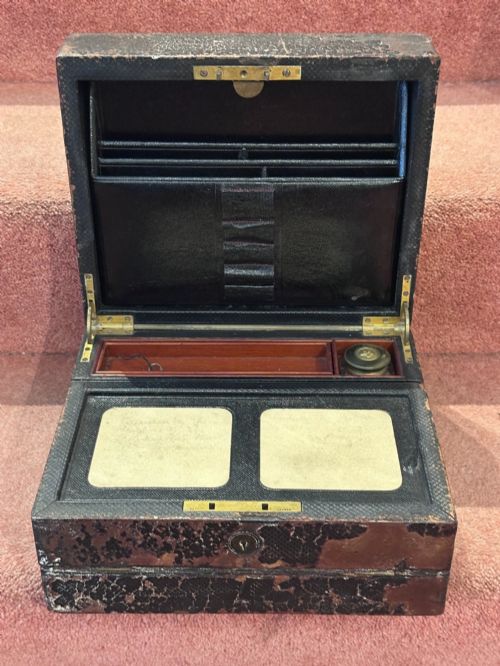
Forms range from simple folding writing slopes to heavy brass-bound chests and upright cabinets. Some examples are fitted with compartments for stationery, while others serve strictly as secure deed boxes for domestic or military use.
Materials and construction
Makers utilised a combination of sturdy structural woods such as mahogany, pine, and exotic padouk or ebony. These hardwoods provided the necessary durability for items frequently subjected to travel.
Many boxes feature heavy brass binding, corner plates, and recessed carrying handles designed to protect the edges from impact. Leather covering, sometimes embossed, was frequently applied to the exterior or used to line the writing surfaces within.
Interiors often incorporated clever mechanisms, hidden drawers, and bone or ivory escutcheons around keyholes. Joinery had to be exact to withstand the rigours of Victorian transport.
The listings on this page span the nineteenth century, showcasing items in brass, leather, mahogany, padouk, and ebony.
Assessing quality and execution
Quality in an antique despatch box is measured by the selection of materials and the precision of the metalwork. Heavy brass mounts that are neatly sunk flush with the wood indicate superior craftsmanship compared to poorly fitted hardware.
The sophistication of the internal fittings, such as secret compartments and well-executed leather tooling, separates standard functional items from exhibition pieces. The choice of dense padouk or figured ebony also elevates a piece above basic pine and standard leather.
P and F Shafer·Houghton and Gunn·Pugin
The Antique Despatch Box Glossary
- Padouk
- A heavy, durable tropical hardwood often reddish-brown in colour, frequently utilised in Anglo-Indian colonial furniture and boxes. It resists moisture and wear exceptionally well.
- Deed box
- A secure container specifically proportioned for storing legal documents, land indentures, and important certificates. They usually feature robust locks and metal reinforcement.
- Escutcheon
- A protective plate surrounding a keyhole, often fashioned from brass or bone. It prevents the wood around the lock from splitting through repeated use.
- Campaign style
- Furniture and boxes engineered for military travel, typically featuring recessed handles, brass corners, and sometimes folding stands. These items were built to dismantle or pack away tightly.
- Gothic Revival
- An architectural and decorative style popular in the nineteenth century, drawing inspiration from medieval forms. Pieces in this style often incorporate pointed arches, heavy tracery, and formal geometry.
Antique Despatch Box: Frequently Asked Questions
What is an antique despatch box used for?
These boxes were originally designed for securely holding, sorting, and transporting sensitive correspondence, official documents, and writing materials.
Today, they function well on desks or tables for storing modern stationery, letters, or keepsakes while adding a period aesthetic to a room.
How do I distinguish a writing box from a deed box?
A writing box typically opens to reveal a slanted writing surface lined with leather, along with compartments for inkwells and pens.
A deed box is generally a simpler, deeper chest designed purely for stacking flat documents and lacks the folding writing slope.
What materials are common in Anglo-Indian boxes?
Anglo-Indian boxes frequently utilise exotic hardwoods such as padouk and ebony, chosen for their density and rich colour.
They are often contrasted with bright brass binding and corner mounts, reflecting regional craftsmanship directed at the British market.
How can I tell the period of a leather-bound box?
Dating relies on observing the type of leather tooling, the construction of internal compartments, and the style of the brass hardware.
Nineteenth-century examples often display specific Victorian design cues, ranging from plain functional black leather to heavily embossed decorative surfaces.