


Leather Upholstered Armchairs
These leather upholstered armchairs offer robust construction and comfortable seating, spanning periods from the eighteenth century to the art deco era.
Leather Upholstered Armchairs
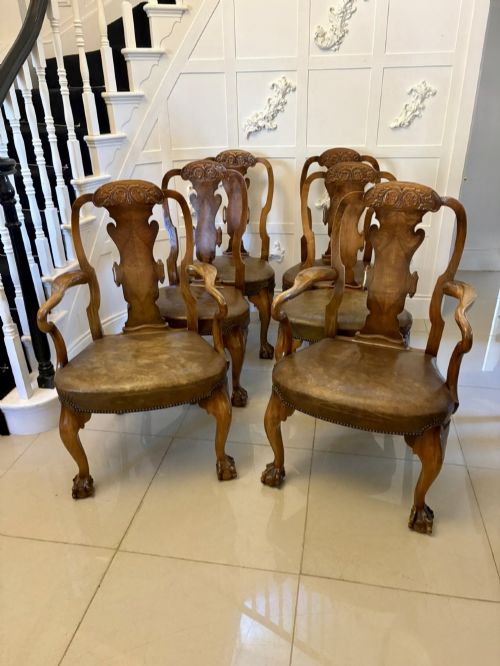
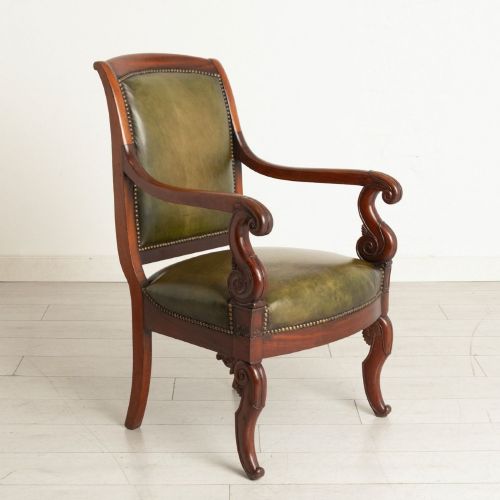
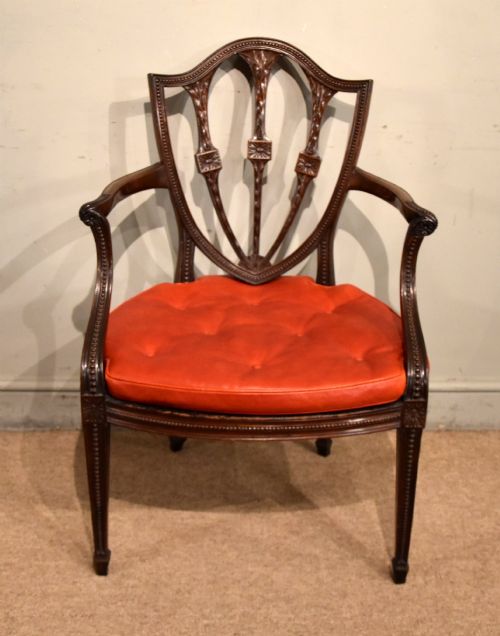
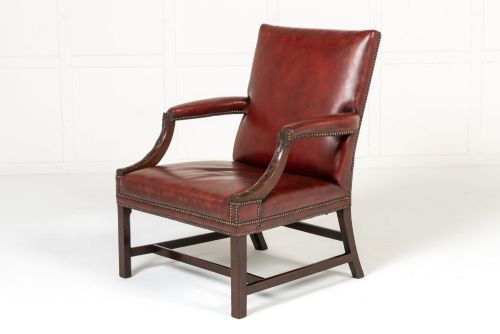
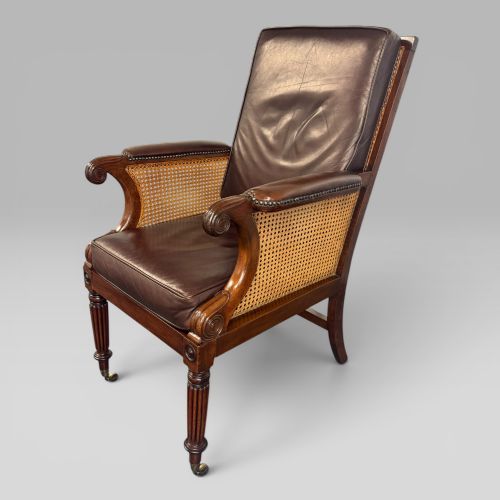
Leather upholstered armchairs encompass a wide variety of seating forms designed for libraries, desks, and firesides. The selections span multiple eras, including Georgian, Victorian, Edwardian, and Art Deco periods, each reflecting the design priorities of its time.
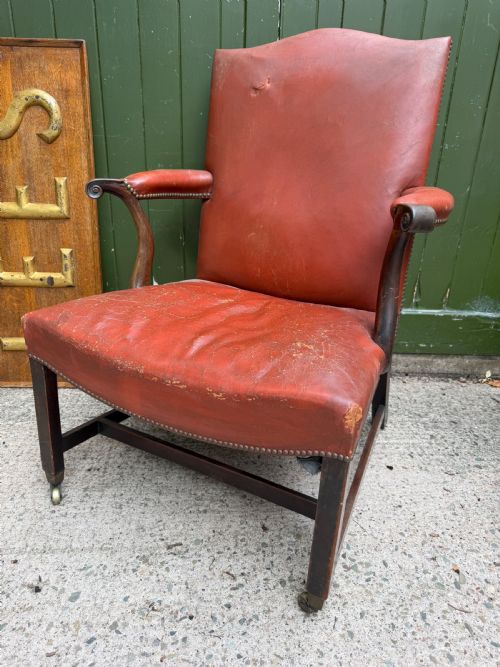
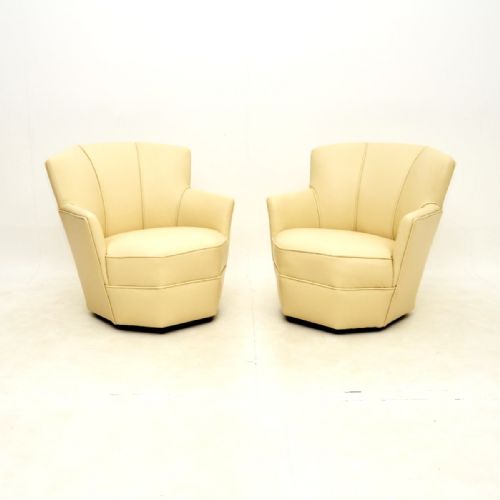
Library armchairs and Gainsborough chairs dominate the earlier centuries, constructed with substantial timber frames and patinated hides. Later decades introduce club chairs, revolving desk chairs, and streamlined Art Deco tub seating.
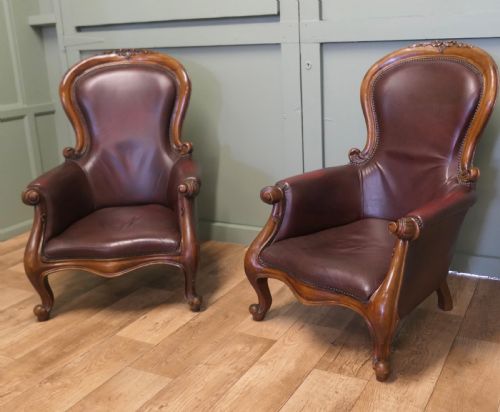
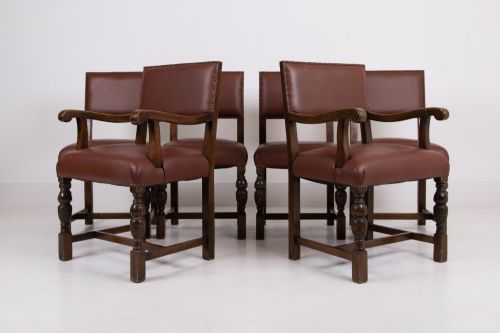
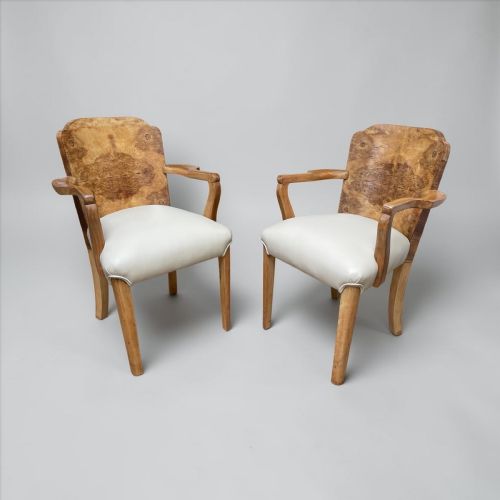
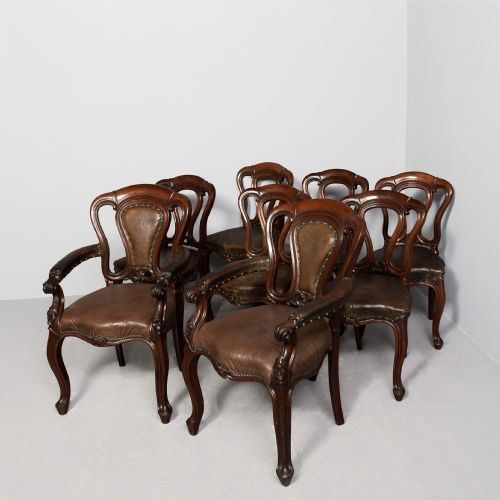
Walnut, mahogany, and oak form the primary timber structures for these pieces, accompanied by occasional use of rosewood and burr walnut. Many examples emerge as pairs, while others remain as single library chairs or matching sets for dining spaces.
What Varies In Quality
The refinement of the timber frame and the depth of the wood carving set certain examples apart from simpler utilitarian seating. Well-proportioned library armchairs with substantial frames demonstrate superior cabinet-making skills compared to standard production pieces.
The character and conditioning of the leather dictate much of the visual appeal. Richly patinated hides that retain their suppleness and colour indicate careful preservation over generations.
One exceptional nineteenth century Welsh oak armchair is noted as a massive throne style wainscot fireside reading seat.
Howard And Sons
The Leather Upholstered Armchairs Glossary
- Gainsborough chair
- A wide seat with an upholstered back and arms, standing on four legs, typically dating from the eighteenth century. This form provided comfortable seating for writing desks.
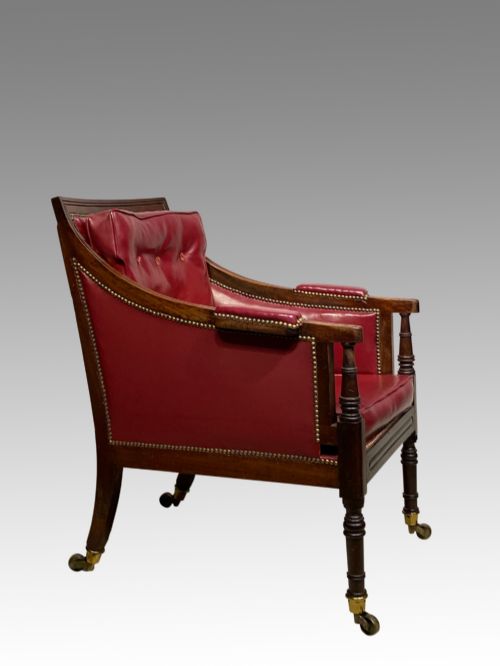
- Bergère
- An enclosed armchair with stuffed or caned sides set into a wooden frame. The style originated in France and appeared frequently in Regency furniture.
- Club chair
- A deep, comfortable armchair with low arms and thick leather upholstery. These chairs emerged strongly in the twentieth century.
- Spoon back
- A vertical chair back curved to match the shape of the human spine. Victorian makers utilised this profile extensively on parlour and library seating.
- Patina
- The surface sheen and colour developed by leather and wood through age and handling. Collectors value this natural indicator of antiquity.
Leather Upholstered Armchairs: Frequently Asked Questions
How do I identify a Victorian leather armchair?
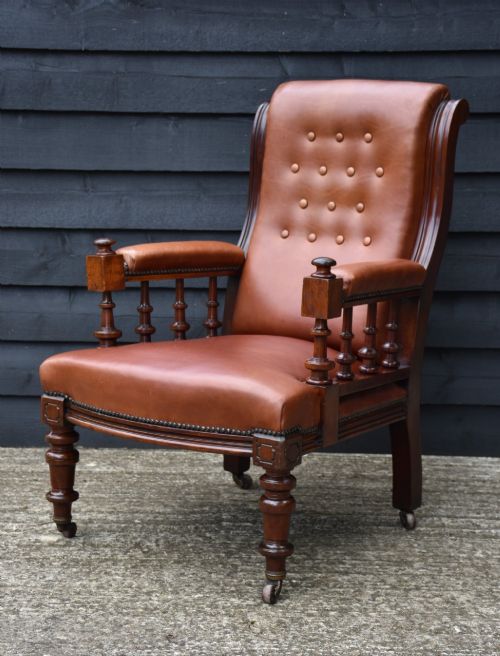
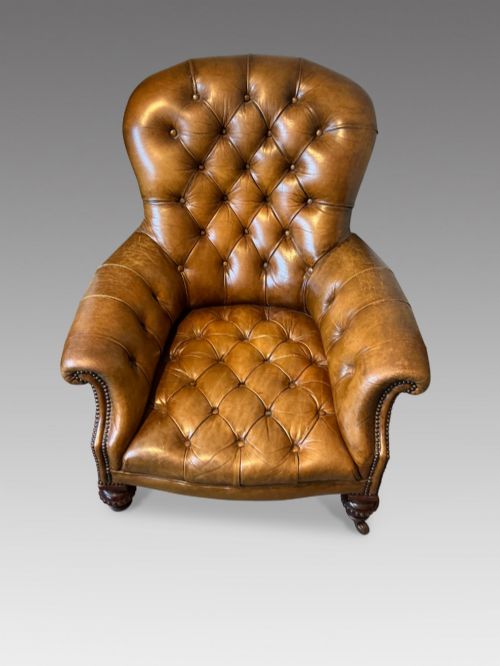
Victorian examples frequently utilise mahogany, walnut, or oak frames paired with button-tufted leather or standard upholstery. Look for carved wooden details, spoon backs, or heavy library proportions typical of the nineteenth century.
Makers of this era also produced revolving desk chairs and low fireside seating with brass studding.
Are these armchairs suitable for daily use?
Most of these seating forms were built for studies, libraries, and parlours using durable hardwoods and thick leather hides. Their robust construction allows them to function well in modern living spaces.
Condition varies by age, so check the integrity of the internal padding and frame stability before heavy use.
How do Art Deco leather chairs differ?
Art Deco pieces from the twentieth century lean towards rounded silhouettes and streamlined tub chair forms. They often utilise cream or coloured leather without the heavy carved woodwork seen on earlier Victorian or Georgian furniture.
Pairs of these club chairs provide a distinct modern aesthetic compared to traditional library seating.