
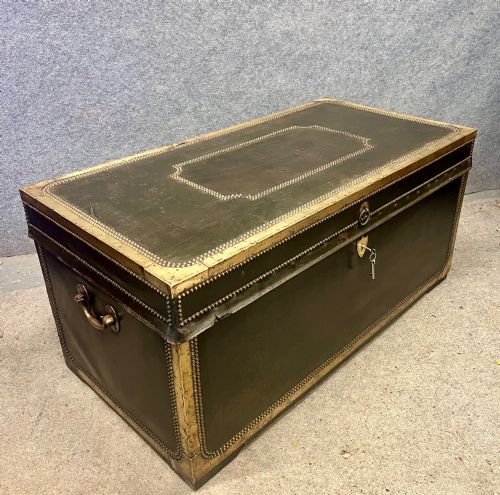

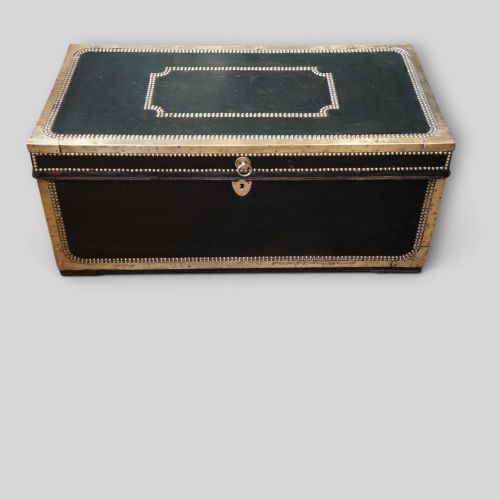
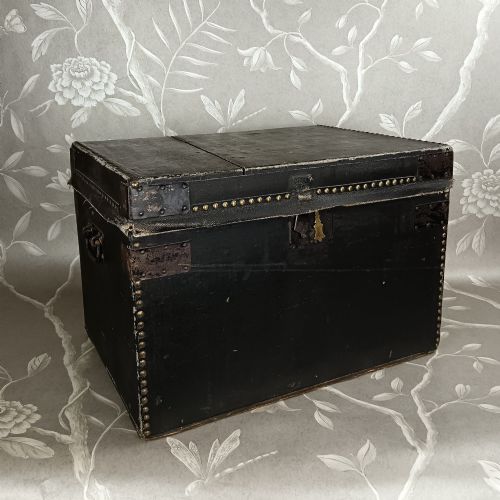
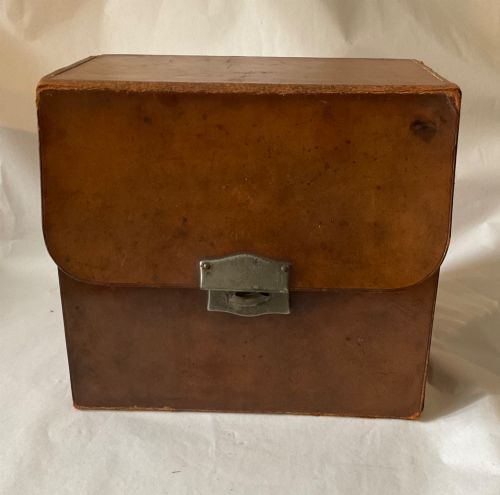



Leather Travelling Chest
These leather travelling chest examples are durable luggage designed for transit, offering buyers authentic period storage with historic character.
Leather Travelling Chest
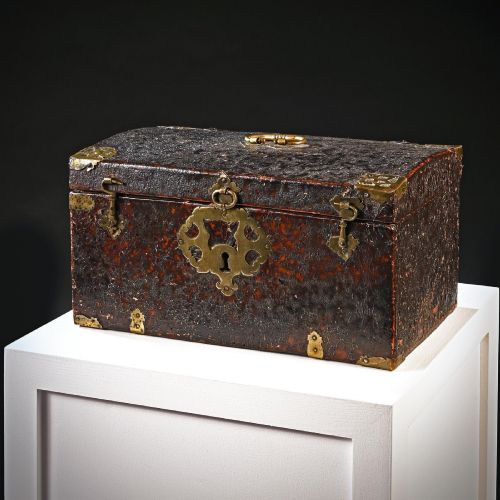
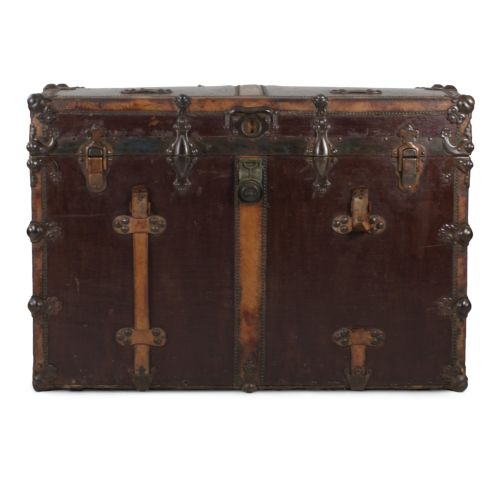
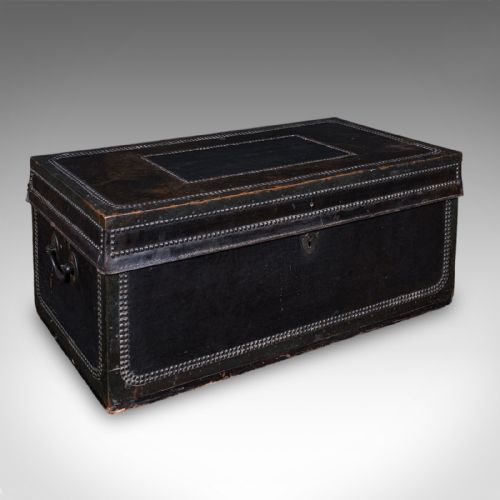
A leather travelling chest serves as robust luggage and portable storage from centuries past, designed to endure long journeys by coach, ship or train. The versions you meet most frequently on this page span the seventeenth century through to the early twentieth century, including Victorian, Regency and Edwardian pieces.
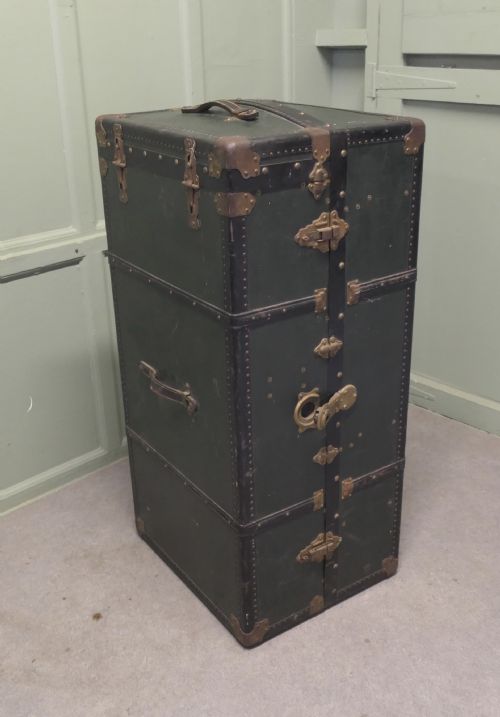
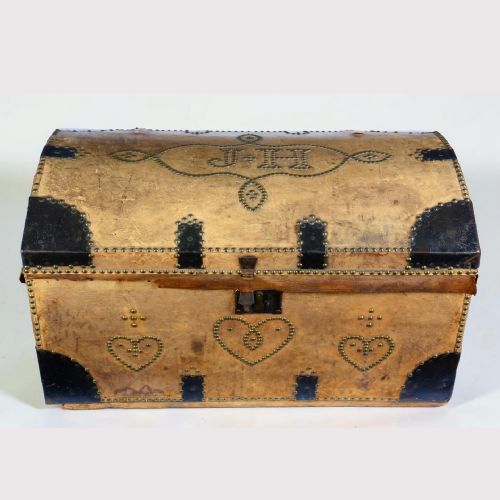
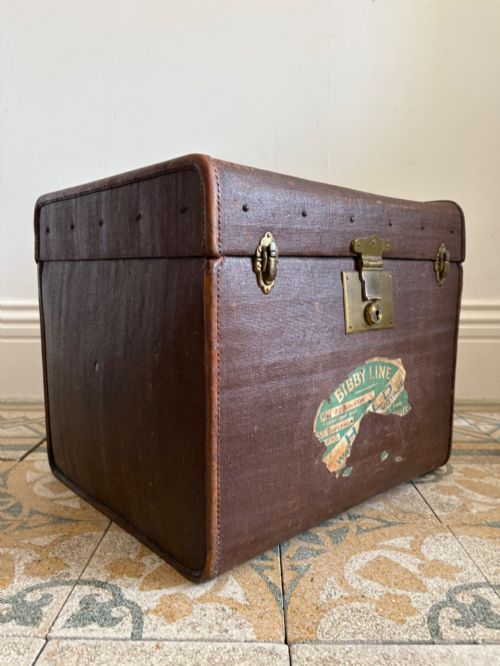
The forms range from dome-top coffers and flat-topped campaign trunks to fitted wardrobe trunks and smaller apothecary cases or hat boxes. Many pieces show origins across Britain, France, China Trade routes and the Netherlands, reflecting the global movement of their original owners.
Structurally, these items function as practical storage furniture in modern homes, providing substantial internal capacity while displaying the marks of genuine transit. Buyers encounter varieties lined in original fabrics, fitted with internal compartments or stamped with historical monogram initials.
Materials and Construction
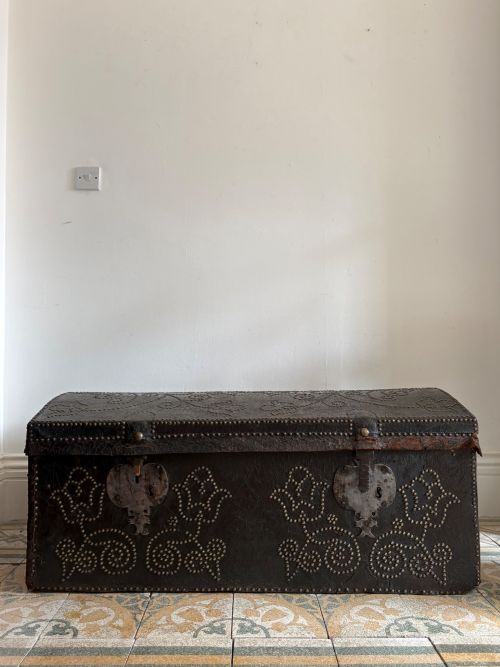
Makers built these pieces using a core of wood, pine, oak or camphor wood, overlaid with animal hide, leather or canvas. Brass studwork, iron bands and metal bindings reinforce the corners and edges to withstand the heavy wear of travel.
Traditional craftsmanship is evident in the hand-stitched seams, applied brass studs and fitted internal compartments designed for specific travel items. Leather handles and carrying brackets complete the construction, secured firmly to the main wooden carcase.
Listings span from the seventeenth century to the 1930s, featuring materials such as camphor wood, hide, canvas and brass.
Assessing Quality and Finish
Quality rests upon the integrity of the core structure, the thickness and preparation of the leather, and the retention of original maker labels or hardware. Finer pieces demonstrate precise brass studwork and robust internal fittings rather than simple storage boxes.
The distinction between standard utility luggage and high-end workshop pieces lies in the precision of the joinery and the selection of materials such as camphor wood or quality hide. Retaining original maker stamps, travel labels and fitted interiors elevates the historical significance of the piece.
Samuel Pratt·Wm. Insall of Bristol·Arthur Wannop·Chapple & Sons·Drew & Sons·Seabrook of St.Pauls·John Pound·Aux Etats Unis·Louis Vuitton
The Leather Travelling Chest Glossary
- Campaign trunk
- A robust chest designed for military officers or travellers on active service abroad, usually featuring recessed brass handles and reinforced corners for easy transit.
- Dome top
- A curved lid construction designed to shed rain effectively during carriage travel and provide extra vertical internal space for bulky garments.
- Studwork
- Decorative and functional brass or metal pins hammered into the leather exterior in geometric patterns to secure the hide and reinforce the edges.
- Portmanteau
- A large travelling case or suitcase, typically made of leather, that opens into two distinct compartments for clothing and personal items.
- Camphor wood
- An aromatic timber frequently utilised in China Trade chests to repel insects and protect stored textiles from humidity during ocean voyages.
Leather Travelling Chest: Frequently Asked Questions
How were leather travelling chests used originally?
These chests accompanied owners on coaches, ships and early rail journeys to transport clothing, valuables and personal equipment safely.
Their robust construction protected contents from rough handling and the elements while moving between destinations.
Where can I use a leather travelling chest at home?
They function well as coffee tables, end-of-bed blanket storage, or statement placement in a hallway.
Their internal capacity makes them practical for hiding everyday clutter while adding historic character to a room.
How do I care for antique leather on a trunk?
Maintain the material by applying specialist leather balms sparingly to prevent the hide from drying out over time.
Keep them away from direct heat sources and strong sunlight to preserve the original colour and finish.
How can I tell the period of a travelling chest?
Dating relies on examining the construction methods, lock types, lining fabrics and any maker stamps or shipping labels.
Earlier examples from the seventeenth and eighteenth centuries often feature hand-wrought ironwork, whereas nineteenth-century pieces display refined brass hardware.