


Brown Leather Steamer Trunk
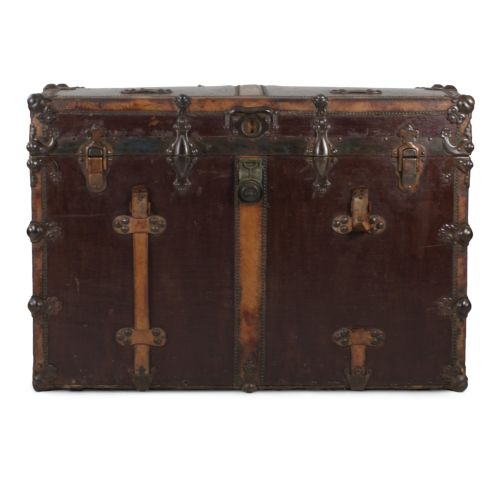
These brown leather steamer trunk pieces are robust travel companions built for long journeys, offering both practical storage and rich historical character.
Brown Leather Steamer Trunk
When you search for a brown leather steamer trunk, you encounter sturdy luggage designed to fit into the restricted storage spaces of ocean liners and early trains. The pieces seen here span the Victorian, Edwardian, and Art Deco periods, encompassing the late nineteenth century through to the 1930s.
Most examples combine leather with materials such as canvas, wood, oak, and metal to withstand the rigours of international transit. Forms range from standard travel trunks and storage chests to fitted wardrobe trunks, dome top chests, and compact hat boxes.
Origin points include British workshops and notable continental makers, reflecting the demands of early twentieth-century global travel. Buyers typically meet traditional campaign styles alongside refined Parisian luxury pieces.
How they were made
Construction relies upon a robust internal frame of wood or oak, clad in layers of leather, canvas, or metal to protect contents from moisture and impact. Artisans reinforced corners and edges with brass and iron brackets, securing them with heavy studs and rivets.
Interior organisation often featured fitted wooden compartments, trays, and hanging rails tailored for travelling wardrobes. Exterior surfaces utilised treated leather and durable canvas, finished with metal locks and leather carrying handles.
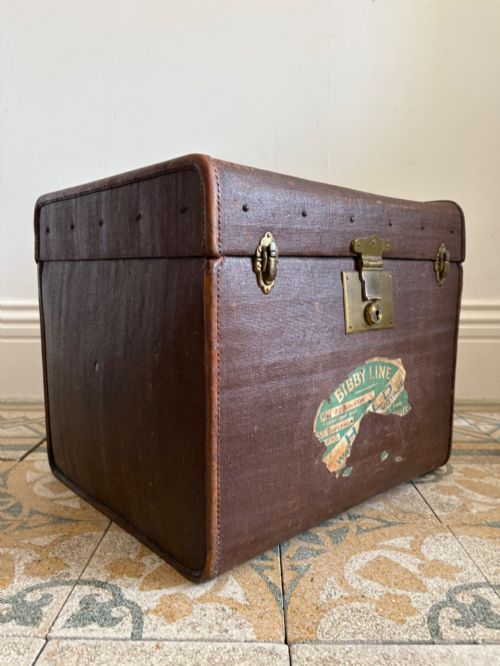
Many Edwardian trunks still retain faint travel labels from steamship lines, offering silent testimony to forgotten global voyages.
What varies in quality
Quality differentiates standard utility luggage from bespoke luxury pieces produced by prominent makers. The sophistication of internal fittings, the choice of fine leather over basic canvas, and the refinement of brass hardware set superior examples apart.
The integrity of the internal wooden frame and the original condition of the linings also dictate the standing of a trunk. Pieces retaining functional locks, original keys, and intact maker markings command greater attention.
Army and Navy·Aux Etats Unis of Paris·Louis Vuitton·W Insall
The Brown Leather Steamer Trunk Glossary
- Steamer trunk
- A low-profile travel trunk designed specifically to fit beneath the cabin berth of an ocean liner. These pieces prioritised height restrictions without sacrificing internal packing capacity.
- Campaign trunk
- Portable furniture and luggage built for military officers or travellers on extended expeditions. Such items typically feature recessed handles and reinforced metal corners for durability.
- Wardrobe trunk
- A tall trunk that opens vertically to reveal a hanging closet on one side and drawers on the other. This form revolutionised long-distance travel during the early twentieth century.
- Dome top
- A curved lid design intended to prevent luggage from being stacked on top of a trunk, or to shed water effectively during transit. It provides additional vertical clearance inside.
- Hat box
- A specialised, compact storage container proportioned specifically to transport headwear safely. These smaller pieces often accompanied larger luggage sets on journeys.
Brown Leather Steamer Trunk: Frequently Asked Questions
What is a brown leather steamer trunk used for?
These trunks serve as distinctive interior storage solutions for blankets, seasonal clothing, and household items. Their flat tops and sturdy construction also allow them to function well as coffee tables or accent pieces in a room.
Historically, they carried a traveller's entire wardrobe across oceans and continents. Today, they bring tactile history and practical concealment into modern living spaces.
How do I care for leather on a trunk?
Leather surfaces benefit from gentle cleaning and occasional conditioning to maintain suppleness and prevent the material from drying out. Avoiding direct sunlight and excessive moisture preserves both the leather and the underlying wooden frame.
Metal hardware such as brass brackets and iron locks can be kept clean with a soft cloth. Preserving the original patina ensures the piece retains its historical character.
How do I date a steamer trunk?
Dating relies upon examining the materials, construction methods, and hardware styles used in the piece. Victorian and nineteenth-century examples often feature heavy timber frames and simpler iron mountings, while 1920s and 1930s pieces introduce sophisticated internal wardrobe fittings and lighter composite structures.
Maker stamps, labels, and patented lock designs provide further chronological clues. Comparing these details against known production eras clarifies the age of the trunk.
Are these trunks waterproof?
While materials like treated leather, canvas, and metal bindings offered significant protection against rain and sea spray during transit, original trunks are no longer reliably waterproof. Age can cause seals, adhesives, and textiles to degrade.
It is best to keep these pieces in dry indoor environments rather than exposing them to damp conditions. This protects the internal wooden structure from warping.