

Leather Top Oak Table
When you search for a leather top oak table, you enter a world of practical writing surfaces shaped by Victorian and Edwardian utility.
Leather Top Oak Table
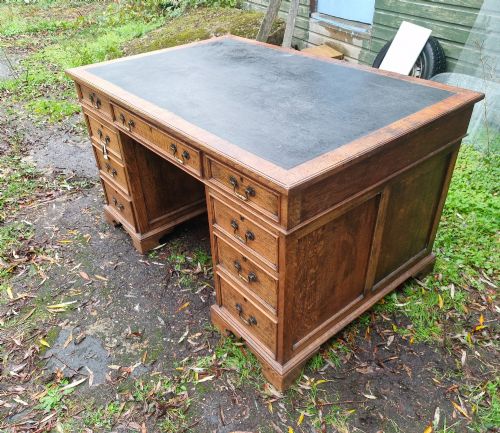
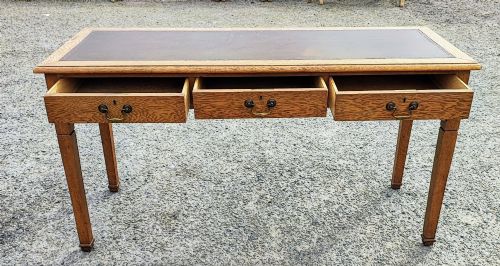
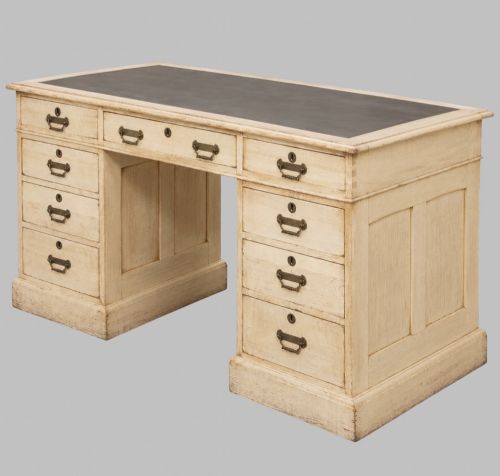
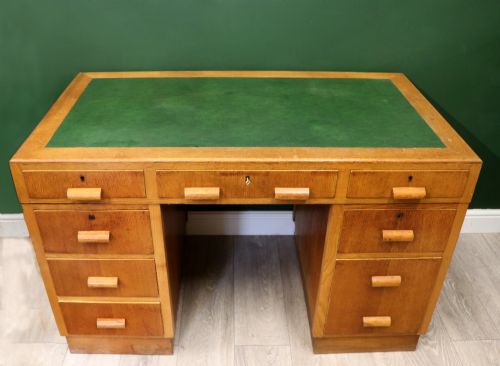
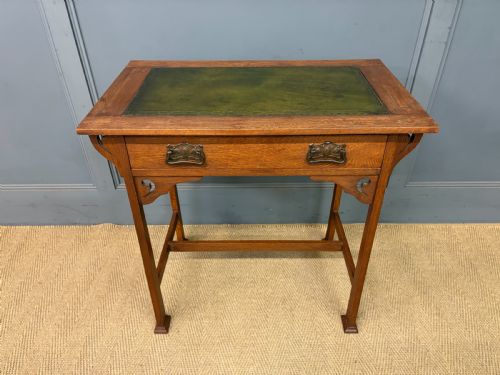
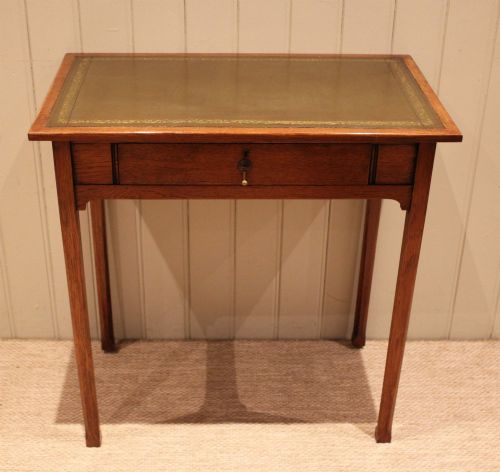
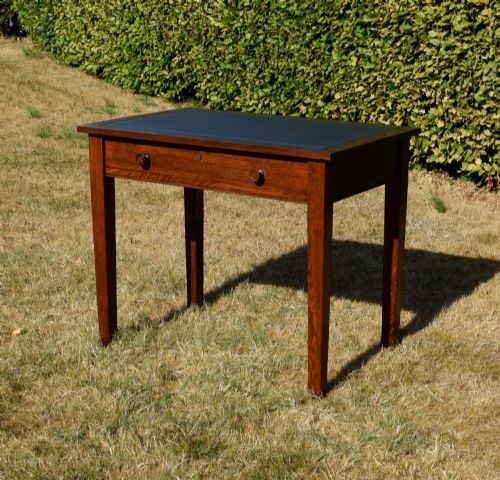
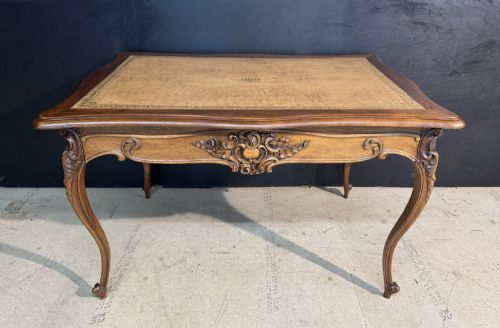
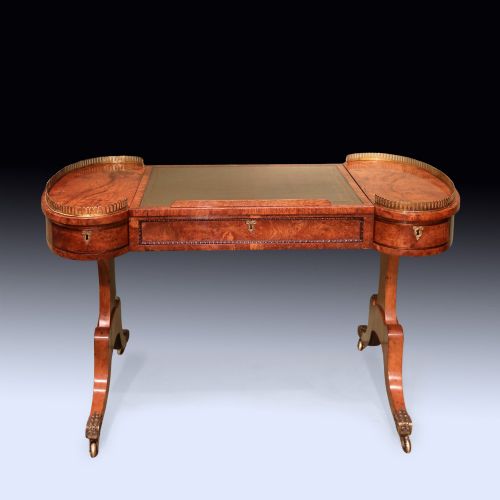
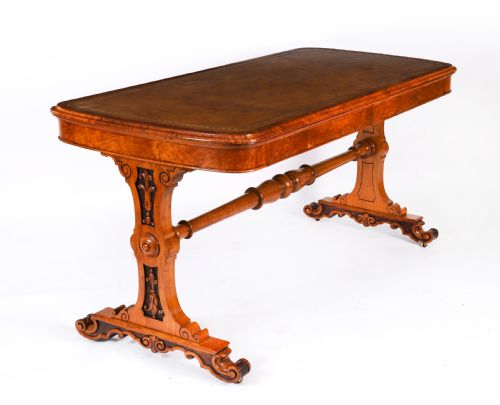
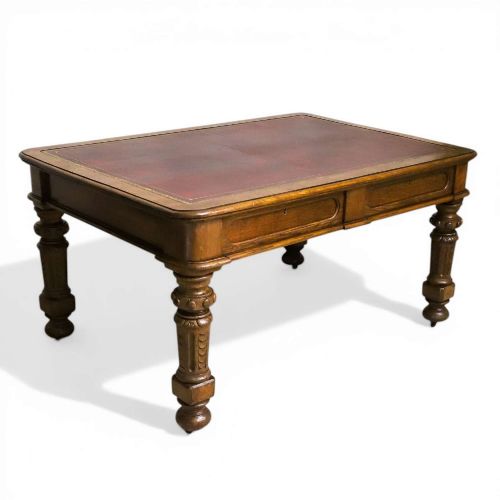
A leather top oak table encompasses a sturdy group of antique furnishings designed for writing, administrative work, and library study. The examples here span from the mid-nineteenth century through the Edwardian period, capturing both domestic country house pieces and formal office desks.
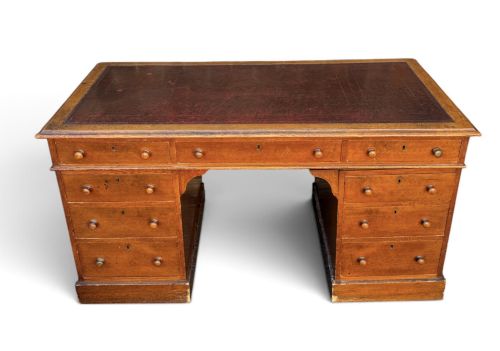
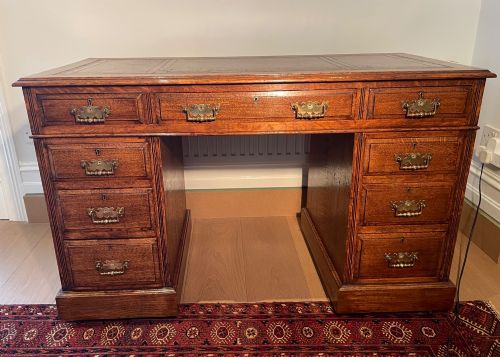
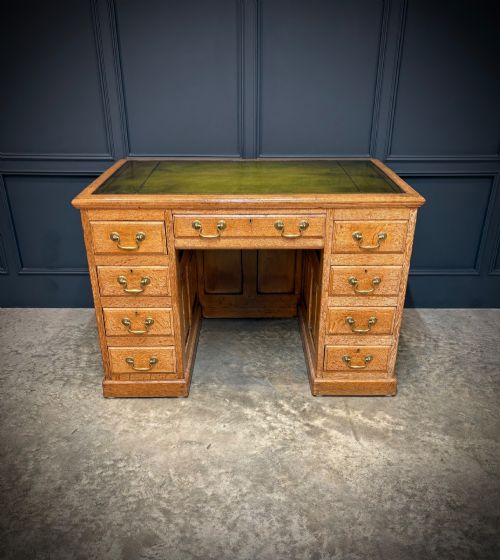
The most common formats on this page are pedestal desks, writing tables, and partners desks. These range from solid oak kneehole configurations to large library tables and octagonal centre tables.
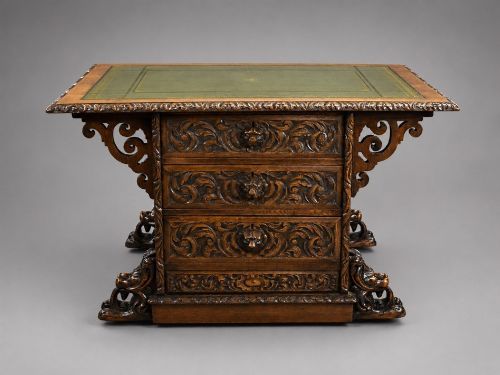
Makers and workshops utilised robust timber frames paired with inset leather surfaces to create functional workspaces. You encounter stylistic influences from the Gothic Revival, Arts and Crafts, and Jacobean Revival movements among these listings.
How they were made
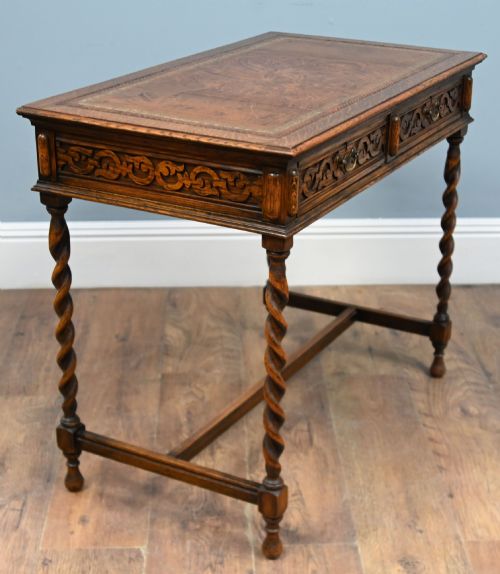
Cabinet makers constructed these tables primarily using solid oak and varied oak veneers such as pollard oak and burr oak, frequently supported by internal pine or mahogany drawer framing. The timber is combined with hand-tooled leather writing surfaces, often edged with gilt tooling.
Hardware details typically include brass handles, drawer pulls, and occasionally brass castors on the feet. Joinery techniques involve traditional dovetailing for drawers and mortise and tenon joints for the main structural frames.
Leather Top Oak Table Retail Price Guide 2026
Typical asking prices for leather top oak table among the pieces listed under this phrase on Sellingantiques today, from the lower quarter to the upper quarter. They describe what is for sale here now, not the wider market.
Some estate manager desks hide secret compartments designed for stashing petty cash and ledger keys.
What varies in quality
The standard of a leather top oak table depends on the selection of timber and the complexity of the cabinet work. Pieces featuring figured pollard oak or burr oak veneers sit alongside solid timber builds, showing varying degrees of carving detail from plain panels to elaborate Gothic Revival motifs.
The condition and retention of the original leather insert heavily influence the character of the piece. Tables bearing maker labels or attributed to established workshops command attention for their documented provenance.
James Shoolbred & Co·Blyth & Son·Gillows
The Leather Top Oak Table Glossary
- Pedestal desk
- A heavy writing desk consisting of two independent pedestals of drawers with a central desktop spanning across them.
- Partners desk
- A large double-sided desk designed for two people to sit opposite one another, featuring drawers on both faces.
- Library table
- A freestanding table utilised in studies or libraries, often finished on all four sides to sit away from walls.
- Pollard oak
- Oak timber taken from trees that have been pollarded, resulting in a dense, knotted grain pattern prized for decorative veneers.
- Kneehole desk
- A compact desk featuring a central recessed space for the user's knees, flanked by columns of small drawers.
Leather Top Oak Table: Frequently Asked Questions
What is a partners desk?
A partners desk is built with storage drawers and cupboards on both sides so two people can work facing each other.
These large tables were traditionally used in banks, legal offices, and grand estate libraries.
How do I care for the leather?
The leather writing surface benefits from gentle cleaning and occasional conditioning with appropriate wax or leather balm.
Avoid using harsh chemical cleaners that can strip the original hand-tooling and gilt accents.
Are these desks good for daily work?
These tables provide generous surface areas and sturdy drawer storage suited for modern writing and study tasks.
Their solid timber construction ensures they handle everyday use comfortably.
How do I date an oak desk?
Dating relies on examining the construction methods, handle styles, drawer dovetailing, and the overall stylistic period influences.
Victorian and Edwardian examples often display distinct design characteristics linked to revival movements of those eras.