
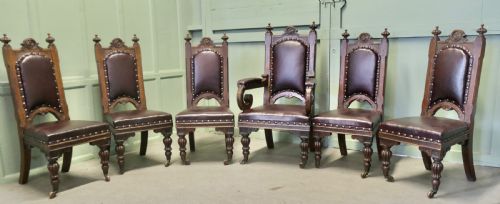
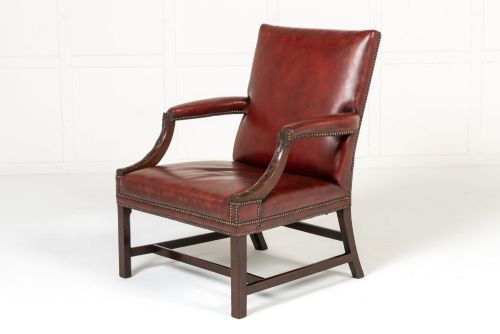
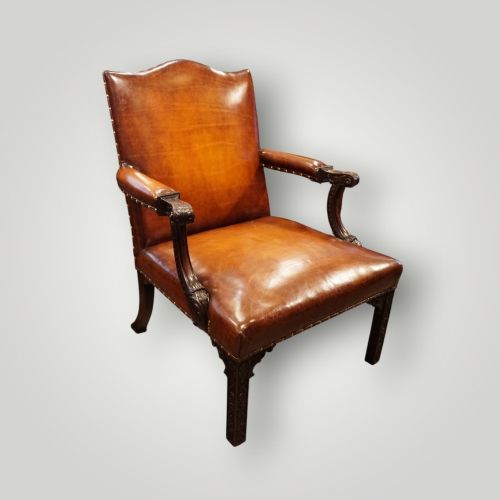
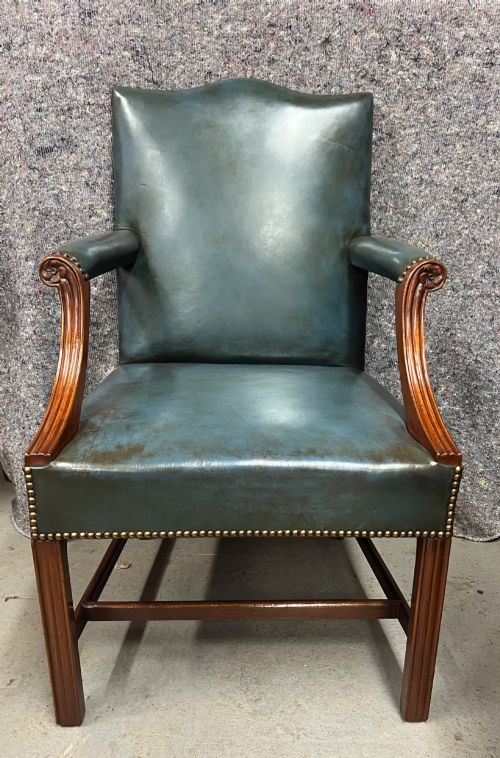
Leather Stud Desk Chair
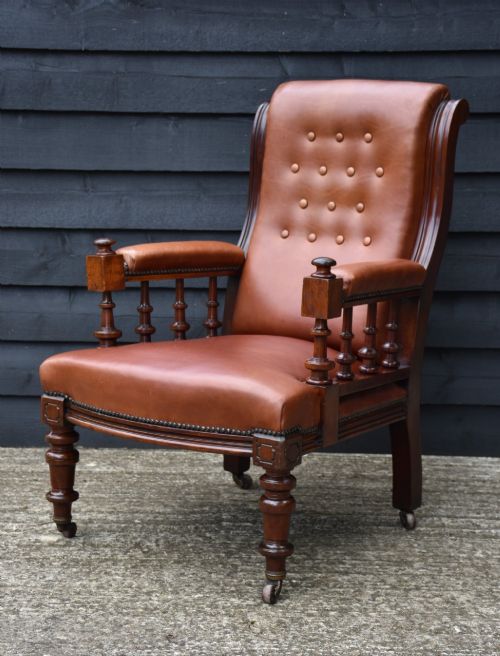
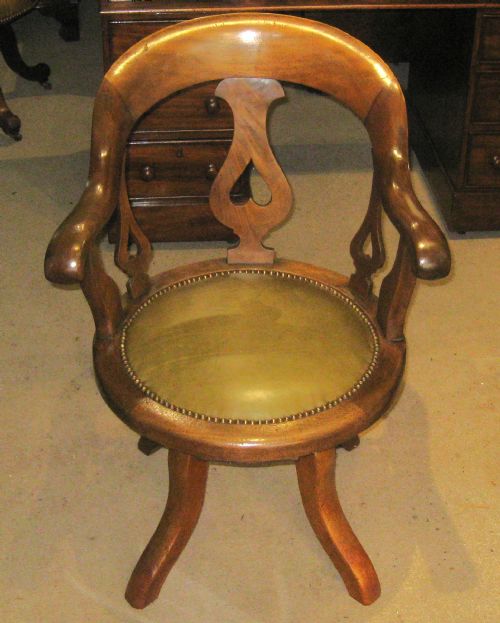
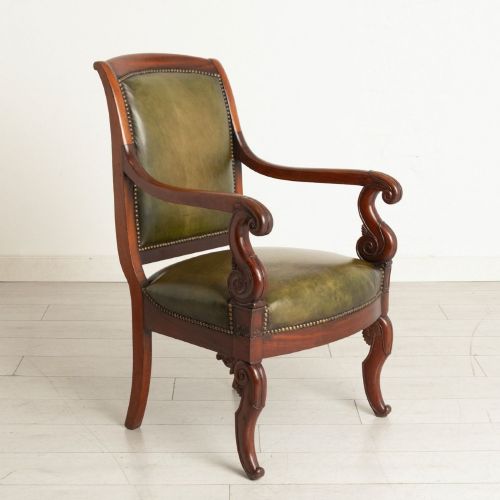
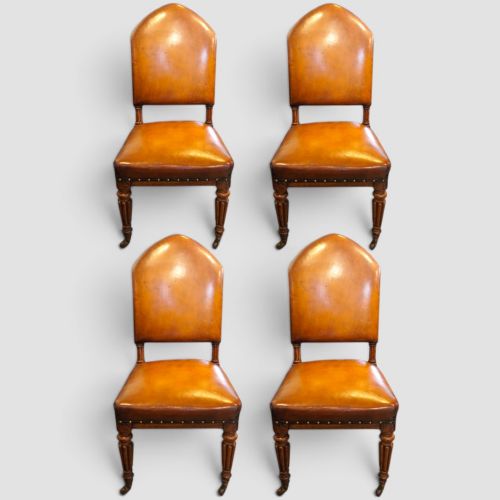
A leather stud desk chair brings heavy hide and brass tack work to a working study, offering a seat built for long hours at a table.
Leather Stud Desk Chair
A leather stud desk chair combines a sturdy timber frame with upholstered hide secured by metal pins, providing firm support for writing and administrative tasks.
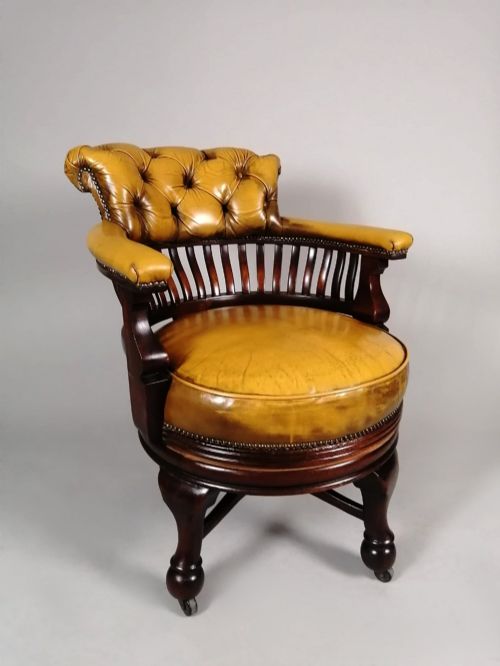
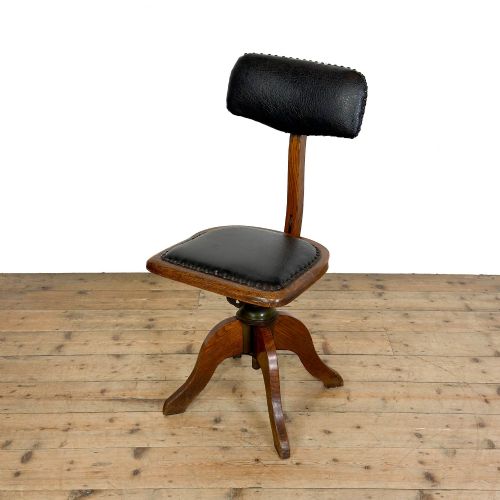
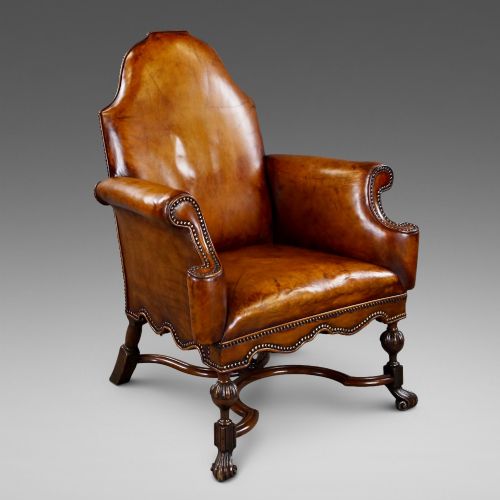
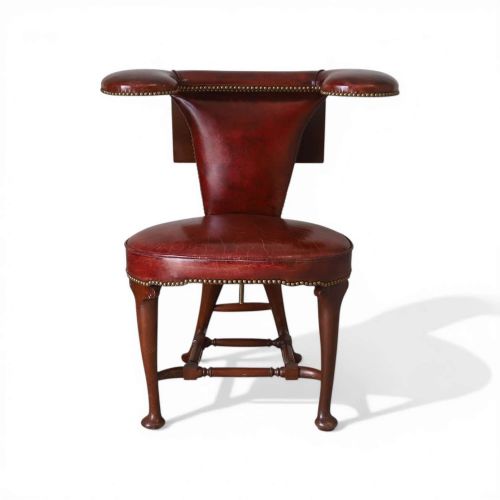
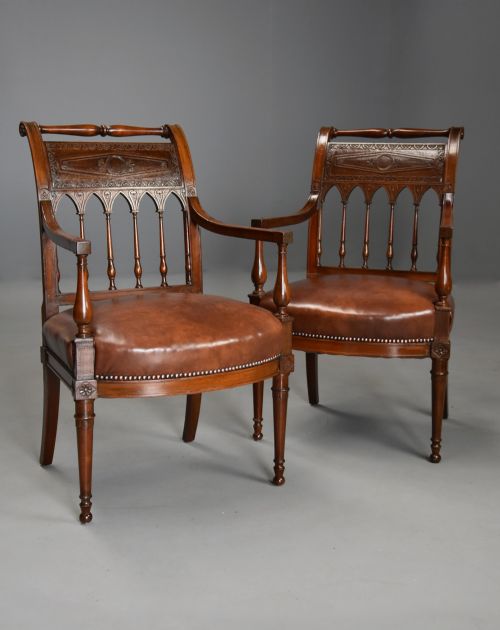
The versions met most often on this page span the Victorian and Edwardian eras through to the early decades of the twentieth century, taking the form of swivelling captain's chairs, library armchairs and heavy oak office seats.
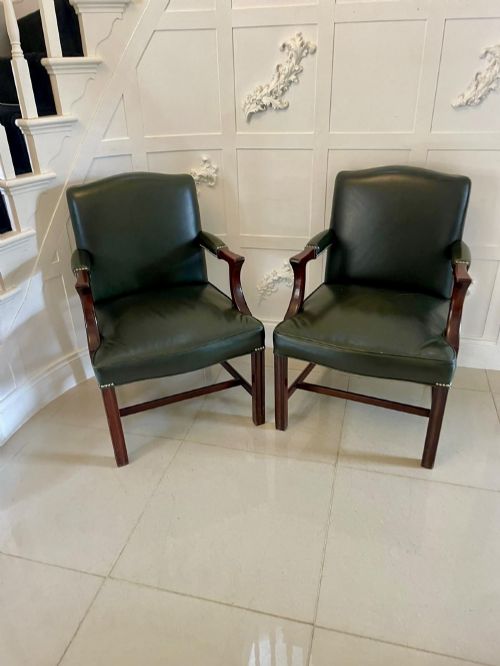
Makers drew on Georgian and Regency proportions, adapting Gainsborough and scroll-arm designs into functional seating fitted with revolving mechanisms or sturdy legs.
Construction and materials
Frames rely on dense timbers such as mahogany, oak, walnut and occasionally beech or burr elm, joined to withstand daily movement and weight.
Upholstery consists of leather stretched over padding and fastened along the edges with brass studs, which pin the hide firmly to the wooden rail.
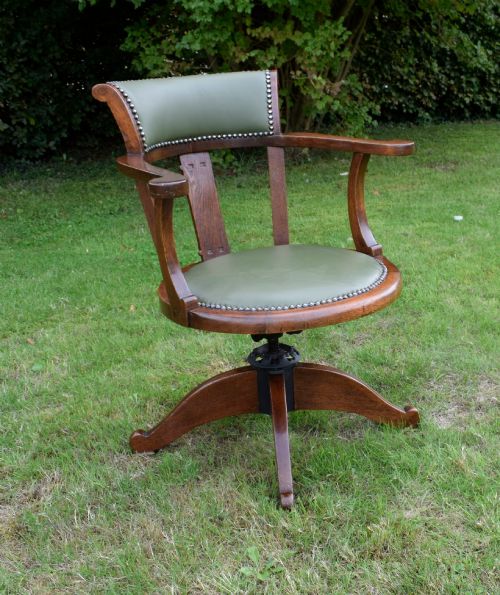
Swivelling examples incorporate iron and cast iron components beneath the seat to allow tilting and rotation.
Listings span the nineteenth and early twentieth centuries, featuring mahogany, oak, walnut and beech frames paired with brass and cast iron.
Judging the standard
Quality rests in the weight of the timber and the depth of the carving, distinguishing heavy mahogany or figured walnut frames from simpler utility pieces.
The treatment of the leather dictates the tactile standard, separating hand-dyed hide with subtle patination from flat, uniform modern replacements.
Joinery execution on revolving and tilting mechanisms reveals the original maker's intent, separating standard office output from bespoke library seating.
W.Williamson & Sons
The Leather Stud Desk Chair Glossary
- Gainsborough chair
- A wide-seated, open-armed armchair with a padded back and seat, typically standing on square-section legs.
- Captain's chair
- A low-backed revolving armchair with a curved top rail supported by spindles, designed for ship cabins and later adopted for offices.
- Brass studs
- Metal tacks with decorative heads hammered in a row to secure leather upholstery to the wooden frame.
- Burr elm
- Timber taken from the gnarled growth of an elm tree, prized for its swirling grain patterns on chair backs.
- Scroll arm
- A wooden armrest carved in a continuous inward-curving spiral, commonly seen on nineteenth-century library seating.
Leather Stud Desk Chair: Frequently Asked Questions
What is a leather stud desk chair?
A leather stud desk chair is a traditional work seat upholstered in hide and fastened with brass tacks along the frame. These pieces were built for studies, offices and libraries to provide durable support.
They combine timber frames in mahogany, oak or walnut with mechanical swivel bases or fixed legs. The style ranges from simple Edwardian office seats to grand library armchairs.
How do I identify Victorian examples?
Victorian models often feature deep buttoning, scroll arms and rich mahogany or oak frames. They frequently include revolving mechanisms supported by cast iron.
Look for heavier proportions and darker timber patination that indicate nineteenth-century workshop practices.
Were these chairs used in offices?
Many of these chairs served as functional office and study seating from the nineteenth century onward. Swivel and tilt mechanisms allowed clerks and professionals to move freely.
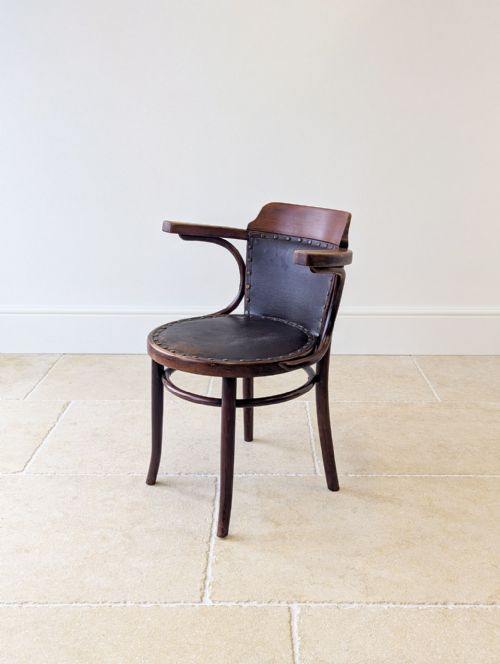
Robust oak and bentwood versions were specifically built for commercial workspaces and administrative rooms.
How do I care for the leather?
Leather upholstery benefits from gentle cleaning and occasional conditioning to maintain the hide's natural flexibility. Keeping the material away from direct heat sources prevents drying and cracking.
The brass studs require simple dusting to preserve their metallic finish alongside the timber frame.