


Antique Study Arm Chair
When searching for an antique study arm chair, buyers encounter seating designed for libraries, writing desks, and offices across several centuries.
Antique Study Arm Chair
An antique study arm chair provides supportive seating for reading, writing, and administrative tasks in domestic and institutional settings. These chairs bridge the gap between formal parlour seating and functional office furniture.
The selections available range widely in form and period, spanning Georgian and Regency library chairs through to Victorian and Edwardian swivel desk seats. Mahogany, oak, and walnut frames appear frequently alongside leather, fabric, and cane upholstery.
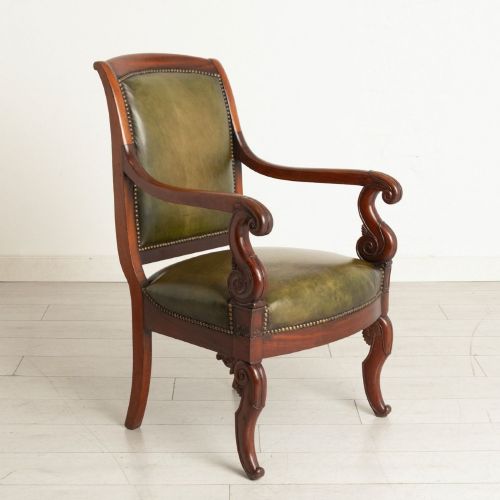
Library armchairs and desk chairs encountered on this page often feature supportive scroll arms, padded backs, and occasionally adjustable height mechanisms or revolving bases dating from the nineteenth and early twentieth centuries.
How They Were Made
Frames rely on dense hardwoods such as mahogany, oak, walnut, and rosewood, shaped through traditional joinery and occasional carving. Cabinetmakers utilised sturdy timbers to withstand the physical demands of daily desk work and library use.
Upholstery techniques combined horsehair and coil springs beneath coverings of leather, velvet, or woven fabric, secured with brass tacks or piping. Swivel models incorporated iron and brass mechanical components to allow rotational movement and height adjustment.
Listings feature study armchairs spanning the Regency, Victorian, Edwardian, and Georgian periods, constructed from mahogany, oak, walnut, rosewood, leather, and cane.
What Varies in Quality
Quality rests primarily in the timber selection, frame integrity, and the sophistication of the joinery and carving. Superior examples display carefully figured mahogany or walnut veneers, tightly fitted joints, and robust structural framing that endures heavy use.
The refinement of secondary materials also dictates value, from the depth of hand-tooled leather hides to the precise engineering of swivel mechanisms and brass castors. Retaining original upholstery methods and period hardware elevates an individual piece above heavily altered counterparts.
J S Ford Johnson Chicago
The Antique Study Arm Chair Glossary
- Bergere
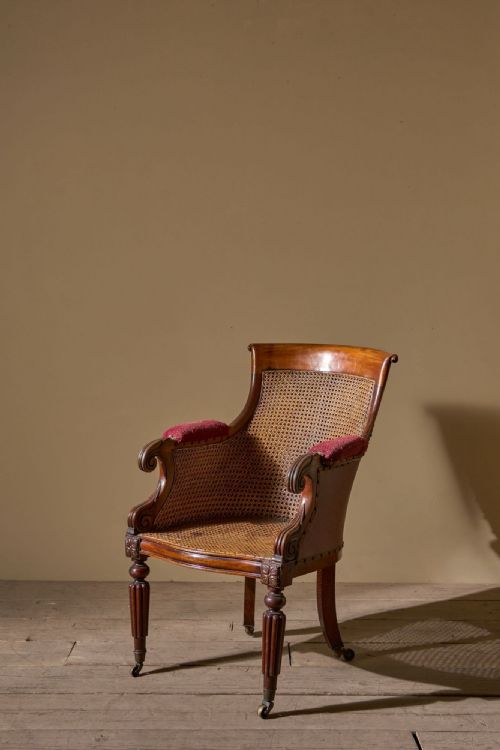
- An upholstered armchair with enclosed cane panels on the back and sides. This French-inspired form gained popularity during the Regency period.
- Gainsborough armchair
- A wide, open-armed easy chair with a padded back and seat, typically set on square legs. These chairs were designed for writing desks and libraries during the eighteenth century.
- Carver chair
- A sturdy wooden armchair, often used at the head of a dining table or as a desk seat. The term distinguishes armed wooden seats from matching side chairs.
- Tub armchair
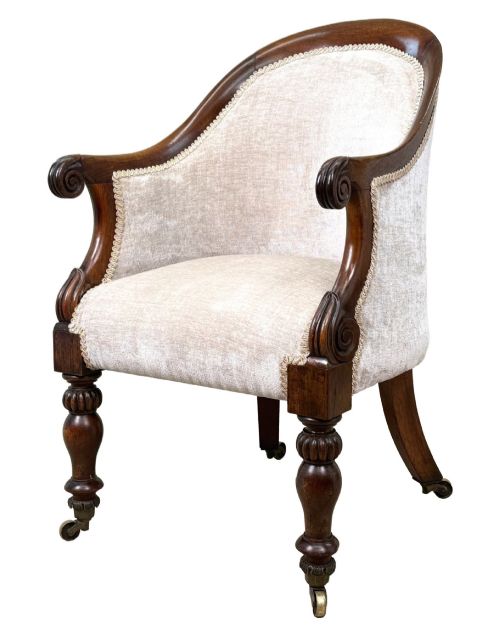
- A comfortable seat featuring a continuous curved back and arms that form a single enclosed bucket shape. They often appear in libraries and private studies.
- Swivel desk chair
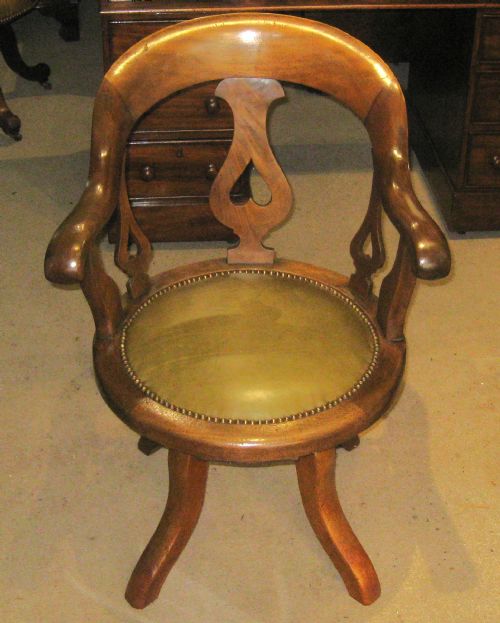
- A revolving seat mounted on a central pillar with legs and castors, allowing movement around a workspace. Edwardian and late Victorian iterations frequently include adjustable height screws.
Antique Study Arm Chair: Frequently Asked Questions
How do I date an antique study arm chair?
Dating relies on observing wood species, construction methods, and hardware styles across different eras. Georgian and Regency pieces favour solid mahogany with hand-cut joinery, while later Victorian and Edwardian examples introduce iron swivel mechanisms and alternative timbers like oak or walnut.
Upholstery style and the presence of patent markings or maker stamps also help pinpoint a decade of manufacture. Comparing secondary woods and interior framing details against documented historical examples confirms the period.
Were these chairs used only for writing?
While intended for writing desks and administrative duties, these armchairs served multiple domestic functions in libraries, drawing rooms, and studies. Their ergonomic proportions made them suitable for prolonged reading sessions and quiet contemplation.
Many heavier library chairs were designed to remain static near bookshelves, whereas lighter revolving models accommodated active desk work. Over time, owners repurposed them freely between bedrooms, studies, and reception rooms.
What is the difference between a library chair and a desk chair?
Library chairs often prioritise deep upholstery and comfortable armrests for reading, whereas desk chairs lean toward mobility and upright support for writing tasks. Desk variants frequently incorporate revolving swivel bases, adjustable height screws, or compact frames to fit beneath writing tables.
Despite these general tendencies, makers frequently crossed boundaries, producing open-armed carvers and leather-upholstered seats that functioned equally well in either environment.
How do I care for leather upholstery on an antique chair?
Leather surfaces require gentle cleaning with a damp cloth and occasional treatment with appropriate conservation balms to prevent drying and cracking. Avoiding direct sunlight and excessive heat preserves the natural hide and maintains historical patination.
Harsh chemical detergents and modern synthetic conditioners should be avoided entirely, as they strip natural oils and alter the historic surface texture. Regular dusting prevents particulate buildup in the creases of buttoned upholstery.