




Leather Occasional Chair
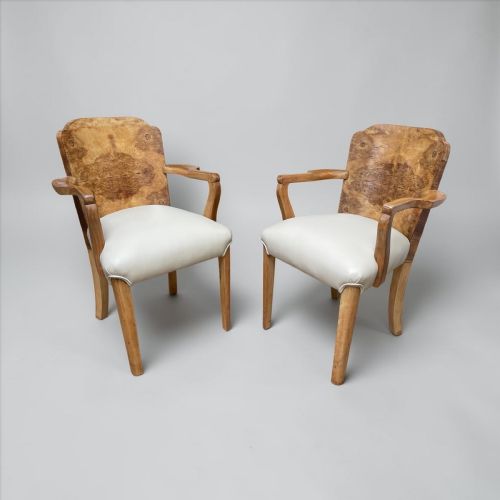
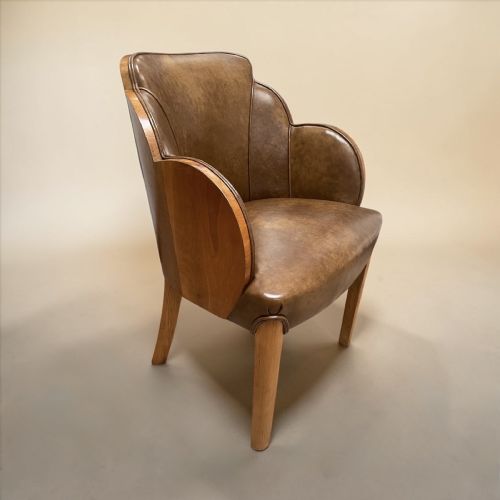
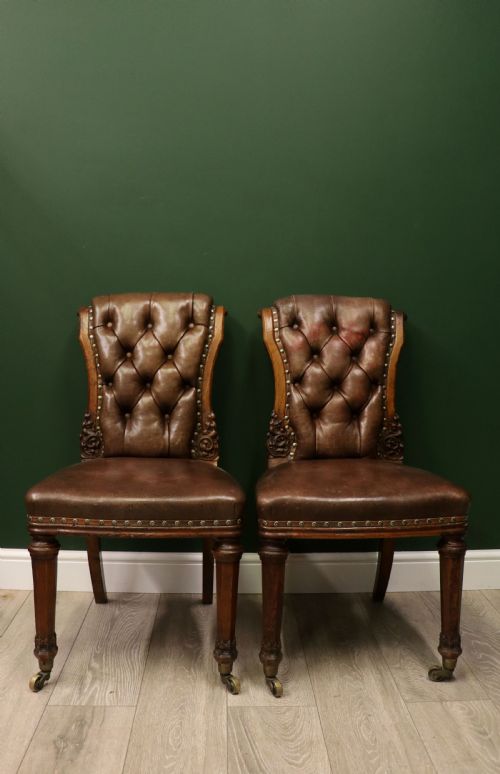
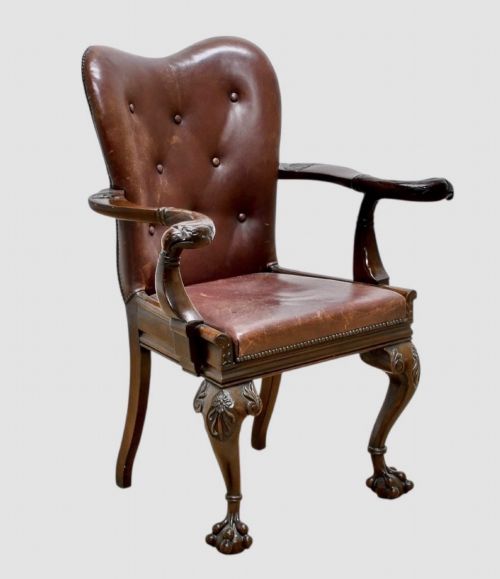
These leather occasional chair pieces offer compact, movable seating scaled for sitting by a fireside or writing at a desk, combining timber frames with supple hides.
Leather Occasional Chair
A leather occasional chair is a portable seat designed to be moved easily between rooms for reading, resting or desk work. The pieces gathered under this phrase span periods from the Georgian year 1800 through Victorian, Edwardian, and Art Deco eras up to 1930.
You will encounter armchairs, side chairs, rocking chairs, and desk armchairs among the forms. Materials range from oak, walnut, mahogany, burr walnut, and beech to wrought iron and veneered wood, upholstered in leather and accented with brass.
Stylistic expressions vary widely across the selection, encompassing Victorian, Regency, Jacobean Revival, Arts and Crafts, French Riviera, and Art Deco designs. Buyers frequently find pairs alongside individual seating options.
Materials and Construction
Makers built the foundational frames using solid hardwoods like oak, mahogany, walnut, and beech, alongside veneered wood and wrought iron. Artisans shaped these timbers through carving, turning, and joinery techniques suited to each respective period.
Upholstery departments integrated leather hides across seats, backs, and armrests, sometimes employing deep buttoning. Metal elements such as brass studs or structural brass components appear alongside timber frames to secure and finish the upholstery.
Listings feature items utilising oak, mahogany, walnut, burr walnut, beech, wrought iron, brass, and leather across the Victorian, Edwardian, and Art Deco periods.
Judging Quality
Quality rests upon the integrity of the timber framing and the proportion of the silhouette. Superior examples display precise joinery and well-figured wood grains, such as burr walnut or figured mahogany, rather than plain structural timber.
The standard of the leather upholstery and its secondary materials dictates the finish at the upper end. Finer pieces demonstrate careful hide selection and disciplined application of details like brass work.
Hille·Harry and Lou Epstein·Gillows
The Leather Occasional Chair Glossary
- Occasional chair
- A movable seat intended to be brought out for visitors or used in various rooms as needed. These pieces are typically lighter than primary dining or heavy library seating.
- Bridge chair
- A compact armchair designed originally for card games like bridge. They offer comfortable support without heavy proportions.
- Tub chair
- An armchair featuring a rounded, enclosed back that curves continuously into the arms. This shape provides an enveloping seat.
- Burr walnut
- A veneer taken from the gnarled growth of a walnut tree. It yields highly figured, swirling patterns prized in cabinet making.
- Gainsborough armchair
- A wide, upholstered seat with an open wooden frame, short armrests, and padded arm pads. Originating in the eighteenth century, it serves well at a desk or table.
Leather Occasional Chair: Frequently Asked Questions
Where should I place a leather occasional chair?
These seats suit corners of bedrooms, studies, or living rooms where extra seating is useful without crowding the floor plan. Their movable nature allows them to shift easily as room layouts change.
Because they bridge the gap between decorative furniture and functional seating, they function well beside tables or near reading lamps.
How do I care for antique leather upholstery?
Keep leather away from direct sunlight and heat sources to prevent the hide from drying out over time. Regular gentle dusting preserves the surface.
Apply appropriate leather balms sparingly when the material feels dry, testing any treatment on a hidden area first.
Are these chairs comfortable for daily use?
Many of these pieces were built for reading or resting and provide supportive seating. The presence of arms and padded backs varies by the specific form, from open side chairs to deep tub designs.
Consider whether you need a desk armchair for upright work or an easy chair for relaxed lounging.
How can I tell the period of a chair?
Examine the timber species, turning styles, and structural joinery, which often point to specific eras like Victorian or Art Deco. Stylistic cues such as geometric lines or carved mahogany details align with their decade of origin.
Comparing construction methods against documented period pieces helps clarify the date.