






Leather Insert Table
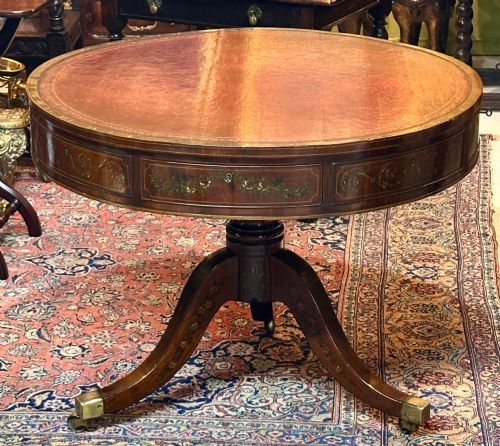
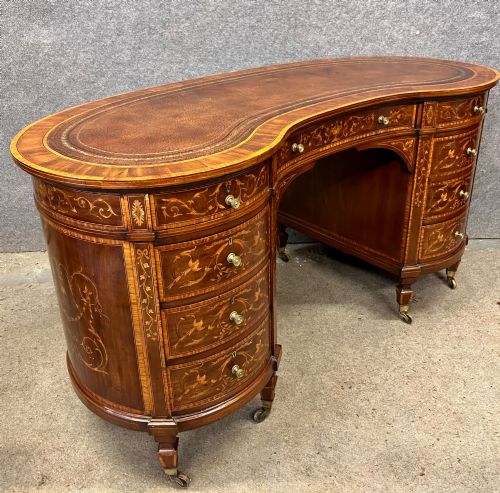
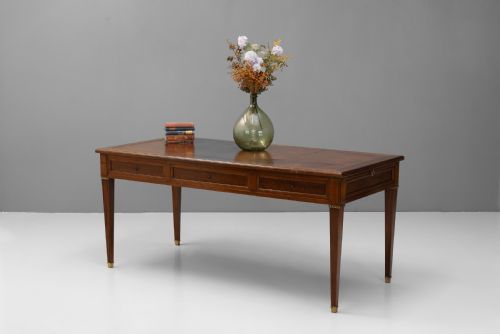
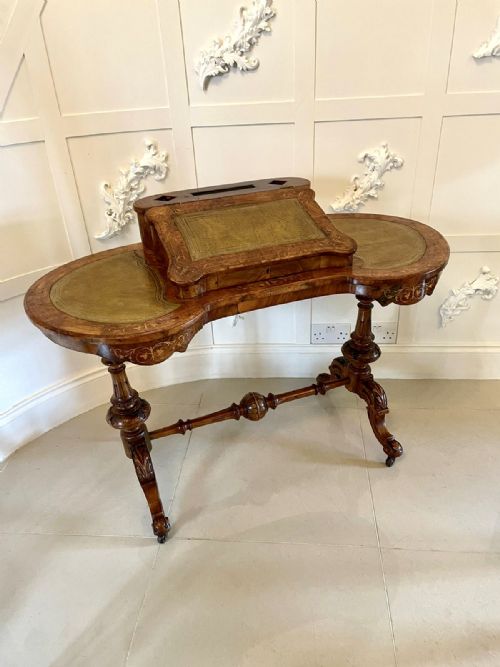
A leather insert table brings a durable leather writing surface to traditional forms like desks, drum tables, and side tables.
Leather Insert Table
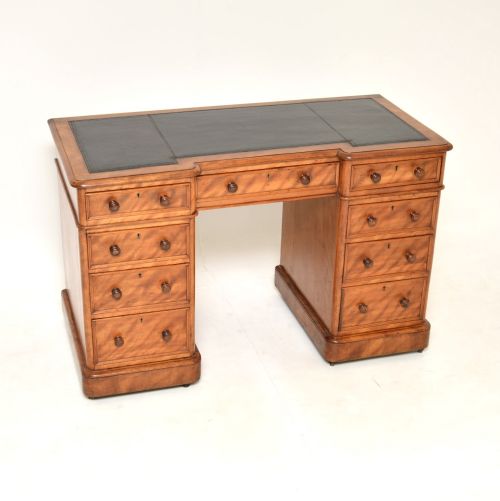
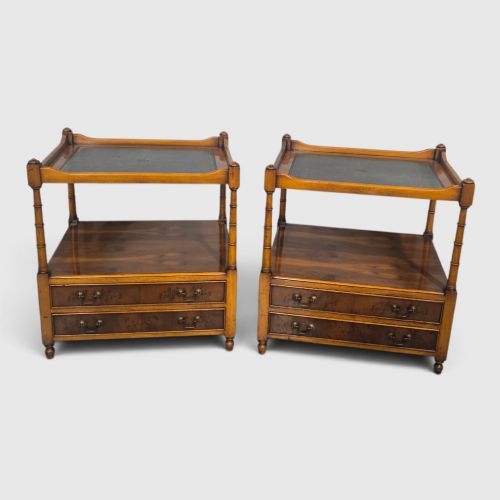
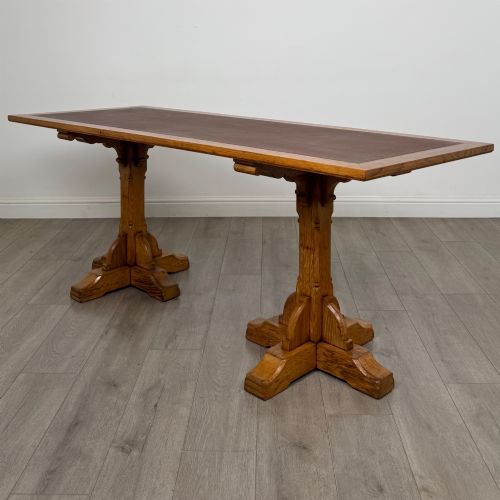
A leather insert table combines a functional wooden framework with a dedicated writing surface set directly into the top. These pieces serve primarily as desks, writing tables, library tables, and occasional tables across multiple historical periods.
The selections span from Regency and William IV examples through Victorian pedestal desks to Edwardian occasional tables. Mahogany and oak form the backbone of these pieces, alongside select examples in satinwood, rosewood, and burr walnut.
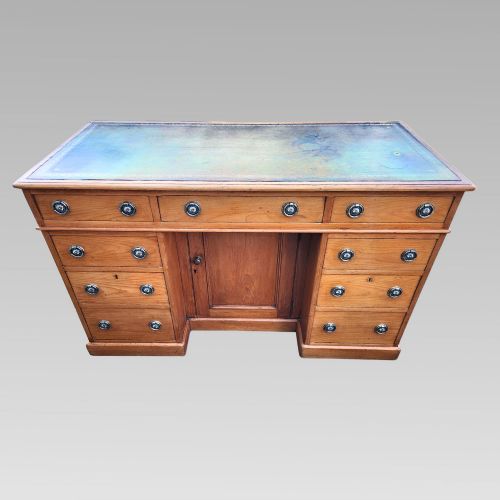
Writing tables and twin pedestal desks represent the most common configurations on this page. Side tables and coffee tables also appear frequently with leather surfaces integrated into their wooden tops.
How they were made
Cabinet makers constructed the foundational frames using dense timbers like mahogany, oak, and rosewood, often incorporating secondary woods for internal drawer linings. Veneers of satinwood, burr walnut, and mahogany were applied to primary surfaces for visual depth.
The leather insert was typically trimmed with gold leaf tooling around the perimeter and recessed directly into the wood. Brass fittings, including drawer pulls, casters, and occasional ormolu mounts, completed the construction of these tables.
Listings span from Regency and William IV eras through Victorian and Edwardian periods, utilising oak, mahogany, satinwood, and rosewood.
What varies in quality
The refinement of the timber and the crispness of any carved detailing or inlay separate standard examples from finer pieces. Cabinet making quality shows in the tight tolerances of drawer construction and the stability of pedestal framing.
The execution of the leather insert and its surrounding gold leaf tooling indicate the original grade of the commission. Finer tables exhibit superior selection of figured veneers and heavier, more substantial brass hardware.
Howard & Sons·Willmington & Cope·Gillows of Lancaster·Maple & Co
The Leather Insert Table Glossary
- Pedestal desk
- A heavy writing desk supported by two separate stacks of drawers flanking a central kneehole. These pieces often feature a leather insert top.
- Gold leaf
- Extremely thin gold beaten into sheets, applied to leather inserts and wooden details for decorative tooling. This material catches the light along the borders of the writing surface.
- Ormolu
- Gilded bronze mounts applied to the corners and legs of finer tables. This French technique adds metallic contrast to dark woods.
- Inlay
- A decorative technique where contrasting woods or metals are fitted into the primary surface of the furniture. This method outlines drawers and tabletops.
Leather Insert Table: Frequently Asked Questions
What is a leather insert table used for?
These tables served as writing desks, library tables, and functional surfaces for correspondence in period homes. The inset leather provided a smooth, non-glare surface for writing with ink.
Today, they function as practical writing desks or striking centre tables in studies and living spaces.
How do I tell a Victorian table from a Regency one?
Regency tables generally display cleaner classical lines, often utilising rosewood or mahogany with restrained brass mounts. Victorian examples tend to be heavier, featuring denser carvings or elaborate burr walnut veneers.
Examining the construction methods and secondary timbers helps confirm the exact period of manufacture.
Are the leather inserts original?
Many surviving tables retain their original leather, though frequent use often necessitated period or later replacements. Original leathers typically show authentic patination and age-appropriate wear.
Replacement leathers are common and chosen to match historical tooling styles.
How should I care for the leather top?
The leather surface benefits from occasional conditioning with specialised balms to prevent drying and cracking. Avoid using harsh chemical cleaners that can strip the gold leaf tooling.
Keeping the table away from direct sunlight preserves the rich colour of both the wood and the leather insert.