
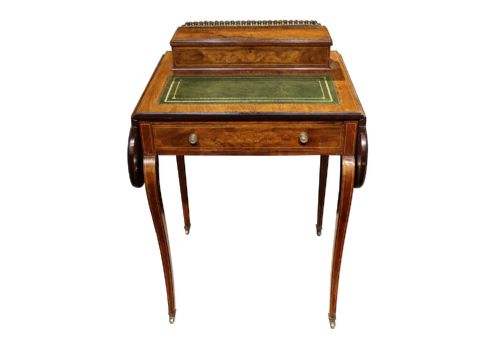
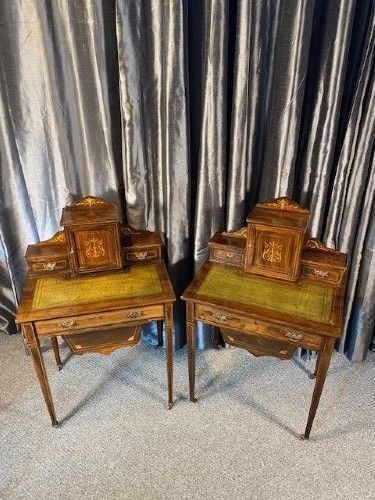
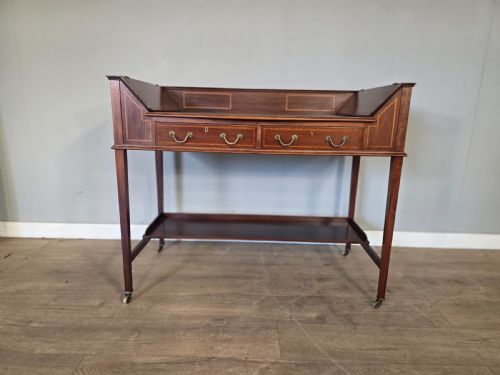
Leather Inlay Desk
These leather inlay desk examples bring writing tables into focus with fitted surfaces designed for daily correspondence.
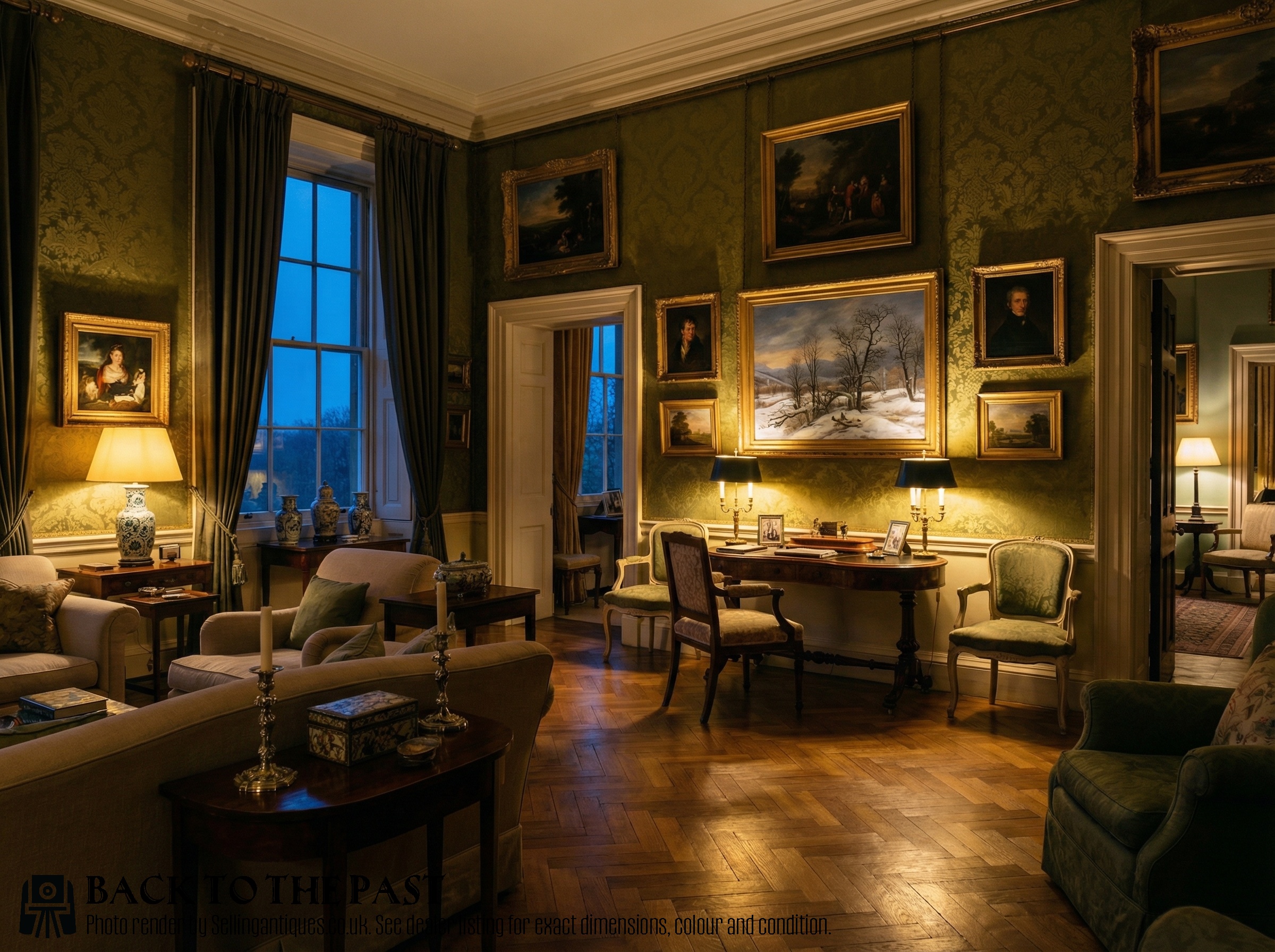
Leather Inlay Desk
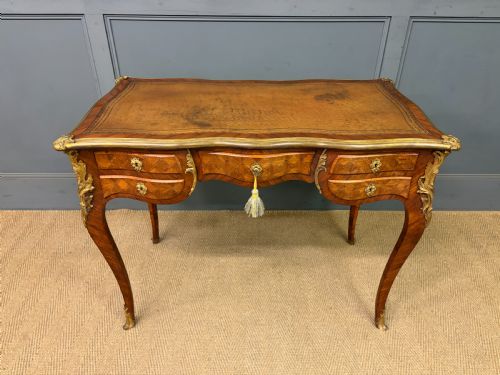
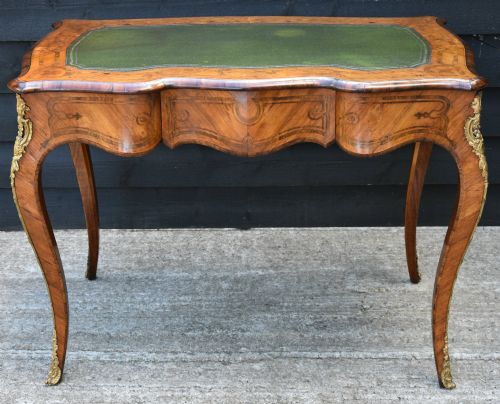
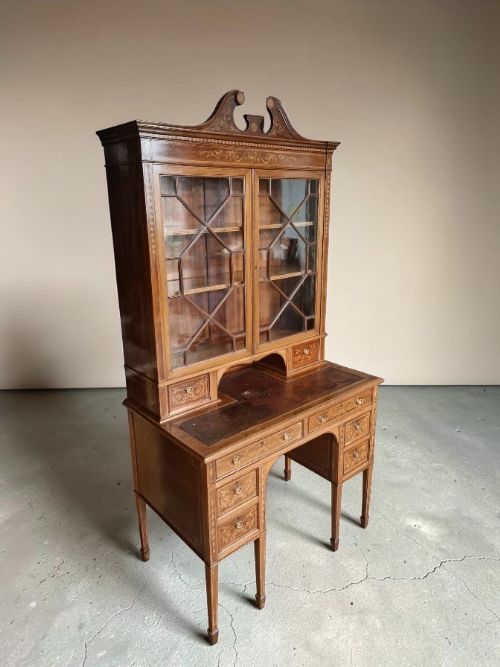
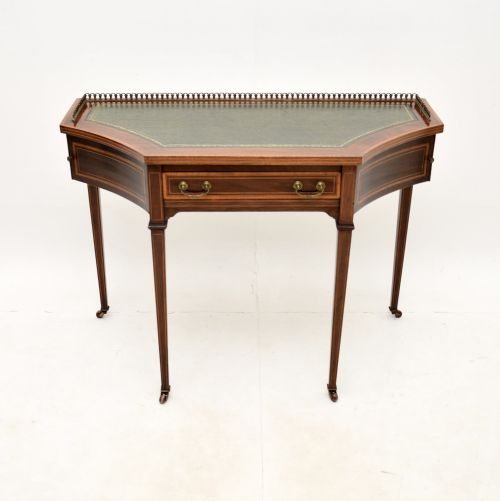
A leather inlay desk functions as a dedicated writing surface, incorporating a leather writing panel bordered by timber. These pieces emerge predominantly from Victorian and Edwardian workshops, alongside occasional Regency and Art Deco iterations.
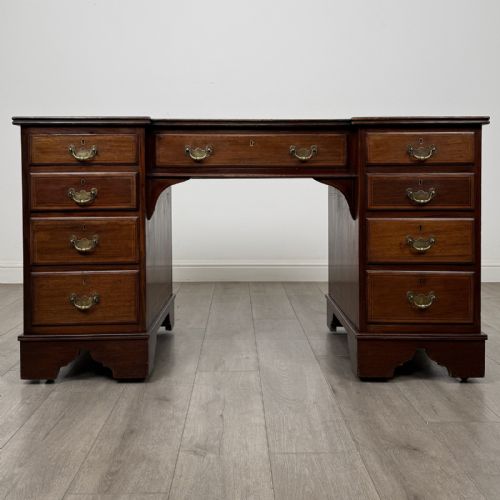
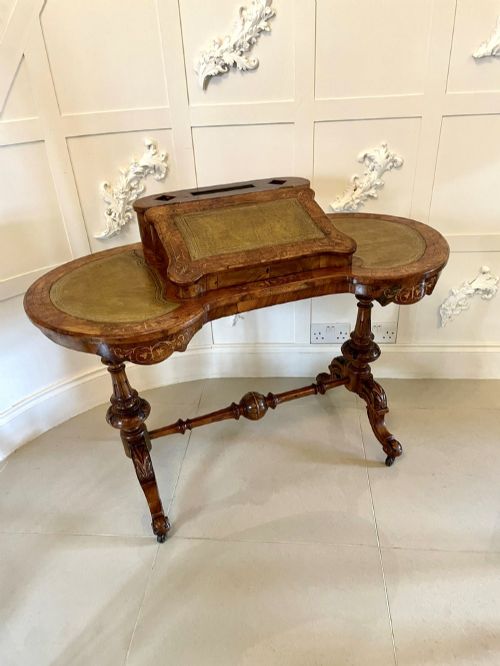
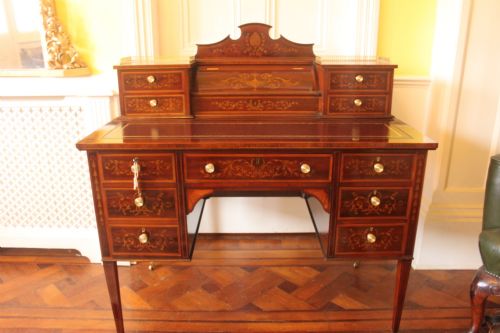
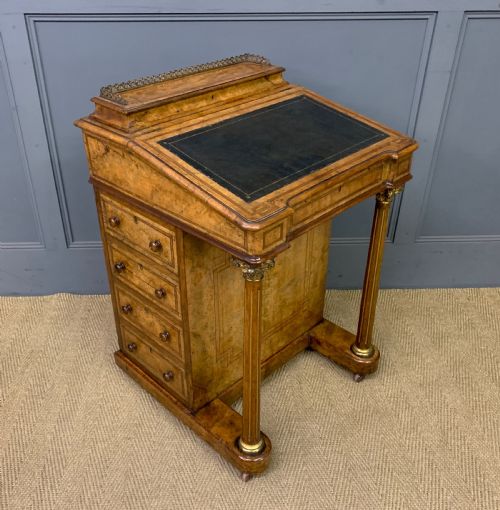
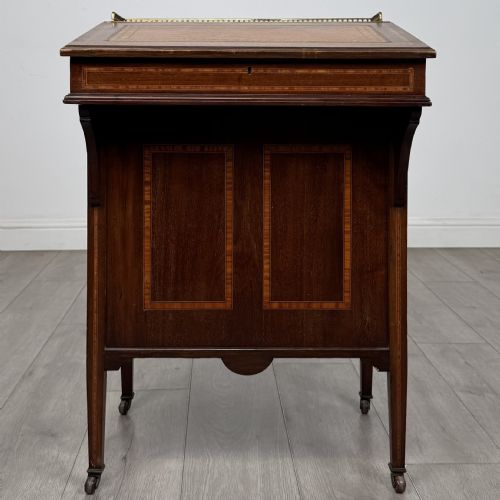
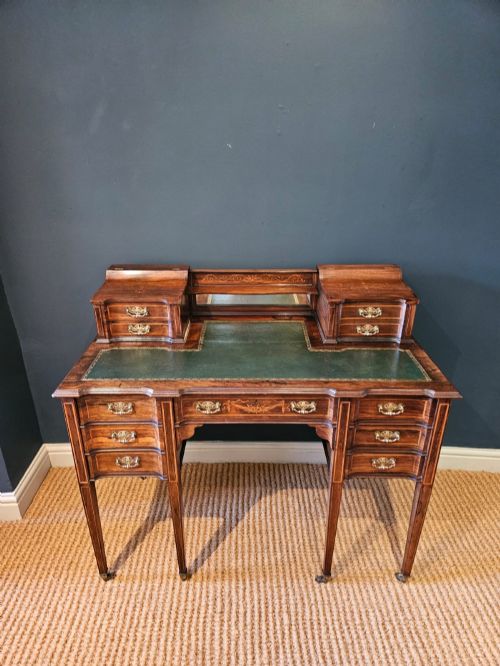
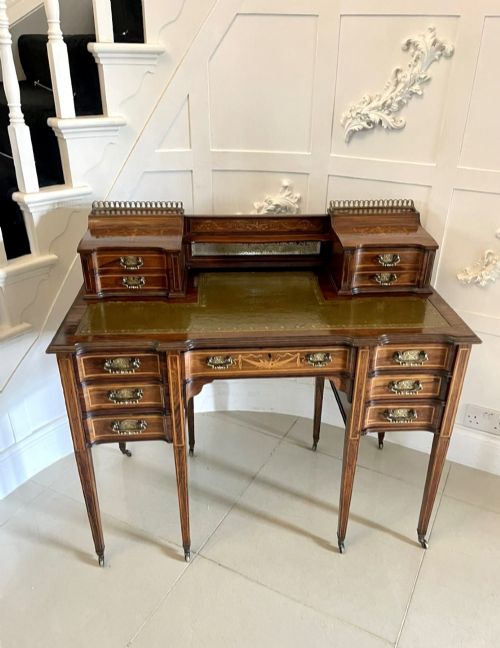
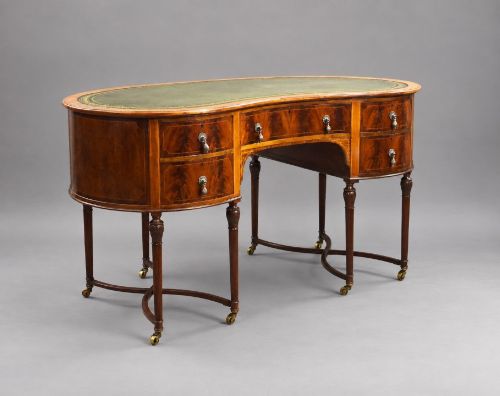
The format ranges from compact kidney-shaped writing tables and Davenport desks to grand pedestal writing desks and Carlton House forms. Edwardian satinwood and mahogany variants appear frequently across these listings.
Materials and construction
Cabinetmakers utilised dense timbers such as mahogany, walnut, rosewood, and satinwood, often embellishing surfaces with intricate marquetry and contrasting inlay. Brass handles, banding, and gallery rails provide metallic accents to the wooden structures.
The writing surfaces feature panels of leather, frequently edged with gold tooling. Carcass construction employs solid secondary woods beneath veneered or solid primary timber exteriors.
Materials documented across the inventory include mahogany, satinwood, rosewood, walnut, ebonised wood, and brass.
Determinants of quality
Superior examples derive from notable makers, exhibiting refined proportions, balanced marquetry, and high-grade timber selection such as flame mahogany or figured satinwood. Original fitted interiors and intact leather surfaces elevate the standing of a piece.
Lesser items display simpler joinery, plain secondary timbers, and heavily replaced or poorly executed writing surfaces that lack the crisp detail of maker-signed works.
Maple and Co·Jackson and Graham·Edwards and Roberts·Wolfe and Hollander·Gill and Reigate
The Leather Inlay Desk Glossary
- Leather inlay desk
- A writing table featuring a central panel of leather inset into a wooden top, providing a smooth surface for writing.
- Carlton House desk
- A form of writing desk with a curved superstructure of small drawers and pigeonholes enclosing the writing area.
- Marquetry
- Decorative patterns formed by the insertion of pieces of wood, ivory, or shell into a veneer-coated surface.
- Pedestal desk
- A heavy writing desk consisting of a top resting on two pedestals of drawers.
- Davenport desk
- A compact Victorian writing desk featuring a sloping writing surface above a set of side drawers.
Leather Inlay Desk: Frequently Asked Questions
What is a leather inlay desk?
A leather inlay desk is a traditional writing table featuring a dedicated leather writing panel set within a wooden frame. These pieces provide a durable surface suited for correspondence and administrative tasks.
They appear in various forms, from compact Edwardian kidney tables to substantial Victorian pedestal desks, utilising timbers such as mahogany, walnut, and satinwood.
How do I identify an Edwardian desk?
Edwardian desks date from the early twentieth century and frequently showcase lighter timbers like satinwood and inlaid mahogany. Their design often embraces Sheraton Revival influences with delicate tapered legs and fine stringing.
Makers from this era, such as Edwards and Roberts or Maple and Co, produced refined variants featuring fitted interiors and kidney-shaped outlines.
Were these desks used for writing?
These desks served as functional furniture for letter writing, record keeping, and estate management. The inset leather panel provided an ideal tactile surface for quill or pen use.
Many incorporate fitted drawers, pigeonholes, and stationery compartments designed to organise writing implements and correspondence securely.
How do I care for the leather top?
Maintaining the leather inlay involves gentle dusting and occasional conditioning with appropriate leather balms to prevent drying and cracking. Avoid using harsh chemical cleaners or excessive moisture on the surface.
Protecting the gold tooling from abrasive friction preserves the decorative borders surrounding the writing panel.