




Leather Inlaid Walnut Desk
A leather inlaid walnut desk brings warmth and practical surface area to a study, drawing on Victorian and Edwardian craftsmanship.
Leather Inlaid Walnut Desk
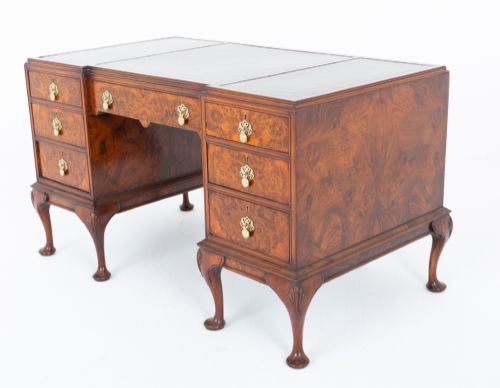
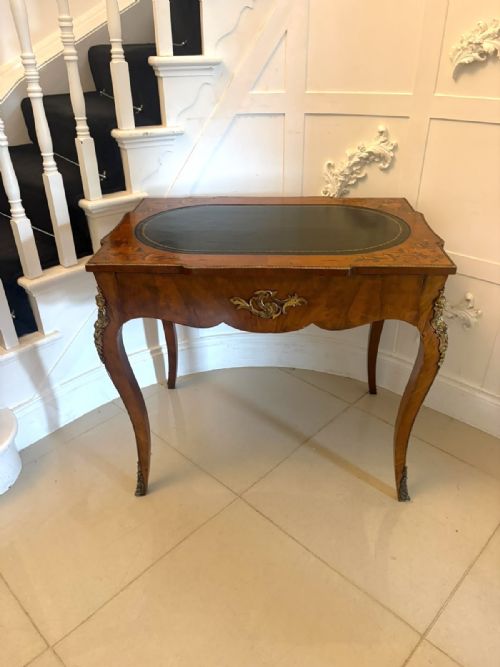
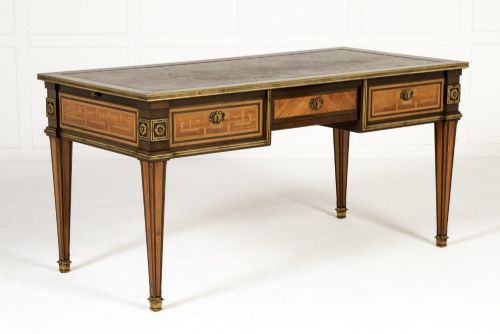
A leather inlaid walnut desk encompasses writing tables, Davenport desks, and bureau plat forms shaped by Victorian and Edwardian makers. These pieces emerge in styles ranging from Queen Anne to French Louis XV, utilising timber matched with leather writing surfaces.
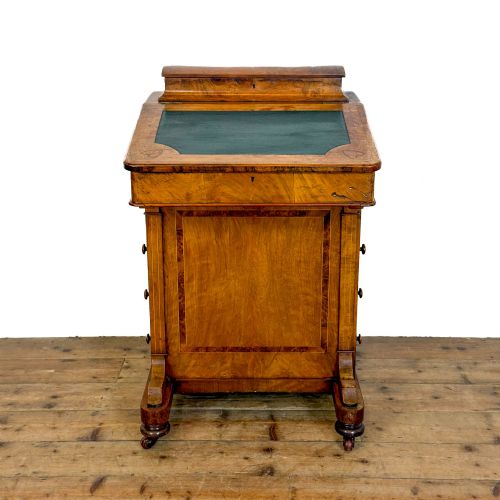
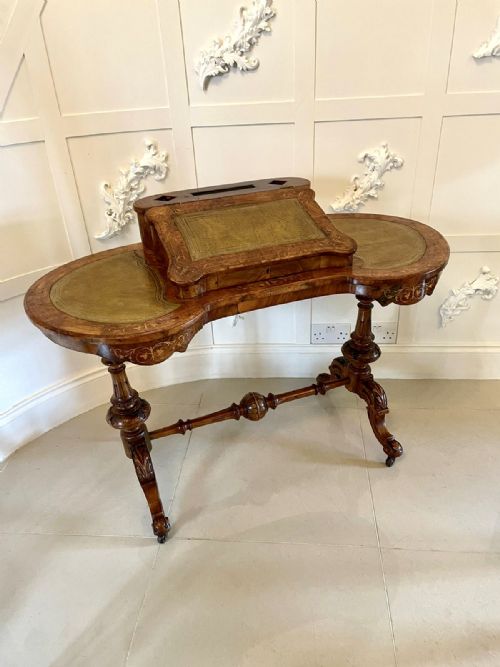
The most common form on this page is the Davenport desk, frequently constructed in burr walnut with inlaid details and functional drawer arrangements. Alongside these compact pieces appear freestanding kidney-shaped writing tables and larger twin pedestal formats.
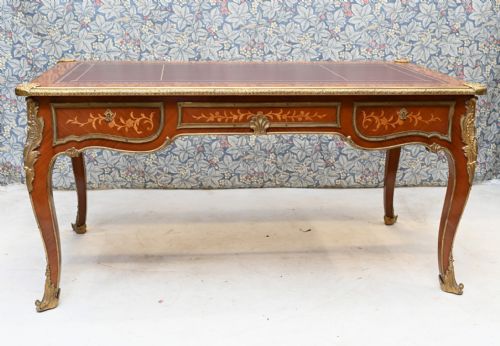
Origins stretch from mid-nineteenth-century English workshops to French revival interpretations incorporating marquetry and ormolu mounts. Buyers encounter everything from morning room writing tables to elaborate bonheur du jour cabinets designed for domestic correspondence.
Materials and Construction
Walnut and burr walnut form the primary carcass woods, selected for rich grain patterns and polished to a deep lustre. Artisans applied delicate wood inlay and marquetry directly onto the timber surfaces to frame drawers and writing planes.
Writing surfaces feature inset leather panels, often bordered by blind tooling, providing a durable platform for correspondence. Brass hardware, ormolu mounts, and gilt bronze details complete the structural assembly across nineteenth-century examples.
Several Davenport desks conceal secret side drawers for storing stamps.
Defining Quality in Walnut Writing Furniture
Quality rests in the selection of the burr walnut veneer and the precision of the wood inlay work across the top and sides. Superior examples display balanced grain matching and tight, seamless marquetry patterns that integrate smoothly into the walnut frame.
The sophistication of the internal fittings, such as fitted stationery compartments in Davenport desks and well-turned ormolu mounts, separates standard production from finer workshop output. Structural integrity in freestanding forms ensures the piece remains stable and balanced during daily use.
Gill & Reigate·Shoolbred
The Leather Inlaid Walnut Desk Glossary
- Davenport desk
- A compact Victorian writing desk featuring a sloping leather-inset top above a bank of side drawers. It typically includes a stationery compartment built into the upper superstructure.
- Bureau plat
- A freestanding French writing table with a rectangular leather top and one or more drawers in the frieze. These pieces often exhibit cabriole legs and bronze mounts.
- Burr walnut
- Timber sliced from the warty growths on walnut trees, yielding highly decorative swirling grain patterns. Cabinetmakers used these veneers on primary display surfaces.
- Marquetry
- Decorative patterns formed by fitting together small pieces of coloured wood veneer onto a solid backing. This technique adorned nineteenth-century writing surfaces and drawer fronts.
- Ormolu
- Gilt bronze ornamentation applied to furniture mounts, feet, and frames. It provides metallic contrast against dark walnut timber.
Leather Inlaid Walnut Desk: Frequently Asked Questions
What is a Davenport desk?
A Davenport desk is a compact writing cabinet featuring a sloped, leather-lined writing lid that lifts to reveal storage space. Below the writing surface sits a bank of drawers.
Originally designed for writing letters in smaller rooms, these pieces combine surface workspace with enclosed storage without dominating a study.
Where were these desks used?
These desks served in Victorian and Edwardian morning rooms, studies, and private libraries as personal writing spaces. Ladies used smaller bonheur du jour desks for correspondence in private sitting rooms.
Freestanding writing tables were also positioned in the centre of rooms rather than against walls, finished with walnut and inlay on all sides.
How do I care for the leather top?
The leather writing surface benefits from gentle dusting and occasional conditioning with appropriate leather balms to prevent drying. Avoid placing damp items directly onto the hide to preserve the tooling and colour.
Keep the walnut timber polished with traditional beeswax to maintain the grain depth and protect the polished finish from sunlight.
How can I tell Victorian from Edwardian pieces?
Victorian pieces generally date from the mid to late nineteenth century, often featuring rich burr walnut veneers, Davenport configurations, and heavy marquetry. They reflect revival styles including French Louis XV and Rococo influences.
Edwardian items emerge around nineteen hundred, sometimes showing lighter satin walnut timbers or cleaner lines influenced by earlier Queen Anne revivals, alongside maker signatures from workshops like Gill & Reigate.