
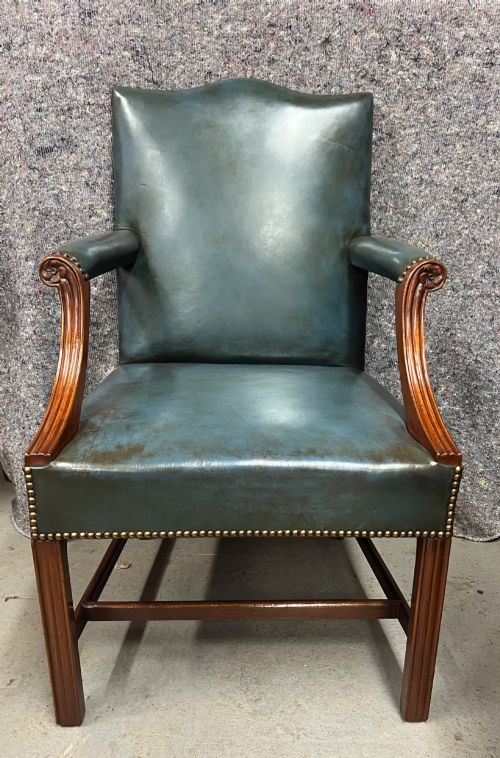

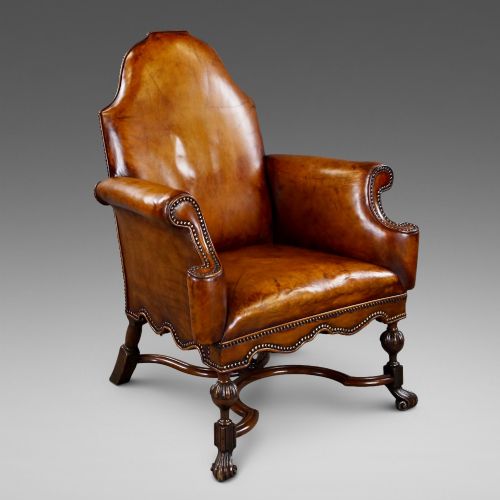
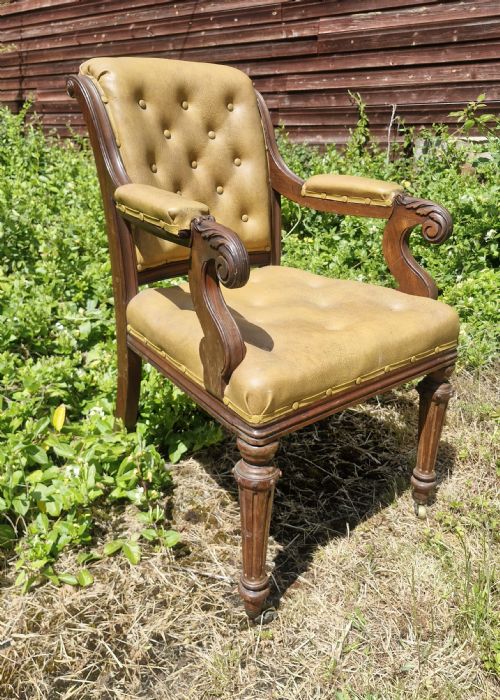


Leather Executive Armchair
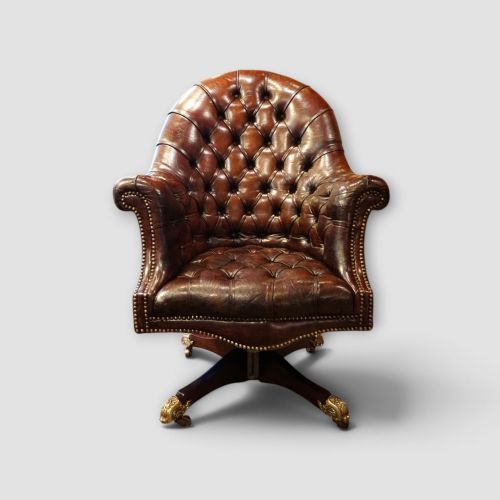
A leather executive armchair brings period character and substantial presence to a study, built from heavy timbers and upholstered hide.
Leather Executive Armchair
A leather executive armchair serves as a primary seating piece for a desk, library, or office space. Buyers searching for a leather executive armchair encounter forms spanning the nineteenth century through the early twentieth century, alongside specific revival designs.
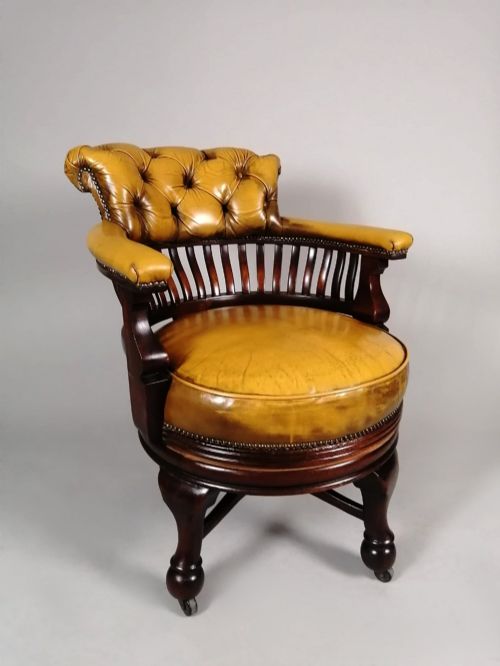
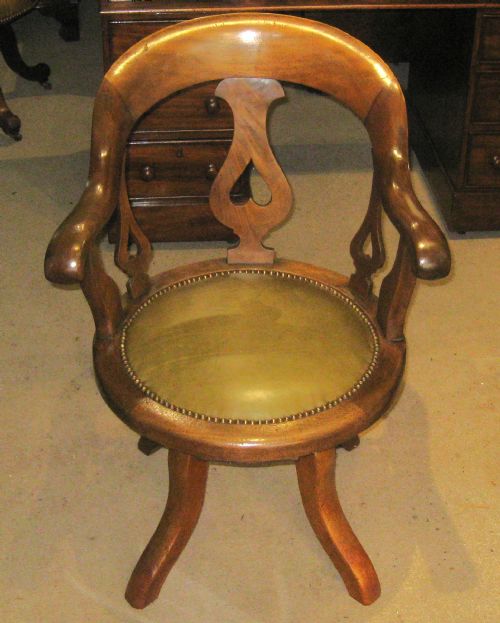
The selection includes Victorian, Edwardian, and Regency examples, frequently constructed as revolving desk chairs, swivel office chairs, or library armchairs. Mahogany, walnut, and oak form the structural foundations of these seating pieces.
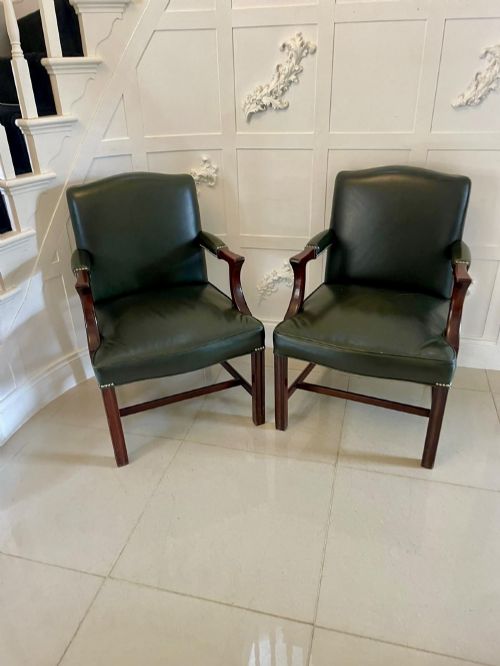
Most items on this page lean towards traditional British and continental forms, including Gainsborough styles, Chippendale influences, and French Empire armchairs. These seats combine utilitarian office functions with domestic library comfort.
Materials and Construction
Makers utilised dense timbers such as mahogany, walnut, oak, and rosewood to build sturdy chair frames capable of enduring heavy daily use. Hardwood components were turned, carved, or joined to create supportive armrests, raked backs, and stable undercarriages.
Upholstery relies on traditional leather hides, often buttoned or plain, secured to the frame alongside brass fixings and metal swivel mechanisms. Cast iron and brass hardware appear on revolving desk chairs to facilitate movement and height adjustment.
Period designations range from the Regency era and nineteenth century through to Edwardian and early twentieth-century designs.
Distinction in Quality
The standard of a leather executive armchair depends heavily on the integrity of its timber frame and the depth of the carved or turned detail. Superior pieces exhibit well-figured mahogany, walnut, or rosewood, combined with robust joinery that sustains swivel and tilt actions.
The treatment of the leather upholstery and the subtlety of the brass or iron hardware further separate ordinary workshop output from finer library seating. Original cast iron mechanisms and patinated leather hides indicate high-grade period manufacture.
Gillows·WM Heywood Chair Co
The Leather Executive Armchair Glossary
- Gainsborough armchair
- A wide, upholstered armchair with open padded arms, designed in the eighteenth century and frequently revived in later periods.
- Revolving desk chair
- An office seat mounted on a central pivot mechanism, allowing rotation and movement while seated at a library table or partner's desk.
- Library armchair
- A comfortable upholstered seat intended for reading rooms, often featuring generous proportions and supportive armrests.
- French Empire
- A neoclassical design style characterised by classical motifs, substantial timber frames, and formal proportions.
- Porters armchair
- A high-backed enclosed seat originally designed to shield inhabitants from draughts in entrance halls.
Leather Executive Armchair: Frequently Asked Questions
What is a leather executive armchair?
A leather executive armchair is a sturdy seating piece designed for a study or office, combining a timber frame with a leather-upholstered seat and back.
These chairs often include swivel mechanisms or fixed frames tailored for long periods of desk work or reading.
How do I date a leather desk chair?
Dating relies on observing timber choices, hardware types, and stylistic cues such as Victorian buttoning or Regency proportions.
Mechanical components like cast iron swivels also provide clues regarding whether a chair originates from the nineteenth or early twentieth century.
Where were these chairs used?
They were primarily placed in professional offices, private libraries, and studies during the nineteenth and early twentieth centuries.
Their substantial construction suited them for administrative duties and scholarly reading.
Are these chairs suitable for daily office use?
Many period examples feature solid timber frames and functional revolving mechanisms that accommodate modern desk work.
Pairing a sturdy nineteenth-century swivel chair with a contemporary workspace adds historic character alongside practical utility.