

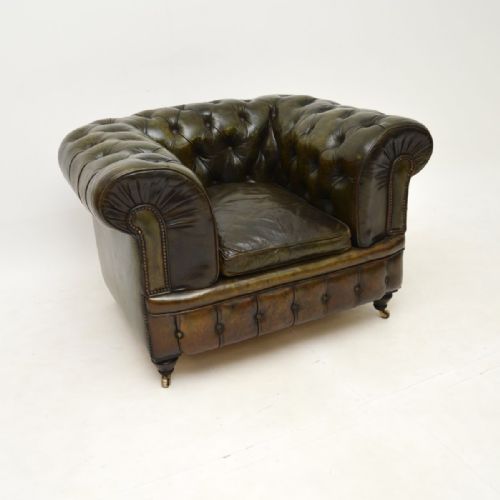


Leather Chesterfield Armchair
A proper leather chesterfield armchair brings deep buttoning, rolled arms and rich hide into a room, offering enduring comfort and substantial character.
Leather Chesterfield Armchair
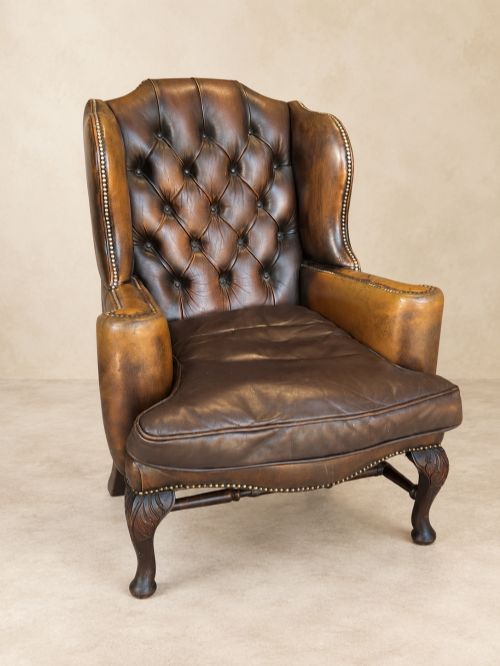
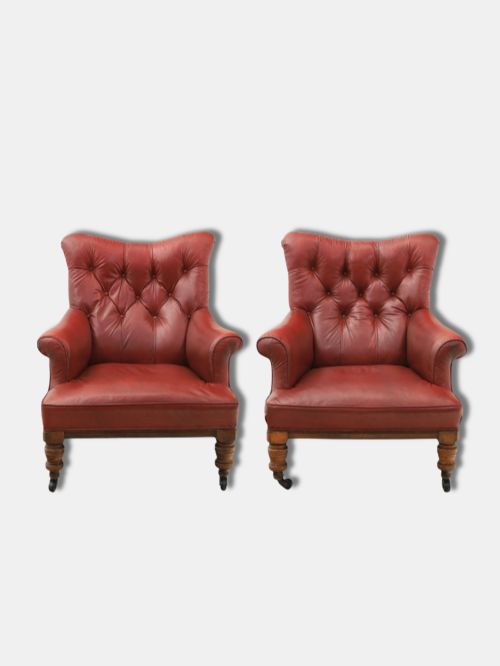
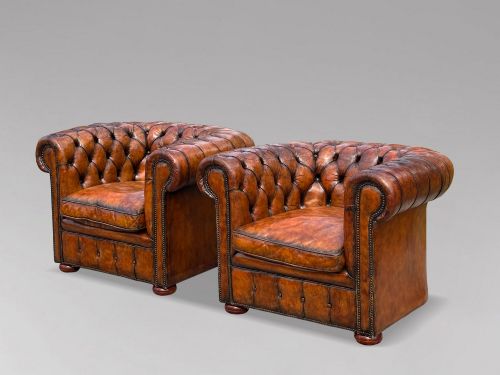
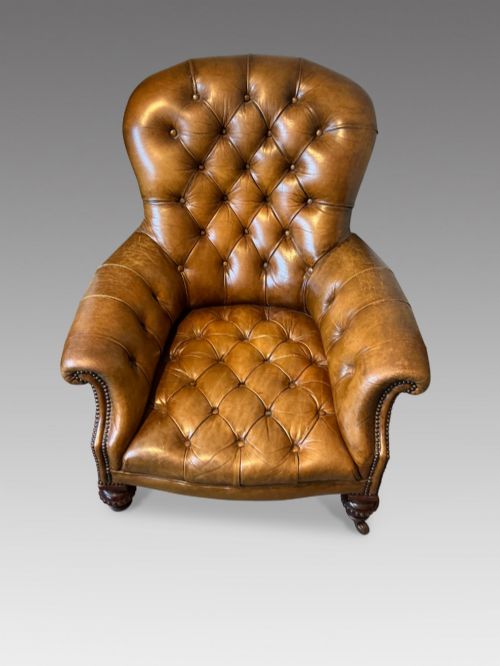
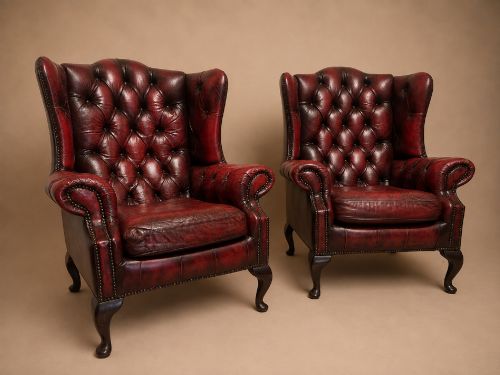
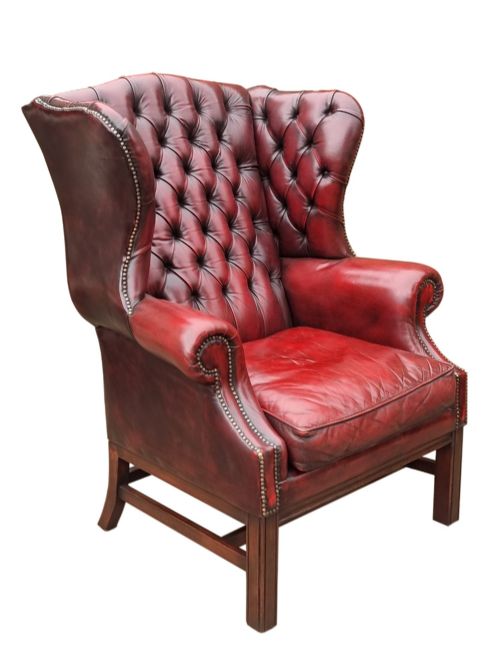
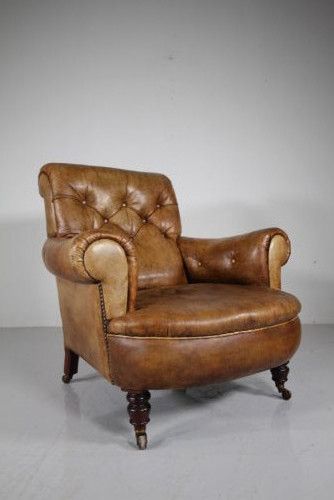
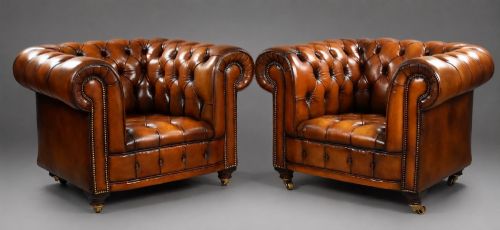
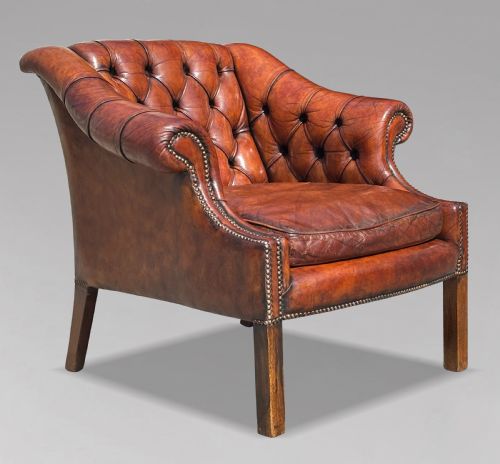
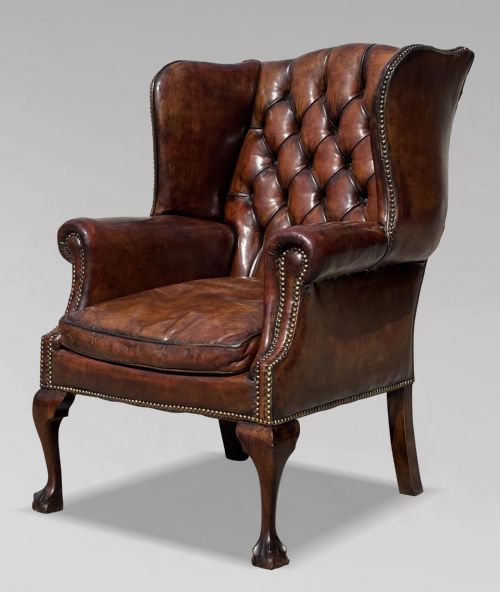
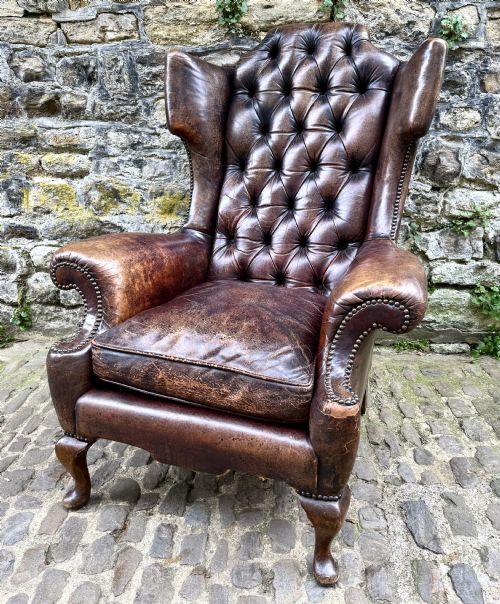
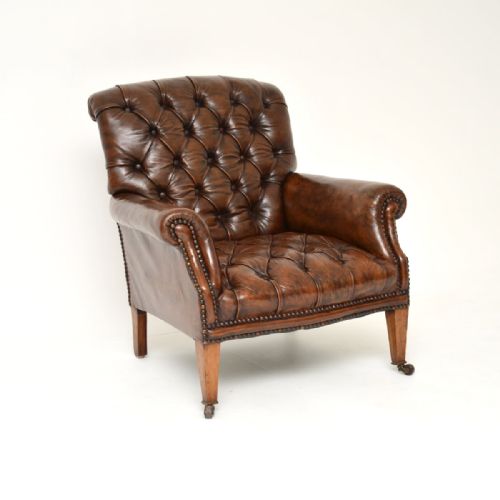
When you search for a leather chesterfield armchair, you encounter deep-buttoned club chairs, wingbacks and library seats dating from the nineteenth century through the early twentieth century. These pieces combine a robust wooden frame with generous padding and upholstered leather hide, often featuring characteristic scroll arms or high wings designed to block drafts in older homes.
You are most likely to meet Victorian and Edwardian examples on this page, alongside later interpretations built in Georgian or George III styles. The selection encompasses low club chairs, tall wing armchairs and specific desk variants constructed for studies and libraries.
Makers utilised traditional forms such as the deep-buttoned back and low seat to create a seat that encourages relaxed posture. Whether styled as a club chair or a gentleman's wingback, each leather chesterfield armchair serves as a focal point for a study, drawing room or library.
How They Were Made
Craftsmen built the foundational frames of these armchairs using sturdy hardwoods like mahogany, oak and general timber, ensuring structural integrity beneath the upholstery. Joinery techniques relied on traditional methods to support the heavy internal padding and daily use.
Upholsterers stretched leather hides over horsehair or coil spring stuffing, securing the shape with thousands of individual brass tacks. Deep buttoning was pulled tight by hand through the leather to create the signature diamond pattern characteristic of the style.
Listings feature pieces spanning from the 18th century through the 1930s, utilising leather, mahogany, oak and brass.
What Varies in Quality
The grade and preparation of the leather largely determine the hierarchy of these chairs, ranging from heavy bovine hide with natural patination to uniform dyed finishes. Hand-dyed leather develops a rich tonal depth over decades, whereas lesser surfaces show flat coloration or rigid factory treatments.
Frame construction and spring tension separate standard seating from exceptional examples. A firm, responsive seat with intact internal webbing and securely anchored brass detailing reflects superior workshop execution.
Robert Mouseman Thompson
The Leather Chesterfield Armchair Glossary
- Chesterfield
- A traditional style of upholstered seating characterised by deep buttoning, rolled arms and uniform back and arm heights. The term traditionally denotes luxury British craftsmanship.
- Wingback
- An armchair featuring protective side panels attached to the backrest, originally designed to shield the sitter from draughts. This form appears frequently among Victorian and Georgian style examples.
- Rexine
- A brand of artificial leather fabric made from cloth coated with nitrocellulose, often utilised as an alternative upholstery material on mid-century or budget pieces. It mimics the appearance of genuine hide.
- Porters Chair
- A high-backed, enclosed armchair designed to keep draughts away from attendants stationed in grand entrance halls. Examples feature domed hoods and fully upholstered sides.
Leather Chesterfield Armchair: Frequently Asked Questions
How do I clean antique leather?
Clean the surface gently using a soft, dry cloth to remove dust settled in the deep button crevices. Apply a specialised leather balsam periodically to maintain suppleness and prevent the hide from drying out.
Avoid harsh modern detergents or excessive water, which can damage hand-dyed finishes and stiffen the underlying material. Regular conditioning preserves the natural patina accumulated over decades of use.
Are these chairs comfortable for daily seating?
These armchairs were designed for extended periods of reading or conversation, offering deep seats and supportive padded backs. The coil springs and horsehair stuffing adapt to the user over time.
Heavier Victorian and Edwardian club models provide a particularly solid, supportive structure. Ensuring the internal webbing remains firm guarantees lasting comfort in a modern living space.
How can I date a leather armchair?
Dating relies on examining the timber frame construction, the type of hardware used, and the style of the leather upholstery. Earlier nineteenth-century examples often display hand-turned mahogany or oak legs alongside traditional hand-stitched webbing.
Twentieth-century iterations may incorporate standardised components or modern rexine finishes. Comparing the overall silhouette to documented Victorian, Edwardian or Georgian proportions helps narrow the timeline.