

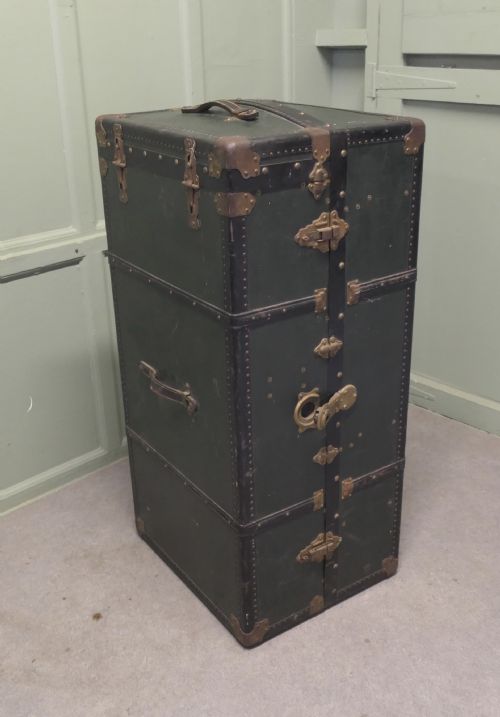
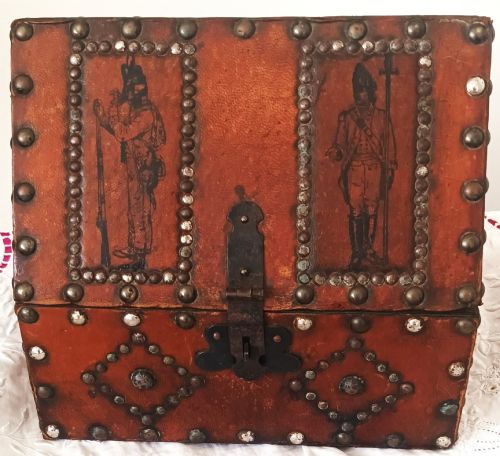


Leather Bound Trunk
A leather bound trunk brings the grit of actual travel into a room, holding centuries of hard movement within its reinforced sides.
Leather Bound Trunk
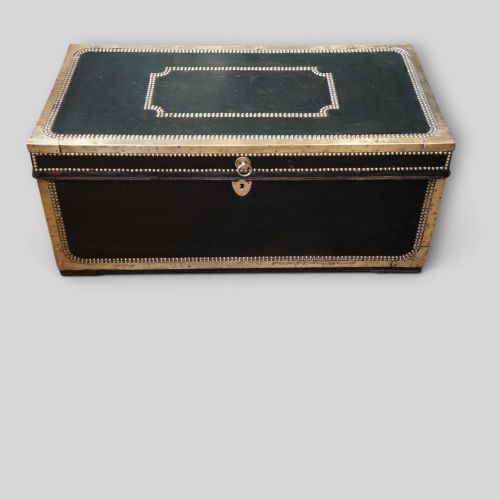
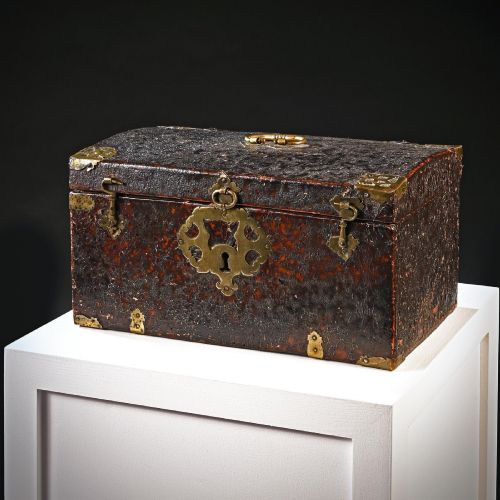
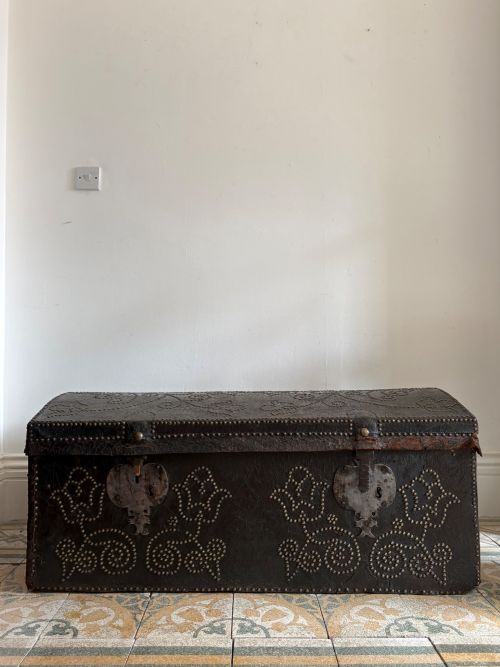
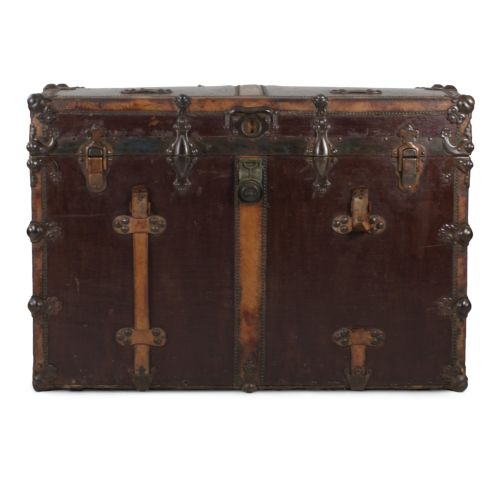
A leather bound trunk is a heavy container built for transport, featuring a wooden core wrapped in hide, leather, or vellum, and reinforced for long journeys by coach or ship. When you search for this phrase, you encounter forms ranging from small travelling caskets and double gun cases to massive dome-topped chests and compartmented steamer luggage.
The pieces on this page span several centuries, with the nineteenth century heavily represented alongside 17th-century travel boxes, Regency campaign cases, and early 20th-century steamer trunks. You will find examples designed for specific duties, such as Chinese export camphor-wood chests, coaching trunks, and officers' travel gear.
Many items display robust hardware, carrying handles, and maker stamps that connect them directly to notable makers and historic travel eras. Whether built for military campaigns or transatlantic crossings, each trunk serves as a tangible record of historical mobility.
Construction and materials
Makers constructed these pieces around a sturdy wooden carcass, frequently utilising pine, oak, or aromatic camphor wood to deter insects during long sea voyages. This internal wooden frame provided the essential rigidity needed to withstand the knocks and strains of transit.
Workmen then covered the exterior in leather, hide, or canvas, securing the material with thousands of individual brass or iron studs. Metal bands, corner braces, and heavy-duty hinges were fastened to the edges and lid to absorb impacts and reinforce the structure.
Internal layouts often featured fitted compartments, lift-out trays, or wardrobe hangers lined with fabric to protect clothing and valuables. Exterior elements like drop handles, straps, and keyed locks completed the build, ensuring both security and portability.
Several trunks bear the initials of intrepid owners who crossed oceans before commercial aviation existed.
Assessing quality in travel pieces
Quality rests heavily on the integrity of the original construction and the calibre of the materials used in the carcass and hardware. Finer trunks employ seasoned woods like camphor or oak, joined with precision, rather than basic pine lined simply for utility.
The presence of original, maker-stamped locks, branded leather labels, and heavy cast brass fittings elevates an item above standard utility baggage. Maker marks from established firms indicate a higher grade of workshop standard and skilled hand-finishing.
The survival of original interior fittings, working keys, and uncompromised structural hide demonstrates how well the trunk endured its working life. Pieces that retain their structural soundness alongside crisp brass detailing represent the pinnacle of this craft.
Samuel Pratt·Chapple & Sons·Seabrook of St.Pauls·Drew & Sons·Aux Etats Unis·Louis Vuitton·W Insall·H J Cave & Sons·Thomas Griffith·Moynat
The Leather Bound Trunk Glossary
- Camphor wood
- A fragrant timber native to Asia, prized for its insect-repelling qualities in trunks made for export trade. Its distinct scent often lingers inside the chest.
- Steamer trunk
- A lower-profile luggage piece developed in the late 19th century to fit beneath cabin berths on ocean liners. These trunks prioritized lighter materials and efficient interior compartments.
- Casket
- A smaller box or container, frequently fitted with a hinged lid and lock, used for transporting valuable personal items or documents. Examples on this page include Georgian and 19th-century variants.
- Portmanteau
- A large travelling bag or suitcase that opens into two distinct compartments. They functioned as portable wardrobes for early 20th-century travellers.
- Campaign case
- Portable furniture and storage built specifically for military officers on active service. These pieces were designed to dismantle or withstand rugged field conditions.
Leather Bound Trunk: Frequently Asked Questions
What is a leather bound trunk?
A leather bound trunk is a durable storage container made from a wooden core covered in hide and reinforced with metal bands. They were built to protect clothing and equipment during harsh travel conditions.
Over the centuries, these trunks evolved from simple domed travelling chests into sophisticated steamer luggage and fitted officer's cases used on long journeys.
How were these trunks used?
Travellers used these trunks to pack garments, valuables, and provisions for long journeys by coach, ship, or rail. Their rugged construction protected contents from weather and rough handling.
Many examples feature heavy iron or brass handles to assist porters and handlers during transit across international trade routes and military campaigns.
How do I date a trunk?
Dating relies on observing construction methods, hardware styles, materials, and any maker stamps or labels found on the piece. Earlier examples often feature dome tops, iron bindings, and hand-stitched hide.
Later pieces from the late 19th and early 20th centuries incorporate flat tops for stacking, canvas coverings, and specialised interior compartments designed for modern travel.
How do I live with a trunk?
These trunks serve well as coffee tables, blanket chests, or statement storage pieces in contemporary living spaces. Their sturdy construction allows them to support items while concealing clutter inside.
Positioning a trunk in a dry environment preserves the leather and metal hardware, while regular light conditioning keeps the hide supple without altering its historic patina.