

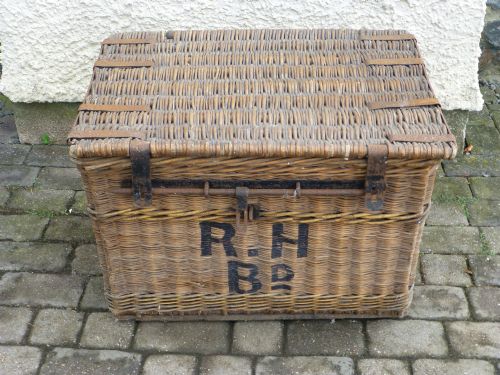


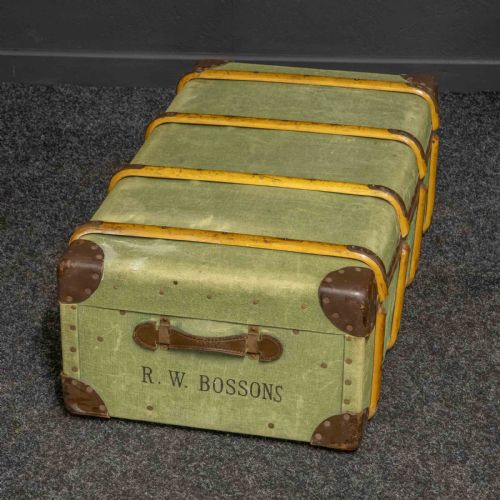


Stencilled Travel Chest
These stencilled travel chest examples combine utilitarian storage with robust construction, offering collectors practical history that anchors a room.
Stencilled Travel Chest
When you search for a stencilled travel chest, you encounter robust storage containers designed for transit and luggage during the nineteenth and early twentieth centuries. These pieces encompass military campaign trunks, industrial cane travelling trunks, and wardrobe steamer trunks.
The versions most frequently met on this page span the Victorian, Edwardian, and 1920 periods, alongside items dated to 1900. Their forms range from large camphorwood blanket boxes and bound pine chests to tall wardrobe steamer trunks.
Originating as practical luggage for journeys by rail, ship, or military deployment, these chests now serve as storage coffee tables or feature pieces in domestic interiors. They bridge functional utility and historical character.
How they were made
Construction relies upon durable timbers such as pine, camphorwood, and wicker, reinforced to withstand the rigours of transit. Makers incorporated structural elements of wood, iron, and brass to protect corners, edges, and lids.
Surface treatments combine protective coatings of leather and canvas with applied stencilling and monograms for identification. Metal hardware such as brass corners and iron bindings secured the joints and added longevity to the chests.
Stencilled Travel Chest Retail Price Guide 2026
Typical asking prices for stencilled travel chest among the pieces listed under this phrase on Sellingantiques today, from the lower quarter to the upper quarter. They describe what is for sale here now, not the wider market.
Listings feature periods spanning the 19th Century, Victorian, Edwardian, 1900, and 1920, utilising wood, iron, brass, leather, canvas, pine, and wicker.
What varies in quality
The standard of a stencilled travel chest depends upon the integrity of its original hardware and the preservation of its materials. Complete sets of brass corners, secure iron bindings, and intact leather or canvas coverings elevate an example.
Distinction also arises from the clarity of applied stencilling and monograms, alongside documented provenance. Pieces retaining original internal fittings or historical association demonstrate higher craftsmanship and historical interest.
Allen of London·Louis Vuitton France
The Stencilled Travel Chest Glossary
- Campaign chest
- A portable chest built in sections with recessed brass handles, designed for military officers on the move. These pieces prioritise structural sturdiness and ease of transport.
- Steamer trunk
- A lower-profile luggage trunk developed to fit beneath cabin berths on ocean liners during the early twentieth century. They often feature reinforced edges and internal compartmentalisation.
- Camphorwood
- Aromatic timber frequently utilised for nineteenth century military chests to deter insects from stored garments and blankets. The wood retains a distinct scent.
- Wicker
- Pliable plant material woven to create lightweight storage vessels and travelling trunks. It offers flexibility while maintaining structural form for luggage.
Stencilled Travel Chest: Frequently Asked Questions
What is a stencilled travel chest used for?
These chests originally served as luggage and storage for individuals travelling during the nineteenth and early twentieth centuries. Military personnel and civilian voyagers relied on them to transport clothing and equipment.
Today, owners utilise these pieces as functional storage solutions within living spaces, often placing them as coffee tables or blanket boxes. They provide enclosed storage while adding historical texture to a room.
How do I date a travel chest?
Dating involves examining the materials, construction methods, and hardware utilised by the maker. Nineteenth century examples frequently feature solid pine, camphorwood, or wicker combined with heavy iron and brass.
Later pieces from the 1920s often incorporate canvas coverings, specific monogram styles, and advanced locking mechanisms. Documentation or maker marks further clarify the period of origin.
Are these chests suitable for daily use?
These robust containers are built from durable woods, metal, and leather designed to withstand rigorous transport. Their solid construction makes them well suited for everyday domestic storage.
Owners should consider the original material fragility, such as canvas or leather surfaces, when placing items on top. Regular care preserves the exterior stencilling and structural hardware.
What materials are common on these trunks?
The listings show a variety of materials including pine, camphorwood, wicker, and wood overall. Protective outer layers typically consist of leather, canvas, or treated fabrics.
Metal components feature prominently, with brass and iron used for bindings, corners, and handles. These combined materials ensured the luggage survived long journeys.