
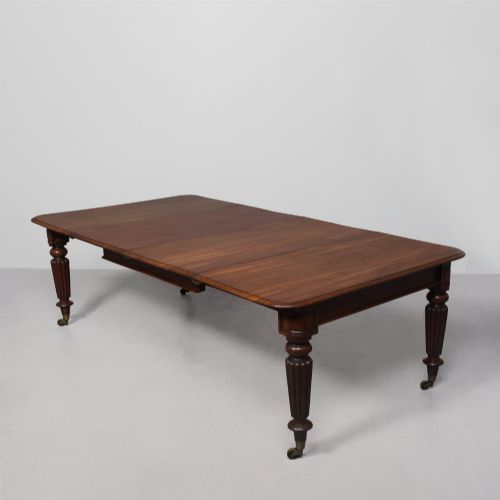
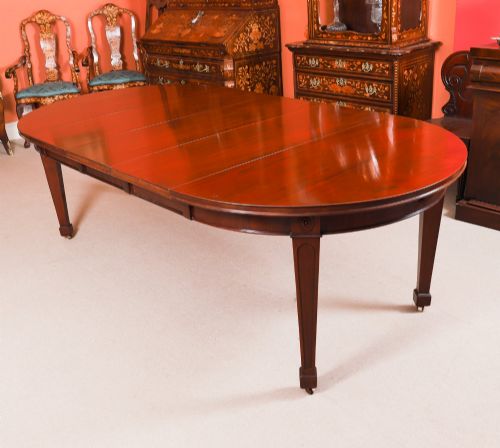
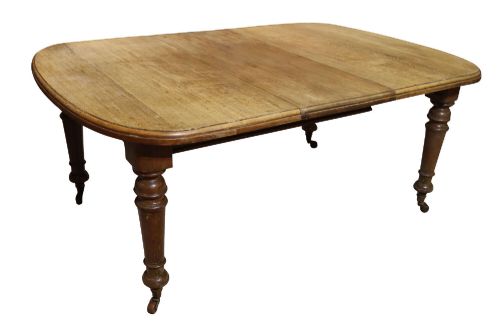
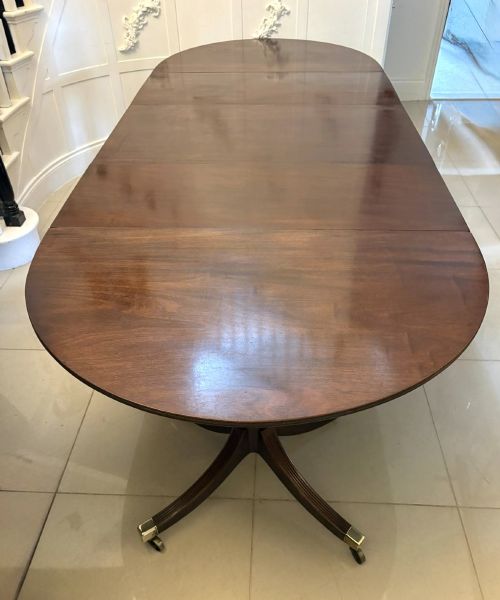
Leaf Extending Table
When you select a leaf extending table, you choose a dining surface designed to adapt its length through inserted leaves or draw mechanisms.
Leaf Extending Table
A leaf extending table provides a flexible dining surface that expands to accommodate larger gatherings through the addition of loose leaves, draw leaves, or mechanical winding systems. These tables appear across multiple periods, including the Georgian, Regency, Victorian, and Edwardian eras, as well as revival styles like Jacobean and Elizabethan.
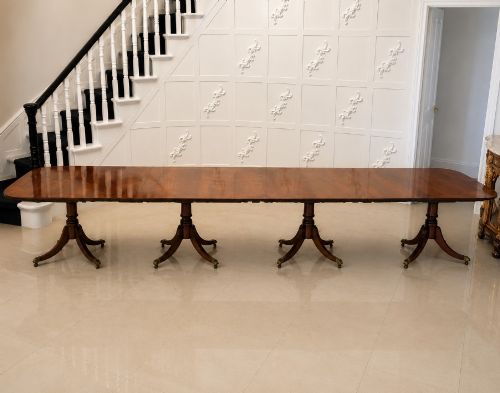
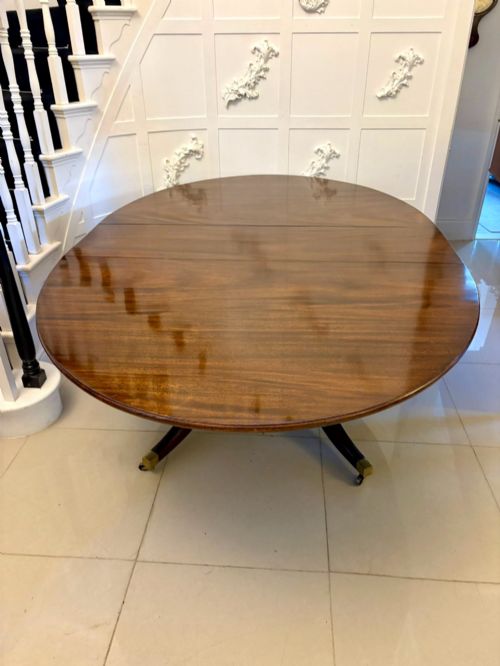
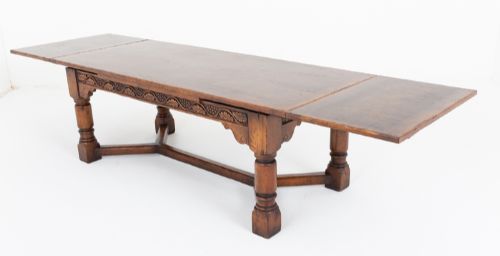
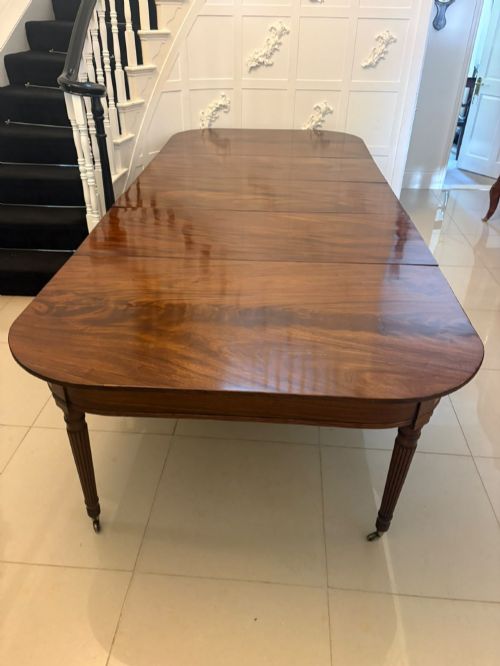
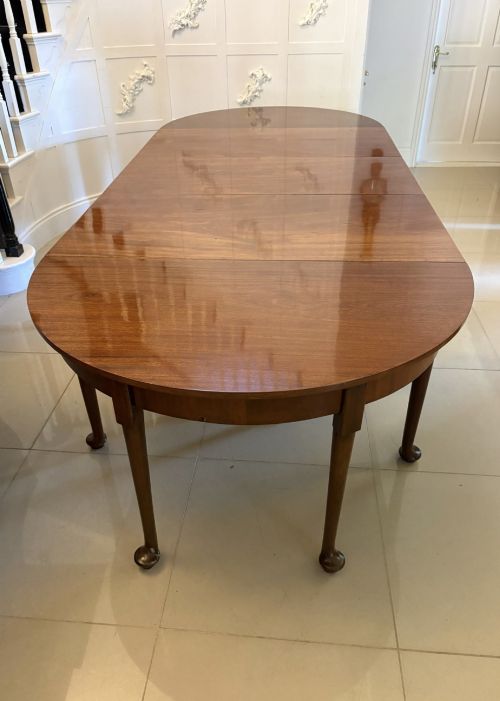
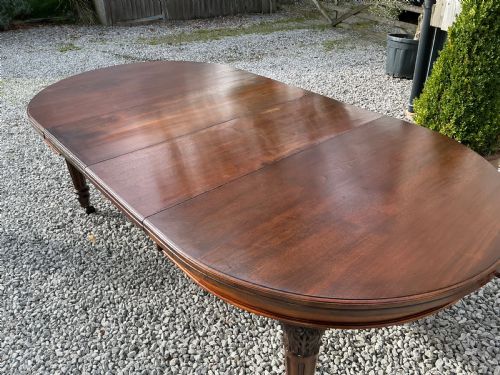
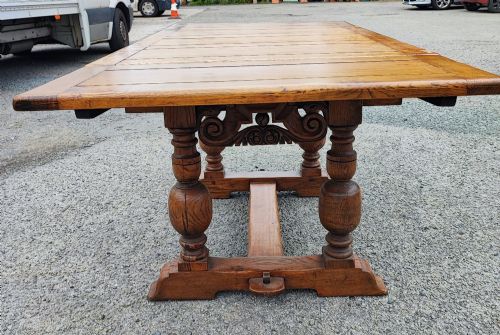
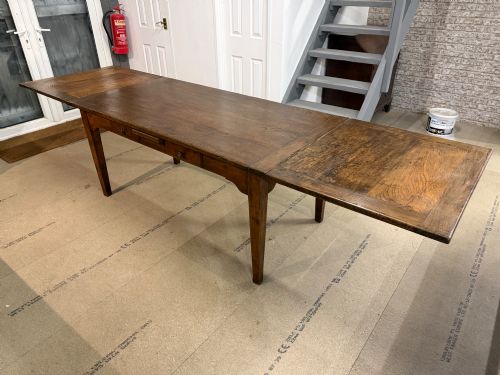
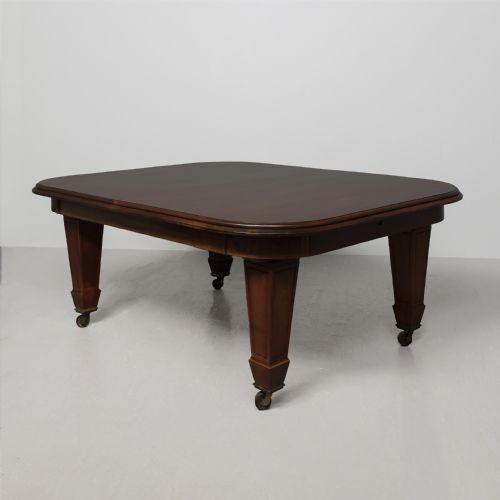
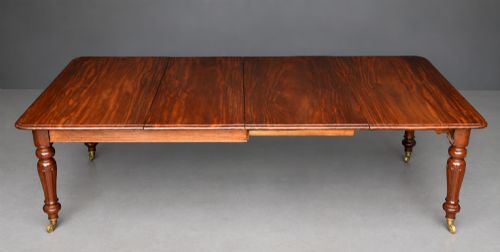
The most common examples on this page are Victorian and 19th-century mahogany dining tables featuring multiple removable leaves and pillar supports, alongside oak draw-leaf refectory tables suited to farmhouse and kitchen settings. Forms range from compact D-end tables to massive banquet tables seating up to twenty-four people.
How They Were Made
Cabinet makers utilised dense hardwoods such as mahogany, oak, and walnut, frequently selecting figured timber for table tops and incorporating secondary woods for framing and internal mechanisms. Solid oak and fruitwood appear frequently in refectory and farmhouse builds, while mahogany is paired with brass fittings and leather accents in formal dining pieces.
Construction techniques include draw-leaf mechanisms where extension leaves slide out from beneath the main top, concertina actions, and removable leaf systems supported by pillars or additional legs. Joinery relies on traditional methods to ensure stability when the table is fully extended.
Some tables stretch long enough to host a small village sports team for Sunday roast.
What Varies in Quality
Quality rests on the selection of timber and the precision of the extension mechanism. Superior pieces display matched wood grain across the main top and all additional leaves, indicating careful initial timber selection by the maker.
The engineering of the extending action dictates day-to-day utility. Tables with smooth-running draw leaves, reliable winding mechanisms, and sturdy supplementary legs maintain stability and alignment whether fully closed or extended to maximum capacity.
The Leaf Extending Table Glossary
- Draw Leaf
- A table design where two extension leaves are stored underneath the main top and pulled out from the ends when needed.
- D-End
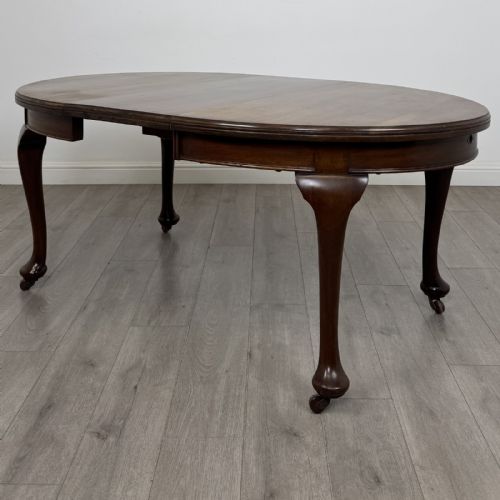
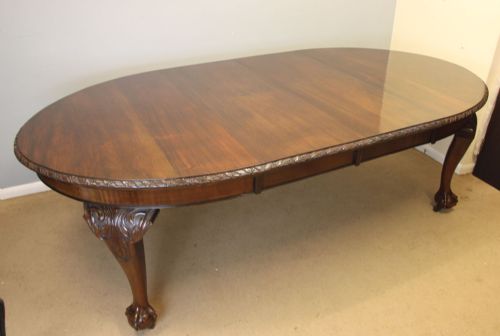
- A table form featuring semi-circular ends, often used in modular dining suites that accept multiple leaves in the centre.
- Refectory Table
- A long, narrow dining table traditionally utilised in communal halls and robustly constructed from solid oak.
- Concertina Action
- An expanding framework that stretches like an accordion to support multiple extra leaves evenly across the length of the table.
- Wind-Out Table
- A mechanical dining table operated via a handle that turns a screw mechanism to part the top sections for inserted leaves.
Leaf Extending Table: Frequently Asked Questions
How do draw leaf tables work?
Draw leaf tables feature two sliding leaves positioned directly beneath the main surface. When pulled outward, these leaves drop smoothly into place to extend the overall length without requiring separate storage space.
This mechanism allows for rapid adjustment between daily dining proportions and larger seating arrangements.
Where were extending dining tables used?
These tables served primarily in formal dining rooms, country houses, and large kitchens where hosting capacity needed to fluctuate. Banquet versions accommodated dozens of guests for formal meals.
Smaller drop-leaf and Pembroke variations suited more compact drawing rooms or multi-use domestic spaces.
How do I care for a mahogany table top?
Mahogany surfaces benefit from regular dusting with a soft cloth and occasional treatment with appropriate traditional waxes to nourish the timber. Avoiding direct sunlight and excessive heat protects the polish and natural grain.
Using heat-resistant mats prevents moisture rings and thermal damage to the polished finish.