
Lead Glass Drinking Goblet
A lead glass drinking goblet brings heavy metal clarity and tactile warmth to the table, connecting modern drinkers directly to Georgian taverns and parlours.
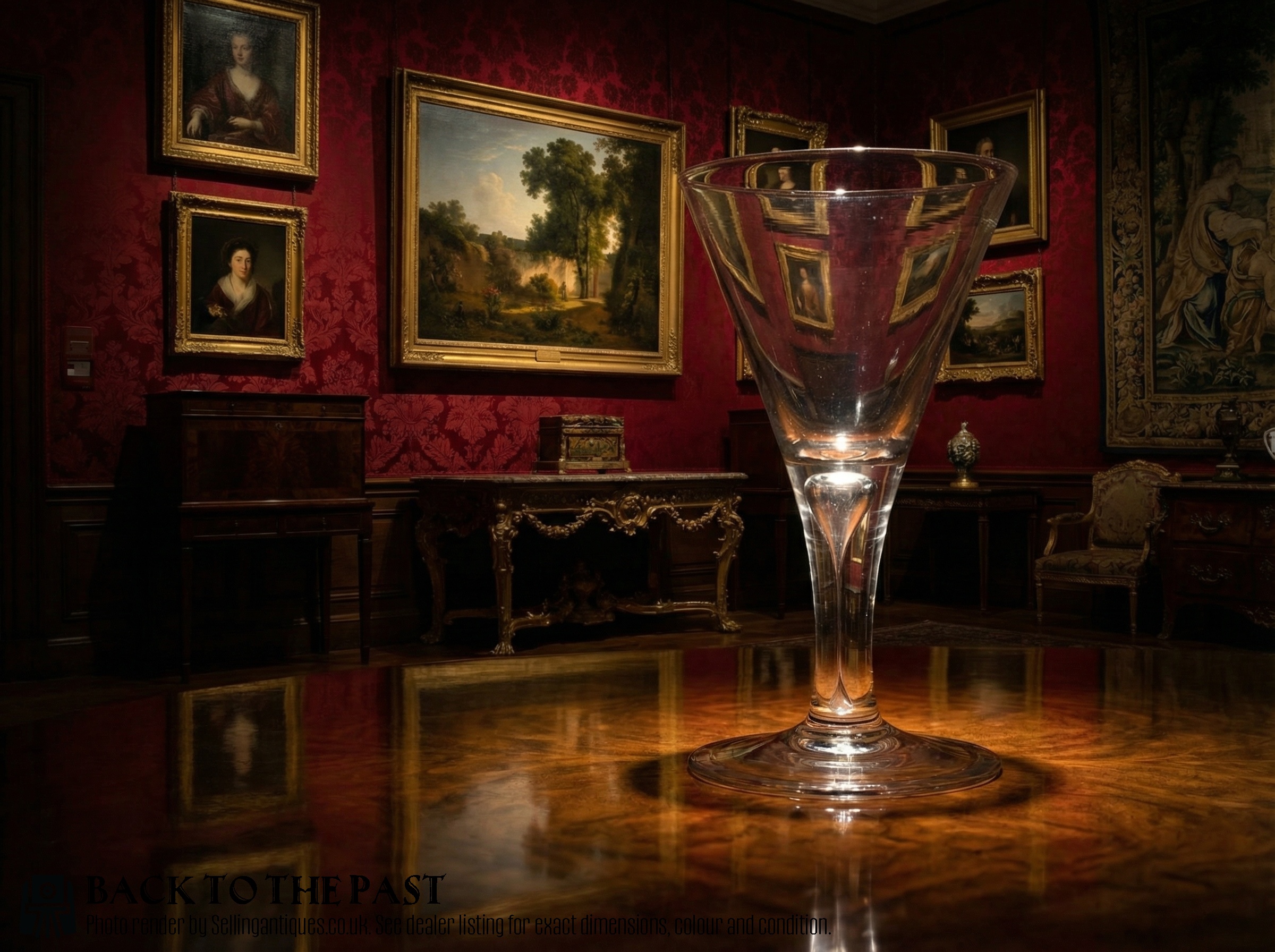
Lead Glass Drinking Goblet
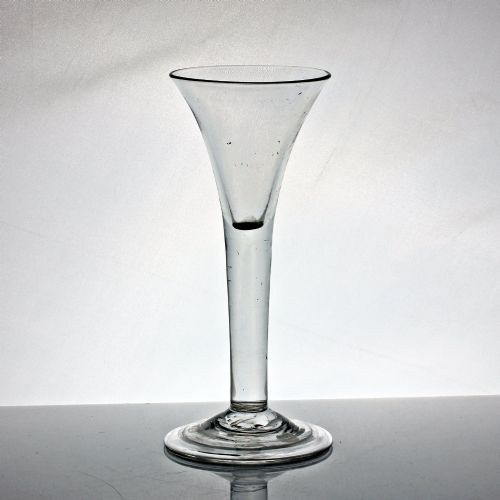
A lead glass drinking goblet is a substantial vessel designed for toasts, everyday drinking, and formal dining across the eighteenth and nineteenth centuries. When searching this phrase, a buyer encounters forms that span heavy tavern rummers, slender balustroid wine glasses, and deep-bowled ale vessels.
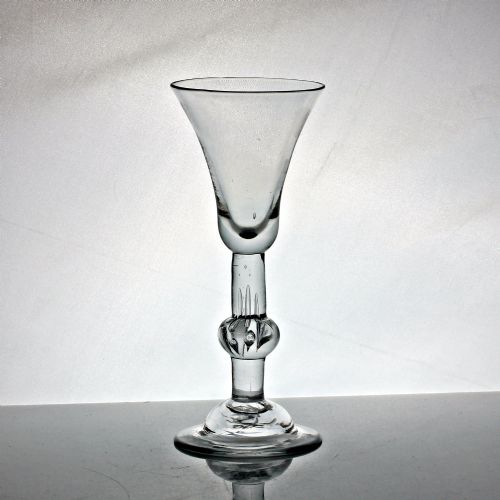
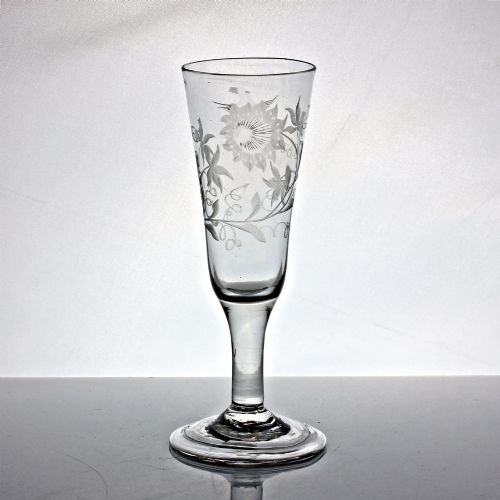
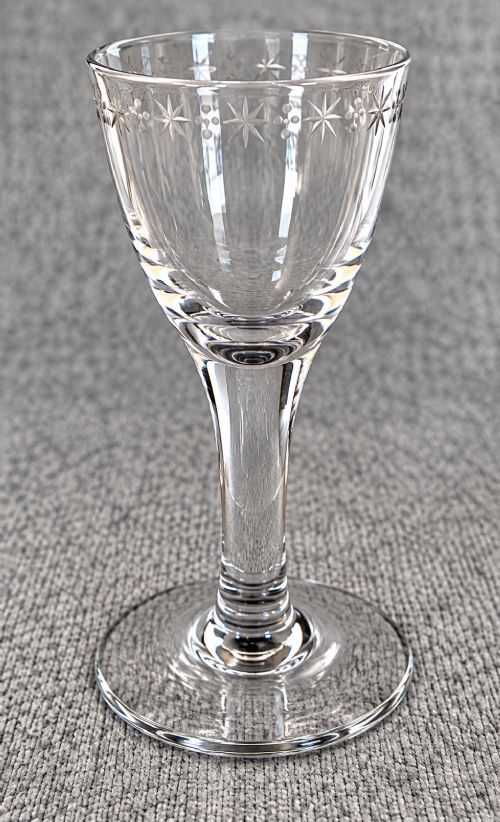
The dominant pieces on this page originate in the Georgian and Victorian periods, with mid-eighteenth-century examples forming a major portion of the selection. These vessels frequently feature decorative elements such as folded feet, facet-cut stems, and engraved bowls.
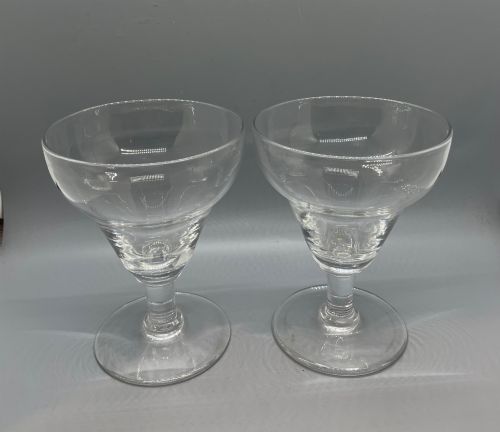
Formats range from tall rummers and capacious beer glasses down to smaller dram glasses and sweetmeat vessels. Each piece demonstrates the heavy, refractive qualities characteristic of early English glasshouse production.
Materials and methods
The material foundation of these objects is lead glass, often referred to as lead crystal or flint glass, which incorporates lead oxide to increase density, refractive brilliance, and weight. Makers shaped molten metal by hand, employing free-blowing and mould-blowing techniques before applying decorative cuts, engravings, or enamel details.
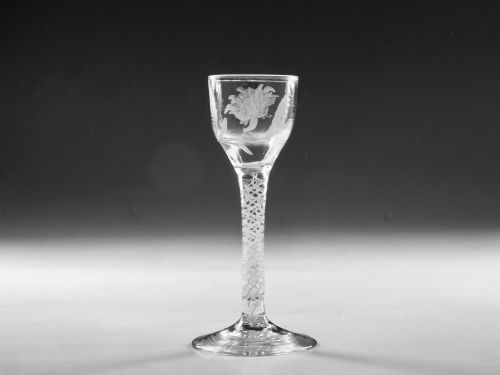
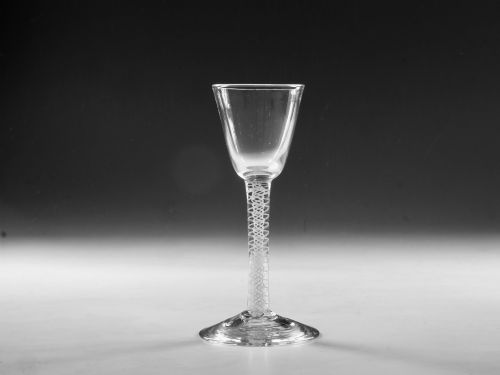
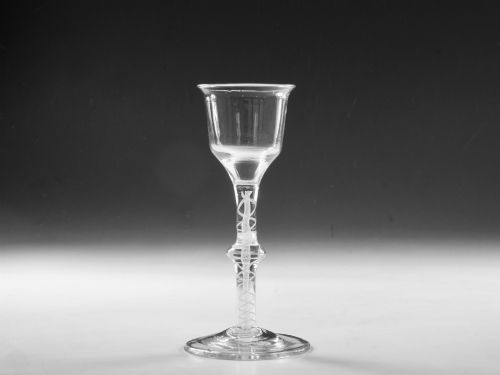
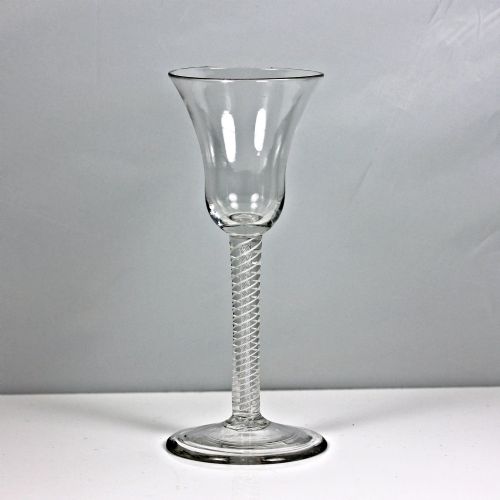
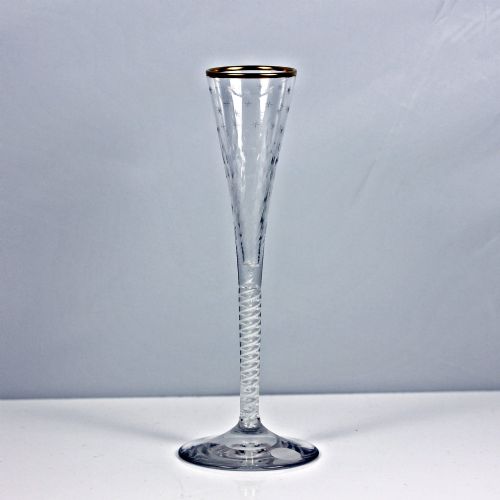
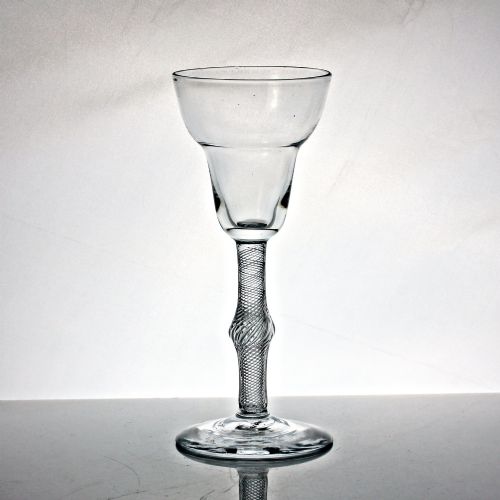
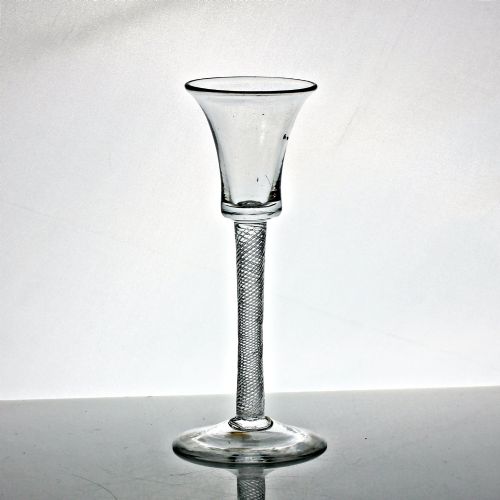
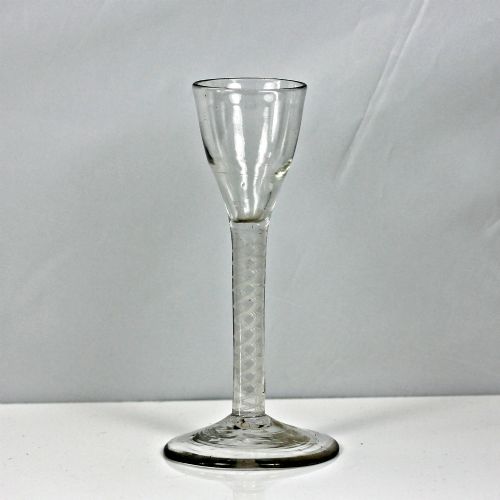
Stems and bowls were frequently worked separately and joined while hot, with twisted air bubbles or white enamel threads spun directly into the core of the stem during manufacture. This hot-working required immense skill to ensure structural symmetry and balance across complex baluster, knop, and faceted forms.
Listings feature lead glass objects spanning the Georgian and Victorian eras, alongside specific forms like dram glasses, rummers, and ale glasses.
Qualities of distinction
Differentiation across the range rests on the precision of the stem formation, the depth and clarity of any wheel-engraving, and the overall weight of the metal. Superior pieces display complex internal structures like multi-spiral air twists or mixed enamel threads without distortion in the glass wall.
Proportion and foot formation dictate the visual success of a goblet, with folded feet and domed bases representing careful, traditional workmanship. Pieces that retain high optical brilliance, sharp facet cuts, and unclouded surfaces command greater appreciation among collectors.
The Lead Glass Drinking Goblet Glossary
- Air twist
- A stem containing spiral threads of elongated air bubbles trapped within the glass. This optical effect was achieved by drawing and twisting hot metal.
- Baluster stem
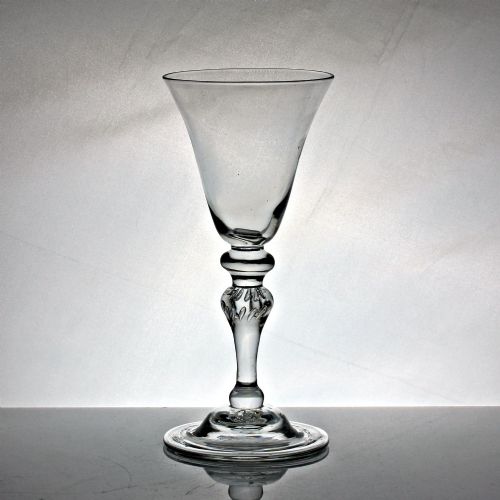
- A heavy, thick stem shaped with swelling knots reminiscent of architectural balusters. These sturdy supports typify early eighteenth-century drinking vessels.
- Folded foot
- A base whose outer rim is folded back underneath itself to create a thickened, rounded edge. This technique added stability and strength to heavy drinking vessels.
- Rummer
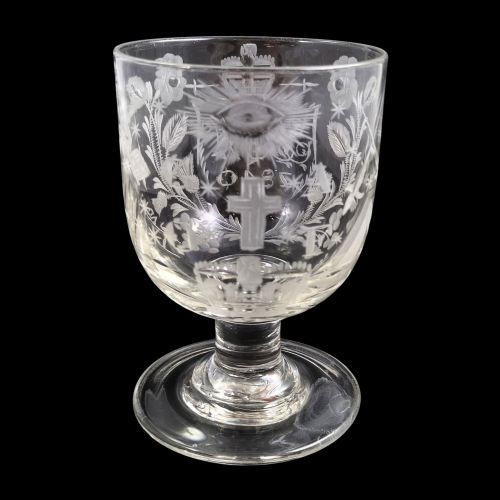
- A capacious, heavy-bottomed drinking glass developed for beer, wine, or punch during the Georgian and Victorian eras. Their robust proportions suited communal dining.
- Wrythen
- A surface decoration featuring spiral ribs or flutes twisted around the body of the glass. It is created by rotating the piece in a mould while hot.
Lead Glass Drinking Goblet: Frequently Asked Questions
How do I date a glass goblet?
Dating relies on combining stylistic evidence from the bowl form, stem construction, and foot style. Early eighteenth-century pieces often feature heavy baluster stems, while mid-century examples introduced air and opaque twists.
Foot characteristics also provide clues, as folded rims appear more frequently on pieces produced before the late eighteenth century. Comparing the pontil mark and overall weight further helps narrow down the production period.
What is the difference between a rummer and a wine glass?
Rummers are substantially larger, heavier drinking vessels designed primarily for beer, ale, or punch rather than delicate wines. They possess thicker walls and broader bowls suited to heavier everyday use.
Wine glasses from the same periods generally feature taller, narrower stems and more refined bowls intended for smaller measures of wine or spirits. Their forms evolved rapidly throughout the eighteenth century to follow changing beverage fashions.
Can I use antique goblets for drinks?
Many collectors use lead glass goblets for special occasions, provided they receive careful hand washing without sudden temperature changes. Lead glass is durable, but thermal shock can crack ancient metal.
Gentle handling prevents accidental chipping of fragile rims and historical engraved surfaces. Storing them securely away from edge hazards ensures their longevity for future toasts.
What does opaque twist mean?
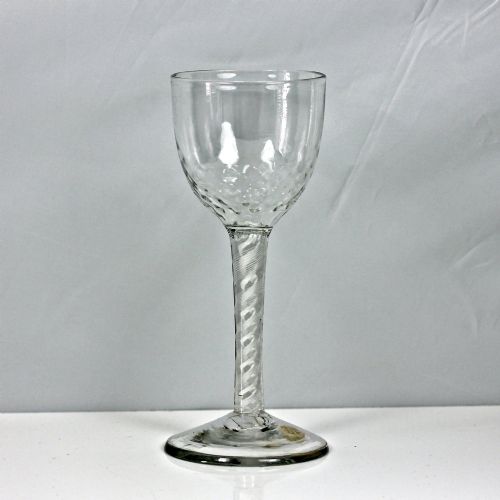
An opaque twist describes a stem containing fine white or coloured enamel threads spun into a spiral pattern inside clear glass. Makers produced these by inserting rods of opaque glass into the core of the stem before drawing and twisting the metal.
Single series twists contain one set of enamel threads, while double series versions combine multiple threads for a denser, more intricate internal design. This decorative technique peaked in popularity during the mid-eighteenth century.