





Lead Crystal Pedestals
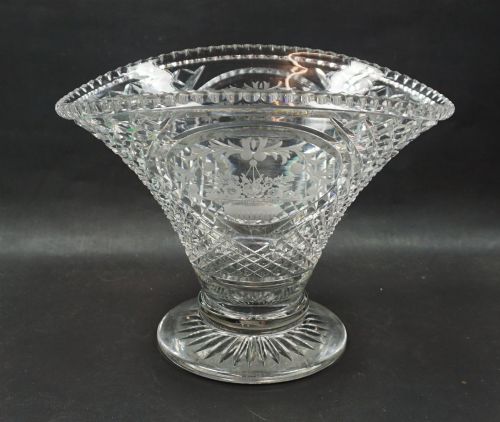
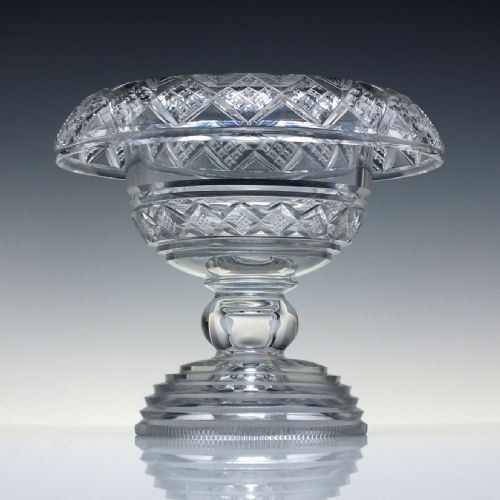
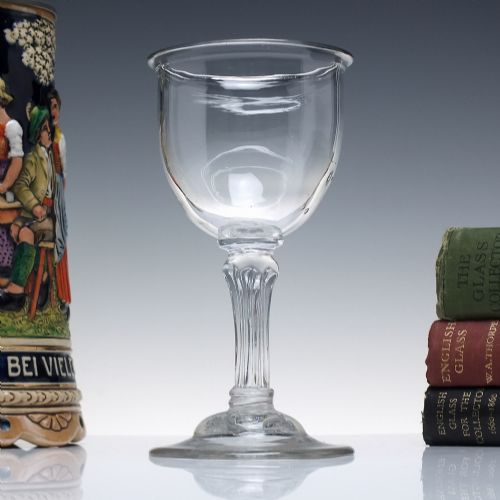
Lead crystal pedestals are heavy, refractive stands and raised bowls that catch the light from every angle.
Lead Crystal Pedestals
The pieces appearing on this page span several centuries, reaching from early Georgian and eighteenth-century examples through the Regency, Victorian, and Edwardian eras. You will encounter decorative bowls, centrepiece bowls, fruit bowls, jars, and ewers alongside traditional Irish crystal and miniature forms.
Victorian and Edwardian iterations dominate the selection, offering substantial cut glass bowls, etched tazza stands, and lidded vases alongside earlier Georgian standing bowls. Each object uses its raised foot to command attention, whether placed upon a sideboard or used as a table centrepiece.
Materials and Manufacture
Makers shaped these objects from heavy lead glass and clear crystal glass, utilising formulations that increased the refractive index and weight of the material. This dense medium allowed artisans to cut deep facets without compromising the structural integrity of the raised stem or pedestal foot.
Craftsmen applied cutting, etching, and hobnail patterns directly to the surface of the lead crystal, removing portions of the material to reveal brilliant patterns that catch the ambient light. Lidded vases, ewers, and bowls received hand-cut flutes, panels, and intricate geometric designs characteristic of their respective periods.
Lead Crystal Pedestals Retail Price Guide 2026
Typical asking prices for lead crystal pedestals among the pieces listed under this phrase on Sellingantiques today, from the lower quarter to the upper quarter. They describe what is for sale here now, not the wider market.
Victorian households regularly deployed these towering glass pedestals to display pyramids of wax fruit when fresh produce proved too costly to rot.
Assessing Quality and Execution
Clarity and weight distinguish superior lead crystal pedestals from simpler glassware, with high-lead compositions delivering greater brilliance and a resonant ring when struck. The depth and crispness of the hand-cut facets reveal the skill of the glass cutter, where sharper geometric angles indicate superior craftsmanship.
Proportion between the bowl, the stem, and the pedestal foot determines the visual balance of the piece, with finer examples maintaining harmonious lines across complex hobnail or etched decorations. Surface wear on the underside of the base provides physical evidence of age on older specimens.
The Lead Crystal Pedestals Glossary
- Lead crystal
- A type of glass containing metallic lead oxide, which increases the weight, clarity, and refractive index of the material. This composition allows for deeper and sharper cutting than standard soda-lime glass.
- Tazza stand
- A shallow decorative bowl or plate mounted upon a central pedestal foot. These elevated vessels were traditionally used to serve fruit, sweetmeats, or cakes at formal tables.
- Hobnail pattern
- A raised, faceted surface decoration resembling the broad-headed nails used in traditional boots. Cutters ground these projecting square or diamond shapes into the body of the glass.
- Patch stand
- A small, elevated glass plate designed to hold cosmetic beauty patches worn during the eighteenth century. These miniature pedestals are exceptionally delicate and highly collectible.
- Standing bowl
- A deep bowl supported by an integral stem and foot rather than resting flat upon a surface. These pieces often feature extensive Irish or English geometric cutting.
Lead Crystal Pedestals: Frequently Asked Questions
What is a lead crystal pedestal?
A lead crystal pedestal is a raised glass vessel, such as a centrepiece bowl, tazza stand, or decanter, supported by a distinct stem and foot. These pieces use heavy, high-refractive glass to elevate contents above the dining surface.
Craftsmen produced them across the Georgian, Victorian, and Edwardian periods using hand-cutting and etching techniques to manipulate the light passing through the dense crystal material.
How do I date an old pedestal?
Dating relies on observing the form, the weight of the lead glass, and the style of the cutting or etching applied to the surface. Georgian pieces often exhibit thicker pontil marks and simpler, heavier proportions, while Victorian items frequently feature elaborate hobnail patterns and etched floral motifs.
Edwardian examples tend toward crisp, machine-aided precision in their cutting, whereas eighteenth-century items show hand-formed irregularities and distinctive tool marks.
Were these pedestals used for dining?
Many of these pieces served practical functions at formal meals, holding fruit, sweetmeats, or liquids such as wine and cordials. Centrepiece bowls and ewers dominated the dining table during Victorian and Georgian banquets.
Smaller items like patch stands served intimate, personal uses on dressing tables, holding small velvet or silk cosmetic patches popular in earlier centuries.
How should I clean lead crystal?
Clean lead crystal by hand using warm water and a mild detergent, avoiding harsh abrasives that might scratch the soft lead surface. Support the heavy pedestal base securely during washing to prevent accidental impacts against the sink.
Dry the vessel immediately with a lint-free cloth to preserve the brilliance of the cut facets and prevent water spots from forming on the clear glass.
What is Irish crystal?
Irish crystal refers to lead glass vessels manufactured in Ireland, particularly during the Georgian and nineteenth-century periods, known for exceptional clarity and deep, bold cutting. Factories in locations such as Waterford produced heavy bowls and decanters that gained renown for their distinct bluish tint and substantial weight.
These pieces command attention through their heavy facets and robust proportions, reflecting traditional Anglo-Irish glassmaking techniques.