


Late Victorian Tray
When you choose a late victorian tray, you secure a functional piece of nineteenth-century craftsmanship designed for serving, display, or organising.
Late Victorian Tray
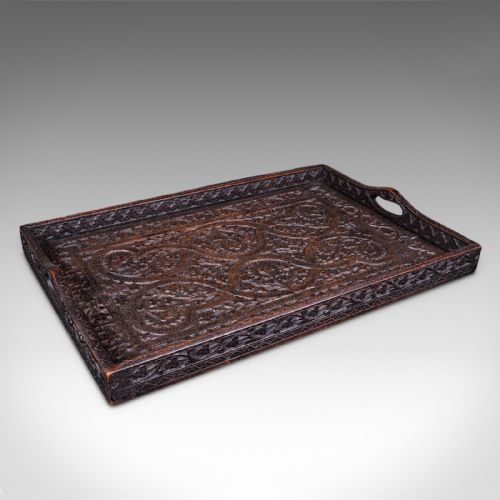
A late victorian tray encompasses a variety of serving platters, butlers' trays on folding stands, and desktop desk accessories intended for daily use in domestic spaces. These pieces reflect the eclectic design movements of the late nineteenth century, spanning standard serving dishes to specialised items like pen trays and crumb trays.
Origins range from traditional English workshops to pieces influenced by broader stylistic movements such as Arts and Crafts, Aesthetic Movement, and Anglo-Indian design. The form serves both practical and decorative functions within domestic interiors, bridging utilitarian service with ornamental display.
What Varies in Quality
The standard of a piece depends heavily on the crispness of its chasing, engraving, and surface carving, alongside the structural integrity of joints and stands. Heavier gauge metals and substantial timber frames indicate a higher grade of manufacture intended for durability.
Makers' marks and signatures from established silversmiths or workshops elevate the standing of silver-plated and sterling pieces. Finer examples display meticulous attention to detail in applied borders, handles, and gallery railings.
The listings show a prominent use of silver plate alongside traditional English hardwoods like oak and mahogany across nineteenth-century serving wares.
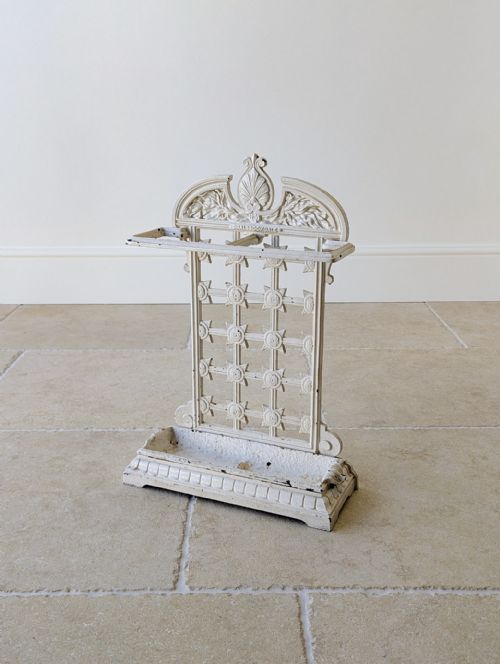
Coalbrookdale·Daniel Arter·John Harrison·Walker & Hall·Martin Hall·Shoolbred·Charles Boyton II·Elkington & Co·Roberts & Belk·Philip Ashberry & Sons·Lee & Wigfull·Thomas Wilkinson·Atkin Brothers
The Late Victorian Tray Glossary
- Gallery tray
- A tray featuring a raised pierced or solid border, often metal or wood, designed to prevent items from sliding off during service.
- Butler's tray
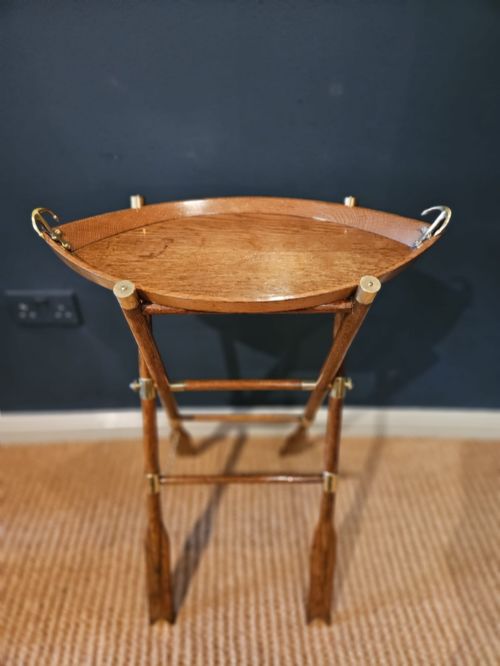
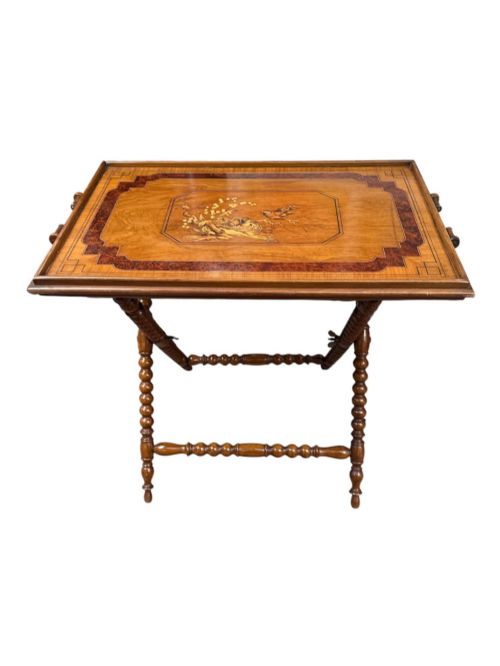
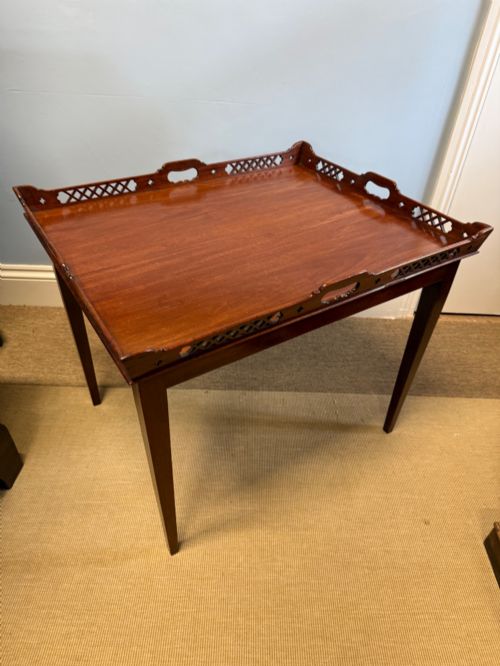
- A removable rectangular tray traditionally set upon a folding wooden stand for serving drinks or afternoon tea.
- Silver plate
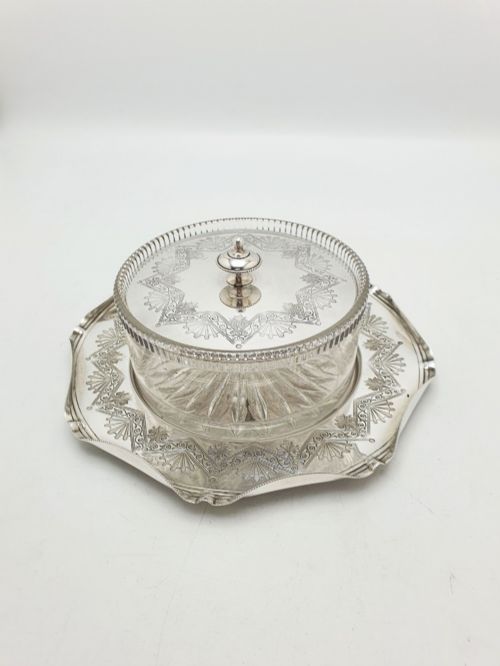
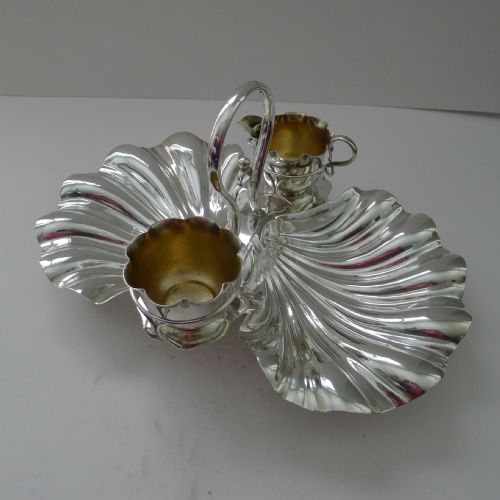
- A base metal, commonly copper or nickel silver, coated with a thin layer of pure silver through electroplating or older fusion methods.
- Salver
- A flat serving tray, usually circular and supported on small feet, utilised for presenting glasses, letters, or visiting cards.
- Marquetry
- The art of applying pieces of veneer to a structure to form decorative patterns, frequently seen on imported wooden tabletops.
Late Victorian Tray: Frequently Asked Questions
How were these trays used?
These pieces served practical roles in nineteenth-century homes, carrying tea services, holding correspondence on desks, or displaying calling cards in hallways.
Larger versions functioned as portable serving surfaces for dining rooms and drawing rooms, while smaller trays organised personal items on dressing tables.
Are tray tables sturdy?
Butler's trays paired with their original folding stands are engineered to support the weight of heavy tea sets and glassware during service.
The folding mechanism allows the stand to be stored flat when not in use while maintaining stability when locked into position.
How do I care for silver plate?
Silver-plated items require gentle cleaning with specialised non-abrasive polishes to preserve the thin metal coating over the base metal.
Regular dusting and avoiding prolonged exposure to moisture protect the reflective surface from tarnishing prematurely.
What defines the Aesthetic Movement?
This design style emphasises visual beauty and artistic expression over strict utility, drawing inspiration from Japanese and nature motifs.
Trays and desk accessories from this period often display stylized flora, fauna, and asymmetrical compositions executed in brass or ceramic.