



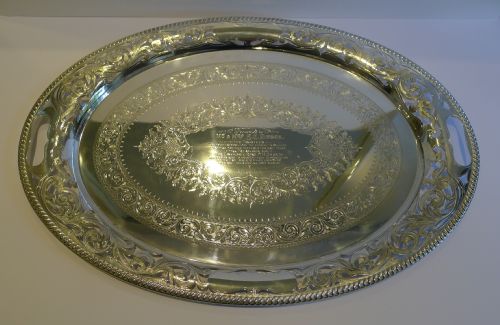

Gallery Rim Tray
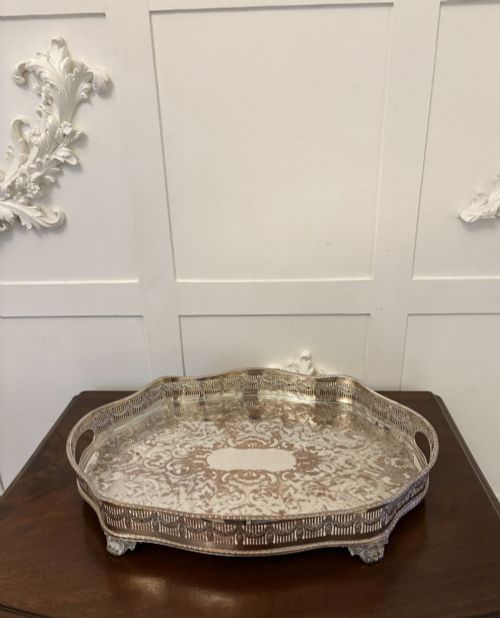
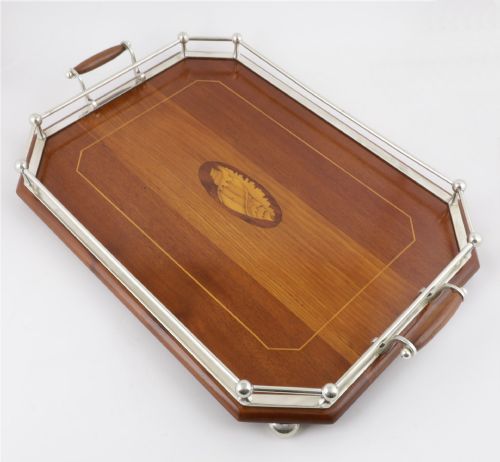
A gallery rim tray provides a raised pierced or solid border to keep glassware secure, combining timber bases with plated metal mounts.
Gallery Rim Tray
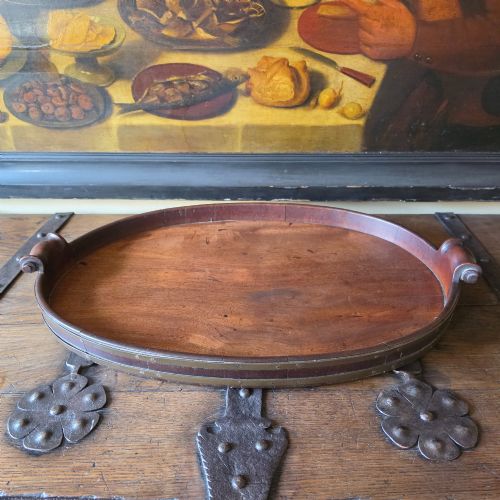
When you search for a gallery rim tray, you find serving vessels designed with distinct raised borders that prevent glassware or decanters from sliding off during service. These pieces range from substantial Edwardian examples to earlier eighteenth-century forms.
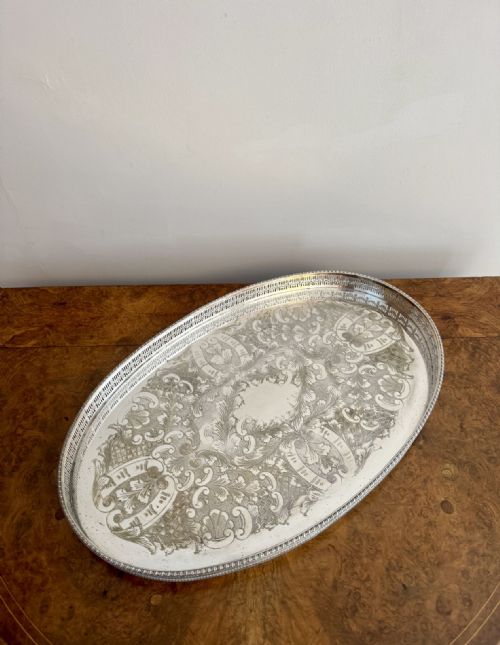
The versions you are most likely to meet on this page pair wooden bases like mahogany or oak with silver plate, EPNS, or brass galleries. They appear as octagonal, oval, or rectangular serving trays and platters.
Makers utilised pierced metal galleries alongside shell inlay and engraved details, bridging practical serving needs with formal display.
How they were made
Craftsmen built the foundations of timber using mahogany and oak, often incorporating decorative elements such as shell inlay into the wooden base. Silver plate, electroplated nickel silver, and sterling silver formed the protective surfaces and raised borders.
Metalwork techniques involved piercing, reticulation, and embossing to create intricate decorative scrolls along the tray walls. Rivets and secure joinery fastened the metal gallery securely to the wooden base plate.
Gallery Rim Tray Retail Price Guide 2026
Typical asking prices for gallery rim tray among the pieces listed under this phrase on Sellingantiques today, from the lower quarter to the upper quarter. They describe what is for sale here now, not the wider market.
Some trays hide intricate shell inlay beneath your cocktails, giving the butler a secret design to admire.
What varies in quality
The distinction between standard domestic production and superior items rests in the weight of the metal and the crispness of the pierced gallery work. Finely reticulated brass or silver plate demonstrates greater artisan skill than stamped alternatives.
Timber selection also dictates value, with well-figured mahogany or quarter-sawn oak providing a stable and handsome foundation for the metal mounts.
J.H. Potter
The Gallery Rim Tray Glossary
- Gallery
- A raised miniature balustrade or railing fitted around the edge of a tray to secure items. This metal or wooden border defines the form.
- Reticulated
- Pierced or perforated in a net-like ornamental pattern. Craftsmen used this method to lighten the visual weight of metal rims.
- EPNS
- Electroplated nickel silver. This base metal forms the foundation beneath a thin coat of silver.
- Sheraton Revival
- A late nineteenth and early twentieth-century design movement. It reinterprets eighteenth-century neoclassical furniture forms.
Gallery Rim Tray: Frequently Asked Questions
What is a gallery rim tray?
A gallery rim tray is a serving piece featuring a raised decorative metal or wooden border designed to keep glasses and decanters stable.
These items date from the eighteenth century through the interwar period, combining timber bases with plated metal surrounds.
How were these trays used?
They served primarily for carrying tea sets, cocktails, and drinks across a room while preventing glassware from sliding off the edge.
Hosts also utilised them as stationary display pieces on sideboards and tables when not actively serving guests.
How do I care for the wood and metal?
Keep the wooden base conditioned with appropriate furniture wax and avoid exposing the surface to excessive moisture.
Clean the silver-plated or brass gallery gently with a suitable non-abrasive metal polish to preserve the finish.
How do I tell an Edwardian tray apart?
Edwardian examples often feature combination materials like oak paired with silver plate, along with specific hallmarks or electroplate stamps.
Their decorative motifs frequently draw upon earlier neoclassical revival styles popular around the turn of the twentieth century.