


Late Victorian Oak Sideboard
A late victorian oak sideboard brings substantial storage and deep timber grain to a room, rooted in nineteenth-century craftsmanship.
Late Victorian Oak Sideboard
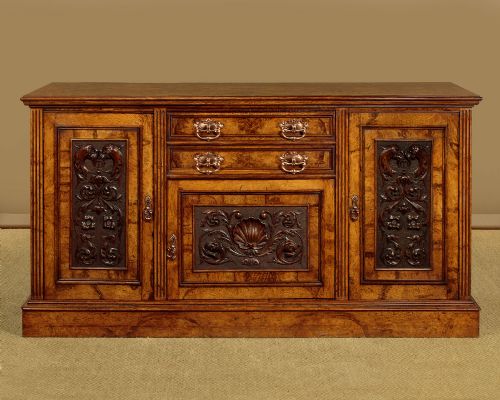
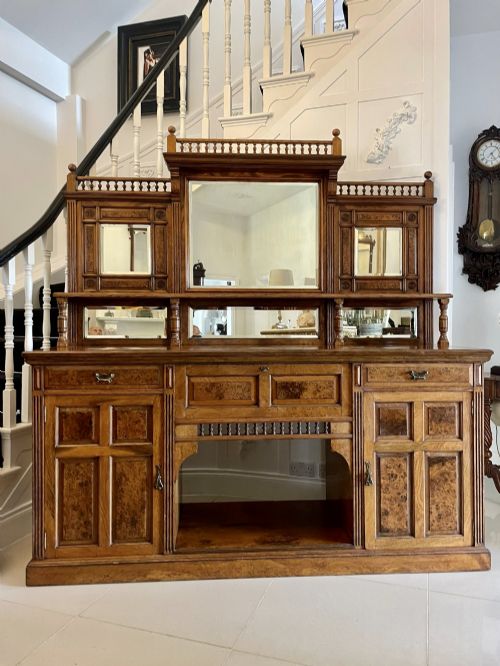
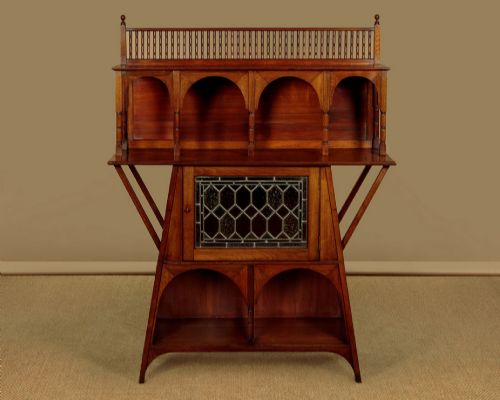
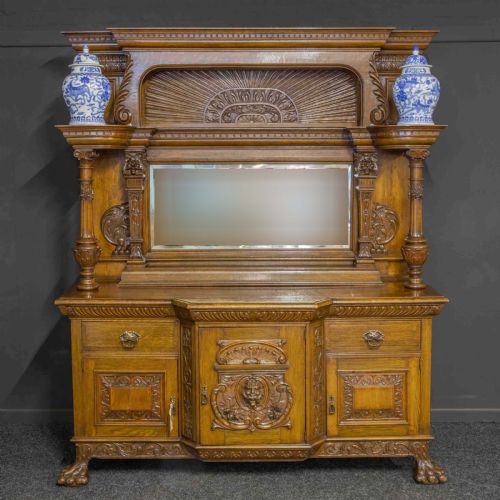
A late victorian oak sideboard provides heavy storage and display surfaces, appearing across Victorian, Arts and Crafts, Gothic Revival, and Aesthetic Movement styles. These large dining room and hallway pieces range from plain light oak formats to heavily carved designs featuring mirror backs and bowfront bodies.
The versions met most frequently on this page include carved oak sideboards, buffets, and servers spanning the late nineteenth century. Makers and workshops of the period utilised durable timber alongside brass hardware, ceramic inserts, and occasional marble tops to create functional furniture for domestic interiors.
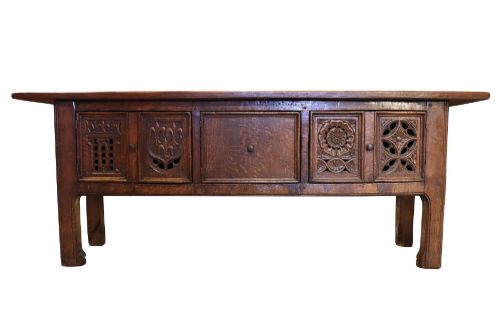
Beyond standard sideboards, the selection encompasses related storage forms such as dresser bases, creedence cabinets, and side cabinets influenced by Gothic and Arts and Crafts ideals. Each piece reflects the varied aesthetic tastes circulating between eighteen eighty and nineteen hundred.
Materials and construction
Cabinet makers constructed these sideboards primarily from solid and figured oak, occasionally selecting pollard oak or burr oak for enhanced visual grain. Secondary materials include brass for handles and hinges, glass for cabinet doors, and lead framing for stained glass panels.
Carving serves as the primary decorative technique, manifesting as green man motifs, lion masks, and linear Gothic Revival detailing. Workshops also integrated marble tops, ceramic tiles, and ebonised finishes to achieve distinct stylistic expressions within the Victorian period.
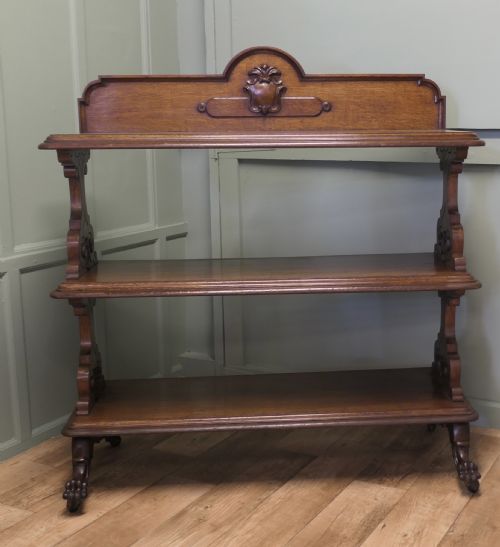
Storage forms range from standard sideboards and buffets to specialised creedence cabinets, dumb waiters, and washstands.
Distinctions in quality
Quality in a late victorian oak sideboard rests upon the selection of timber and the execution of carved ornamentation. Superior examples display figured pollard or burr oak veneers alongside deep, crisp hand-carving rather than superficial stamping.
Structural integrity and hardware choices further differentiate the tier of a piece, with top-grade cabinets retaining original brass fittings, leaded glass, and substantial marble surfaces. Maker attribution to known workshops elevates the standing of a sideboard within the historical record.
Liberty & Co.·Garnett & Sons·Warings
The Late Victorian Oak Sideboard Glossary
- Pollard oak
- Timber taken from trees that have been pollarded, producing a dense, knotty grain pattern prized for decorative panels. This figured wood appears on high-status Victorian case furniture.
- Gothic Revival
- An architectural and decorative style drawing inspiration from medieval forms, characterised by pointed arches and heavy carved detail. Pieces in this idiom often feature linenfold panels or ecclesiastical motifs.
- Aesthetic Movement
- A late nineteenth-century design current emphasising art for art's sake and simplified, often ebonised forms. Furniture from this movement prioritises visual composition over historical revival.
- Credence cabinet
- A small storage cupboard traditionally used for holding food or communion elements, reinterpreted in the nineteenth century as domestic furniture. These compact pieces frequently exhibit Gothic Revival characteristics.
- Bowfront
- A convex, curved front profile applied to cabinets and dressers to soften linear geometry. This shaping requires specialised joinery to bend or carve the timber accurately.
Late Victorian Oak Sideboard: Frequently Asked Questions
What defines a late victorian oak sideboard?
A late victorian oak sideboard is a heavy storage piece produced between eighteen eighty and nineteen hundred, typically constructed from solid or figured oak. These items combine practical drawer and cabinet space with decorative elements drawn from contemporary revival styles.
They frequently incorporate mirrors, carved panels, and brass hardware, reflecting the domestic requirements and aesthetic preferences of late nineteenth-century households.
How do I identify a Gothic Revival sideboard?
Gothic Revival sideboards are recognised by architectural motifs such as pointed arches, linenfold panels, and heavy geometric mouldings. Carvings on these pieces often include medieval symbols, lion masks, or green man faces.
Such furniture was built to create a solemn, historically grounded atmosphere in Victorian dining rooms, contrasting with lighter Arts and Crafts designs.
Where were these sideboards used originally?
These sideboards served primarily in dining rooms to store heavy tableware, linen, and serving dishes. The flat top surface acted as a station for presenting food and drink during family meals.
In larger homes, similar cabinets also populated hallways and reception rooms to display decorative ceramics and glassware behind glass doors.
How do I care for antique oak furniture?
Maintain antique oak by keeping it away from direct heat sources and strong sunlight, which can dry out and split the timber. Apply a traditional beeswax polish sparingly to nourish the grain and protect the surface.
Avoid using modern liquid silicones or abrasive cleaners, as these can permanently damage the historic polish and finish of the wood.