


Mirrored Oak Chiffonier
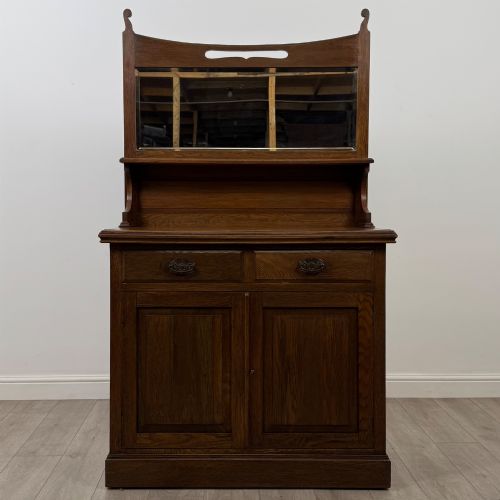
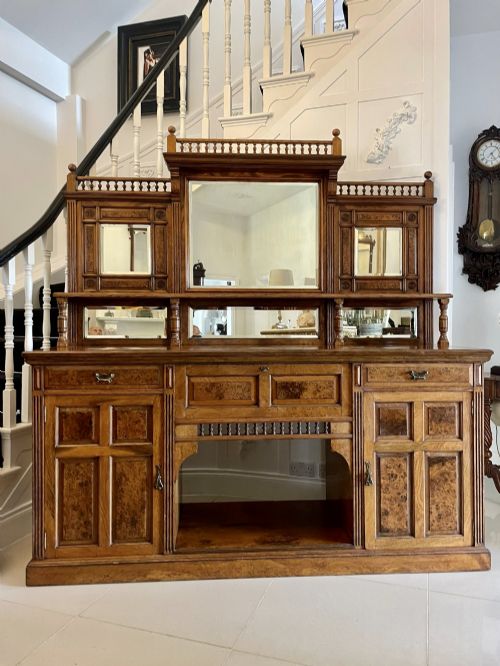
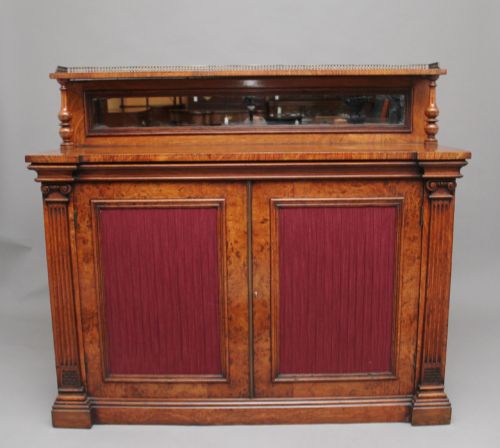
A mirrored oak chiffonier brings rich timber grain and reflecting glass to a room, offering both display surface and enclosed storage.
Mirrored Oak Chiffonier
When you search for a mirrored oak chiffonier, you are looking at substantial sideboard furniture combining timber structure with integrated mirror glass. The pieces seen on this page span the Victorian and Edwardian periods, stretching from eighteen eighty up to nineteen ten.
Most examples you will meet here take the form of sideboards and cabinets featuring mirror backs or mirror tops. They emerge from several design movements including Arts and Crafts, Aesthetic, and Victorian styles, often utilising pollard oak alongside standard oak timbers.
How they were made
Maker workshops built these cabinets using solid oak and pollard oak timber, sometimes incorporating ebonised wood for contrast. Metal elements in brass and copper appear on hardware and mounts.
Large mirror glass panels are integrated into the upper back sections of the sideboards. Fabric linings and secondary timbers like pine are also utilised within the construction of the cabinets.
Listings span from the nineteenth century through the Edwardian era, including Victorian, Arts and Crafts, and Aesthetic Movement styles.
What varies in quality
The distinction between standard and superior pieces rests in the selection of wood, particularly the figuring of the pollard oak and golden oak veneers. Richly patterned timber grain elevates the presence of a sideboard significantly.
Carving execution and the integration of the mirror back define the finer examples. Elaborate detailing and substantial proportions separate the ambitious workshop pieces from simpler utility furniture.
Garnett & Sons
The Mirrored Oak Chiffonier Glossary
- Chiffonier
- A low sideboard or cabinet featuring shelves or a mirror back. It provides storage space below while offering a surface for display.
- Pollard Oak
- Timber taken from trees that have been pollarded, producing highly decorative growth patterns and knots. It is prized for its mottled figuring.
- Aesthetic Movement
- A late nineteenth century design style emphasising visual beauty over narrative subject matter. Ebonised finishes and gilt details frequently accompany this look.
- Arts and Crafts
- A design movement valuing honest construction and traditional craftsmanship. The style favours unpretentious golden oak surfaces and simple structural forms.
Mirrored Oak Chiffonier: Frequently Asked Questions
What is a mirrored oak chiffonier?
A mirrored oak chiffonier is a large sideboard or cabinet built from oak timber with an attached glass mirror. These pieces combine lower storage cupboards with upper display areas.
Originating mostly in the nineteenth and early twentieth centuries, they served as functional dining room furniture for displaying silver and serving food.
How do I date an oak chiffonier?
Dating relies on observing the stylistic markers and materials used across different decades. Victorian examples often display heavy carving, whilst Edwardian and later Arts and Crafts pieces tend towards lighter oak tones.
Makers' marks, brass hardware styles, and the method of silvering on the mirror glass also provide clues to the exact period of manufacture.
Where was a chiffonier placed?
These sideboards traditionally stood against dining room walls where food could be plated and tableware stored close at hand. The mirror helped to reflect candle or gas light around the room.
Today they function equally well in hallways or living spaces, providing surface area for lamps and decorative objects.
What is pollard oak?
Pollard oak comes from trees pruned above animal browsing height, which forces dense branching and creates swirling grain patterns. Cabinetmakers sliced this timber into decorative veneers.
It appears on the finest Victorian sideboards to add texture and visual depth to large flat surfaces.