




Late Victorian Hall Seat
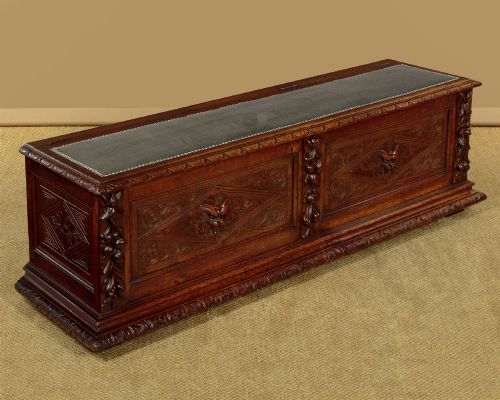
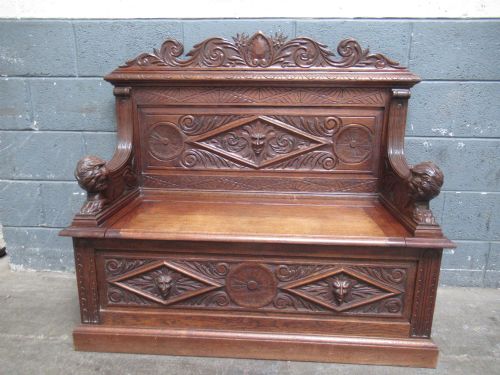
A late victorian hall seat welcomes visitors with carved timber and practical storage, anchoring an entranceway with period character.
Late Victorian Hall Seat
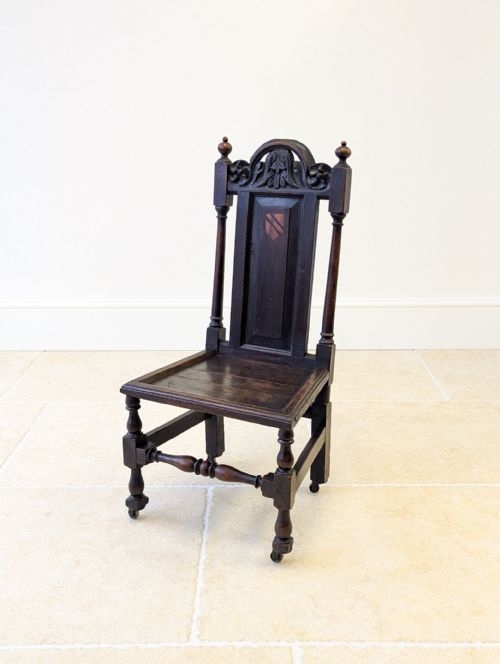
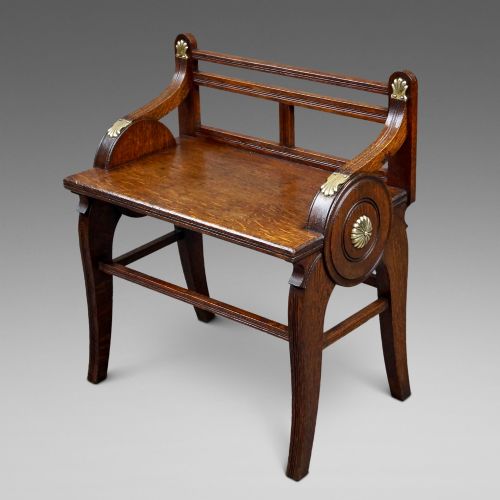
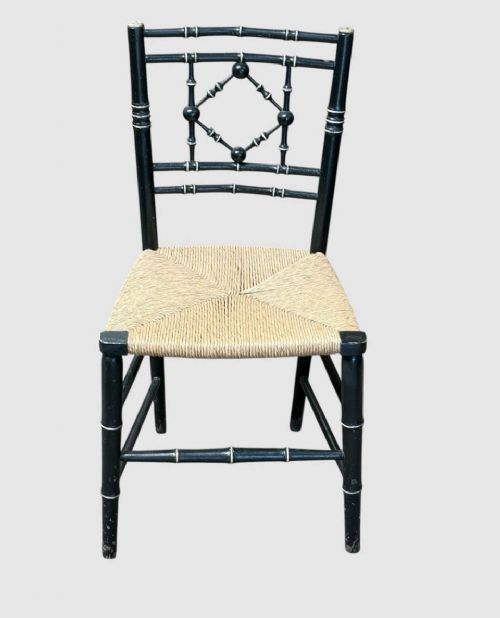
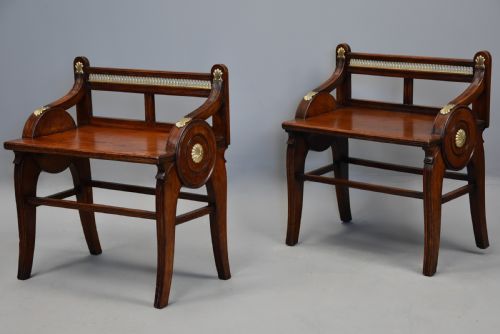
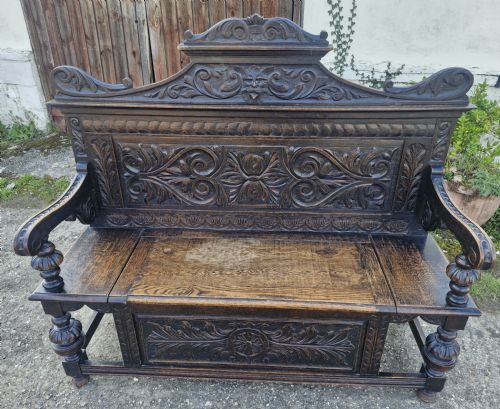
A late victorian hall seat combines the practical seating of an entranceway with storage compartments, appearing as benches, settles, and monks benches. These forms populate the selection alongside related hall chairs and window seats from the same era.
Makers and workshops constructed these pieces primarily in oak, mahogany, and walnut, often applying revival styles such as Jacobean Revival and Gothic Revival. Pieces span the late nineteenth century, reflecting the tastes of the eighteen-eighties and eighteen-nineties.
Materials and construction
Carpenters utilised solid timber, predominantly oak and mahogany, building sturdy frames designed to withstand heavy daily use in entrance halls. Carved ornamentation, pierced splats, and turned elements define the decorative approach of the period.
Makers incorporated functional hardware including brass mounts, hinges for lift-up storage seats, and occasional upholstery in velvet, leather, or fabric.
Duet stools and Ceylonese satinwood chairs slip into the lineup, proving Victorians liked a surprise by the umbrella stand.
Evaluating craftsmanship
Depth and crispness of hand-carved detail separate standard production from superior examples, particularly on panelled backs and arm supports. Timber selection also dictates grade, with dense figured oak and select mahogany commanding attention.
Structural integrity relies on traditional joinery techniques and the survival of original brass hardware or fitted storage mechanisms without excessive replacement.
James Shoolbred & Co.
The Late Victorian Hall Seat Glossary
- Jacobean Revival
- A nineteenth-century design style emulating seventeenth-century English woodwork, featuring heavy turned legs and geometric carving. This style frequently appears on oak seating from the period.
- Monks Bench
- A convertible piece of furniture functioning as both a table and a seat with a storage box underneath. The hinged back folds down to form a flat surface.
- Settle
- A wooden bench with a high solid back designed to block draughts, often incorporating a lift-up seat for storage. These items provide substantial seating in large entrance halls.
- Pierced Splat
- The central vertical strip of a chair back pierced through to create an openwork decorative pattern. This feature occurs on side chairs and hall chairs of the era.
- Aesthetic Movement
- A late nineteenth-century design movement emphasising visual beauty over narrative subject matter. Furniture from this circle values refined lines and decorative detail.
Late Victorian Hall Seat: Frequently Asked Questions
What is a monks hall seat?
A monks hall seat is a dual-purpose wooden form that operates as a bench with a storage compartment beneath the lid. The hinged back panel pivots or folds to transform the piece into a small table.
These versatile items suit hallways where space demands multi-functional furniture. They typically feature carved oak panels characteristic of late nineteenth-century revival styles.
How do I spot Jacobean revival style?
Jacobean revival items display heavy geometric mouldings, strapwork carving, and robust turned supports reminiscent of seventeenth-century English joinery. Makers utilised dark oak to emulate the ageing of earlier furniture.
Look for deep relief carving on backrests and panelled storage boxes. This aesthetic was popular for entrance hall furniture designed to project historic gravitas.
Were these seats used in hallways?
These seats occupied the entrance halls of Victorian homes to provide a place for guests to sit while removing outer garments. The integrated storage held items like walking sticks, umbrellas, and outdoor accessories.
Their robust timber construction ensured they endured the heavy traffic of a front entrance. Many surviving examples retain lift-up lids designed specifically for this domestic storage.
What wood was used most often?
Oak forms the primary timber for these pieces, appearing both plain and heavily carved in revival styles. Mahogany and walnut also occur, particularly on more refined seating and reception chairs.
Alternative woods like elm and satinwood appear in specific regional or colonial pieces. Upholstered elements occasionally incorporate velvet, leather, or standard fabric.