


Late Victorian Gold Pendant
A late victorian gold pendant is a small jewelled ornament that brings the distinctive craftsmanship and romantic motifs of the late nineteenth century to the neckline.
Late Victorian Gold Pendant
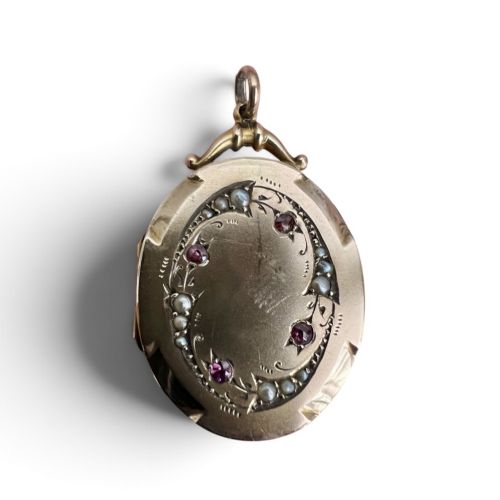
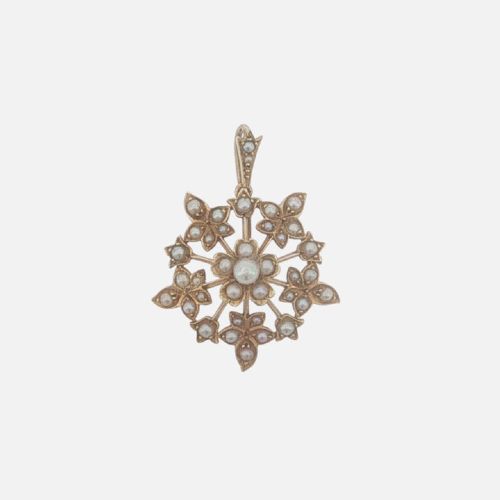
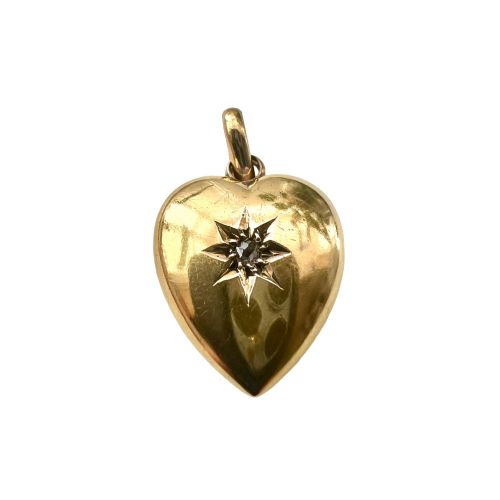
When you search for a late victorian gold pendant, you encounter jewels shaped by the prevailing tastes of the closing decades of the nineteenth century, including the Victorian, Edwardian, and Arts and Crafts movements. The pieces on this page span forms such as lockets, crosses, sunbursts, and convertible brooches that double as necklaces, often incorporating regional revivals like Victorian Orientalism and French Baroque styles.
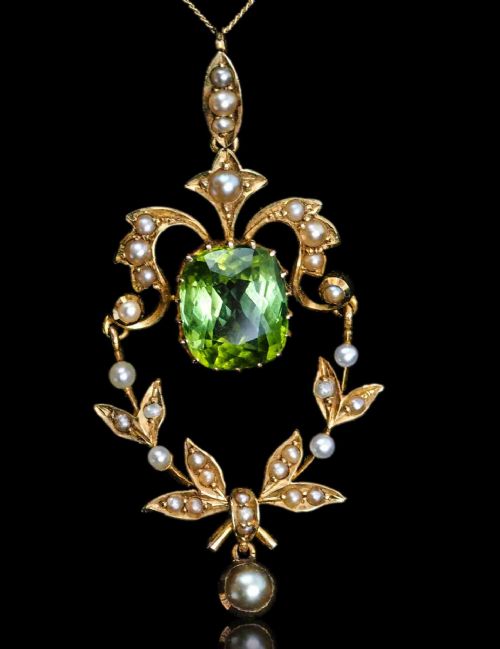
The most common examples you meet balance high-carat gold with delicate clusters of seed pearls, garnets, or old-cut diamonds. Makers of the period frequently utilised convertible settings, allowing a single piece to function as both a pendant and a brooch depending on the wearer's attire.
How they were made
The goldsmiths of this era worked primarily in nine-carat, fifteen-carat, and eighteen-carat gold, frequently pairing yellow or rose gold with silver settings on the face to make diamonds appear whiter and brighter. Stones such as peridots, opals, rubies, and turquoise were hand-set alongside seed pearls, while vitreous enamel added vibrant colour to cross and locket designs.
Construction techniques relied heavily on hand-piercing, repoussé, and fine granulation to achieve intricate floral, star, and buckle shapes. Many pendants incorporate hinged compartments, glass-covered locket backs, and secure pin stems designed to withstand daily wear.
Listings feature periods from 1880 through Edwardian times, alongside materials including fifteen-carat gold, silver, diamonds, and enamel.
What varies in quality
Quality rests upon the crispness of the hand-work and the matching of the stones, particularly where tiny seed pearls or old-cut diamonds are closely pavé-set into the gold or silver ground. Finer examples display meticulous claw work and substantial gauge metal that resists bending, whereas lesser pieces show uneven stone heights and hurried soldering.
The integrity of the original box, hallmarks, and convertible fittings also distinguishes exceptional examples from standard production. Pieces retaining their original unpolished patina and fully functional hinges command greater interest among collectors.
Murrle Bennett
The Late Victorian Gold Pendant Glossary
- Seed pearl
- A tiny, naturally occurring or early cultured pearl measuring under two millimetres, frequently drilled and threaded onto silk or wire in clusters.
- Old-cut diamond
- A hand-faceted diamond cut before the standardisation of modern brilliants, characterised by a smaller table, higher crown, and open culet.
- Convertible brooch
- A dual-purpose piece of jewellery featuring a removable pin stem and a hidden bail, allowing it to be worn on a chain or pinned to fabric.
- Hallmark
- An official stamp struck into precious metal by an assay office to indicate the purity of the gold or silver and the year of manufacture.
- Repoussé
- A metalworking technique where a smith hammers the metal from the reverse side to form a raised design in relief on the front.
Late Victorian Gold Pendant: Frequently Asked Questions
Can I wear my pendant every day?
These pieces were designed for regular social wear, but their age requires some care. It is wise to remove them before swimming, sleeping, or engaging in heavy physical work.
Softer gemstones like opals and pearls benefit from avoiding harsh chemicals and ultrasonic cleaning machines. A gentle wipe with a soft dry cloth maintains the gold and silver surfaces.
How do I attach a pendant to a chain?
Most pieces feature an integrated loop called a bail at the top, through which you thread your necklace chain. Some antique examples have smaller rings that require a fine jump ring to fit modern clasps.
Take care not to force a thick chain through a delicate antique bail. A jeweller can easily add a matching gold jump ring if necessary.
How do I know if the gold is genuine?
British pieces from this era frequently bear stamped hallmarks indicating the carat weight, such as nine, fifteen, or eighteen carat gold. Foreign imports and unmarked items rely on acid testing or density checks by a specialist.
Colour alone can be misleading, as antique gold alloys often carry a warmer, richer hue than modern commercial yellow gold.