


Late Victorian Genre Painting
Late victorian genre painting captures domestic scenes and everyday moments through oil and watercolour.
Late Victorian Genre Painting
When you search for late victorian genre painting, you look at artworks depicting daily life, domestic scenes, and coastal or rural subjects from the nineteenth century. These pieces record human stories, portraits, and familiar moments rather than grand historical events.
You are most likely to meet watercolours on paper and oil paintings on canvas or wood panels, often preserved in original giltwood or gesso frames. The forms range from small intimate portraits to larger domestic and marine compositions.
The periods represented stretch across the late nineteenth century, taking in Victorian and Edwardian dates alongside works from the eighteen-eighties and eighteen-nineties. These paintings offer a direct window into the visual culture and popular subjects of the era.
Materials and techniques
Artists worked primarily in oil on canvas or wood, and in watercolour on paper, applying pigments to capture light and detail in narrative scenes. These mediums allowed for both the rapid recording of coastal life and the careful finish of indoor portraiture.
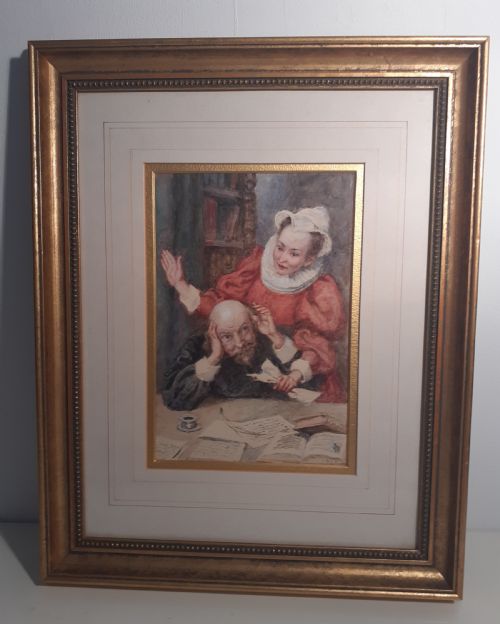
Finished works were typically housed in decorative frames made of giltwood and gesso, adding weight and presence to the picture. These frames frequently complement the period of the painting, using moulded plaster and gold leaf to set off the composition.
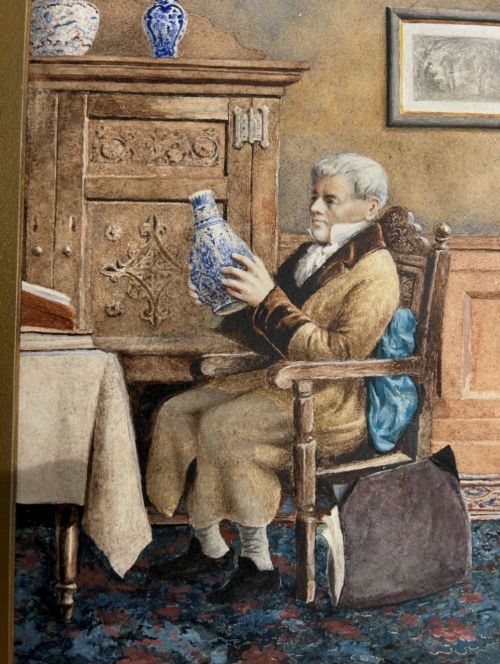
Subjects range from quiet gentlemen examining porcelain vases to new toys and Sunday best attire.
Assessing quality
Quality reveals itself in the handling of brushwork and the precision of the narrative, where skilled artists bring distinct expression to figures and interior light. Stronger works hold the eye through confident draftsmanship and harmonious composition rather than mere subject matter.
The preservation of the primary medium, whether oil or watercolour, alongside the original condition of the giltwood or gesso frame, shapes the integrity of the piece. Clean surfaces and stable paint layers separate well-kept examples from those requiring conservation.
Henry Stacy Marks·Charles Burton Barber·Kate E Booth·Ralph Hedley·Robert Gemmell Hutchison
The Late Victorian Genre Painting Glossary
- Genre painting
- Artwork depicting scenes from ordinary life, typically domestic or rural subjects. It focuses on human activity rather than landscape or history.
- Watercolour on paper
- A painting method using water-soluble pigments applied to paper supports. It creates translucent washes and delicate detail.
- Oil on canvas
- Pigments suspended in a drying oil applied to a stretched canvas support. This technique allows rich colour depth and textured brushwork.
- Giltwood
- Wood that has been coated with gold leaf or a gold-coloured metallic finish. It provides a bright, reflective border for framing pictures.
- Gesso
- A paint mixture consisting of a neutral binder mixed with chalk, gypsum, or pigment. It serves as a smooth base for gilding on frames.
Late Victorian Genre Painting: Frequently Asked Questions
What is a genre painting?
A genre painting depicts scenes from everyday life, focusing on ordinary people in domestic, rural, or coastal settings. These works record everyday human stories rather than grand historical or mythological events.
Such paintings provide insight into the social habits, clothing, and domestic interiors of the nineteenth century.
How do I care for these paintings?
Keep watercolours and oils away from direct sunlight to prevent fading of pigments and yellowing of varnishes. Stable room temperatures protect both the canvas support and the gesso frame from cracking.
Dust frames gently with a dry cloth and avoid using liquid cleaners on the painted surfaces.
Are these works original?
Many listings feature original hand-painted watercolours and oil paintings created directly by artists during the Victorian period. You will also find period prints associated with the era.
Check the material description in each listing to confirm whether a piece is an original painting or a printed reproduction.
How do I date these artworks?
Dating relies on recorded signatures, dated inscriptions, period frames, and stylistic indicators typical of the late nineteenth century. Victorian and Edwardian fashions visible in the portraits also help narrow the timeframe.
Many pieces carry specific dates or fall within well-documented artist working periods.