




Framed Chromolithograph Picture
These framed chromolithograph picture examples bring rich Victorian and Edwardian colour to your walls through layered stone-block printing.
Framed Chromolithograph Picture
A framed chromolithograph picture is a multi-coloured print produced through the painstaking process of lithography using separate stones for each tint. When you search for a framed chromolithograph picture, you encounter works spanning the nineteenth century, Edwardian era, and early twentieth century.
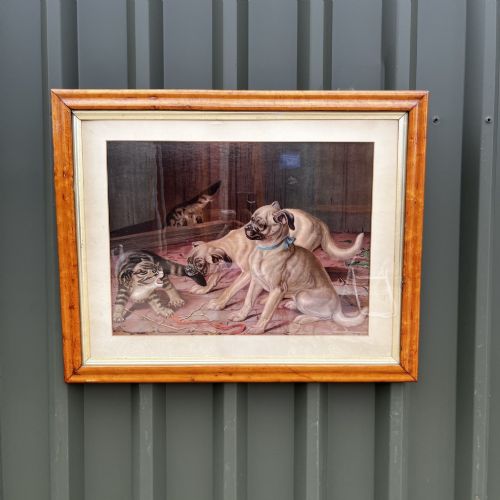
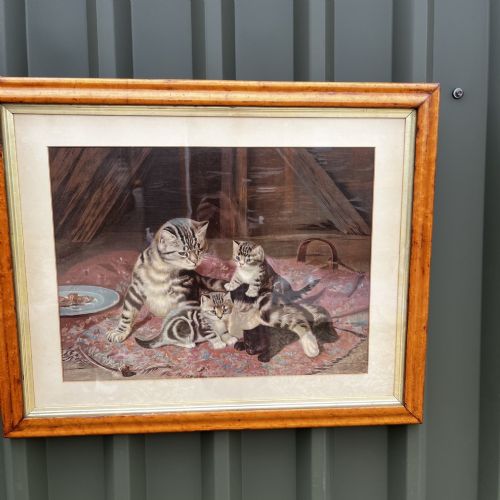
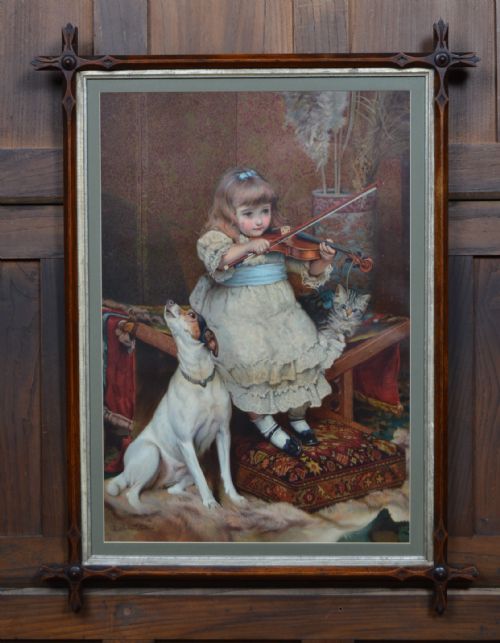
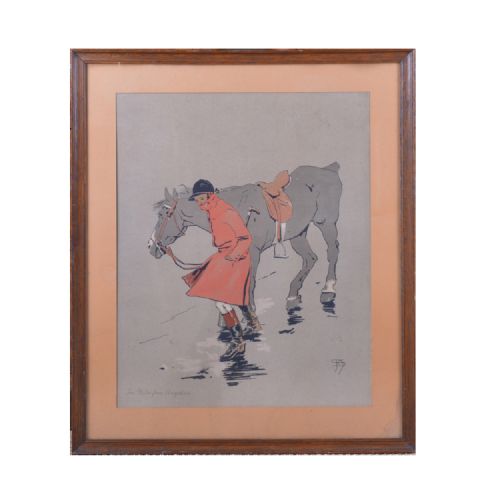
The subjects seen on this page range from animal scenes featuring pugs and cats by Horatio Henry Couldrey to British sporting art, Vanity Fair double prints, and advertising plates by Charles Burton Barber. Most examples arrive ready to hang in period frames.
You are most likely to meet Victorian and Edwardian portrayals of domestic animals, hunting scenes, and society portraits. These works capture the vibrant commercial illustration methods of their respective periods.
How they were made
The production of these pieces relies on paper and ink, where lithographic artists drew separate limestone blocks for every individual colour applied to the composition. This registration process required immense skill to align multiple impressions precisely.
Finished plates were mounted behind glass and housed within wood frames, frequently enhanced with gold leaf, gesso, or carved detailing. The backing often incorporates cardboard or oak reinforcement to preserve the fragile paper sheets.
Listings include materials such as paper, glass, wood, gold leaf, ink, gesso, cardboard, and oak across the nineteenth and twentieth centuries.
What varies in quality
The sophistication of the colour separation and the register alignment dictate the visual clarity of the image. Finer printing plates retain crisp dot patterns and subtle tonal gradations rather than muddy colour overlaps.
The original framing contributes significantly to the integrity of the piece, with carved wood and gold leaf mouldings carrying more distinction than plain modern surrounds. The prominence of the artist, such as Horatio Henry Couldrey or Charles Burton Barber, also elevates the standing of the work.
Horatio Henry Couldrey·Charles Burton Barber·Frank Algernon Stewart
The Framed Chromolithograph Picture Glossary
- Chromolithograph
- A multicoloured print produced from a series of lithographic limestone blocks, each adding a different hue to the final image.
- Chrystoleum
- A photograph applied to convex glass, hand-coloured from behind, and finished with backing layers to create a dimensional painted effect.
- Gesso
- A plaster-like mixture applied to wood frames before gilding or painting, providing a smooth base for carved ornamentation.
- Vanity Fair print
- A satirical portrait lithograph published in the periodical, known for caricatures of notable Victorian and Edwardian figures.
- Pear's advertising print
- A popular commercial chromolithograph distributed by the soap manufacturer, often featuring sentimental childhood or animal scenes.
Framed Chromolithograph Picture: Frequently Asked Questions
What is a chromolithograph?
A chromolithograph is a colour print made using multiple lithographic stones, where each stone applies a distinct ink layer to build the complete image.
This technique dominated nineteenth-century commercial printing, allowing for rich, painterly reproductions before modern photographic methods took over.
How do I date these pictures?
Dating relies on the style of the imagery, the typography of any accompanying text, and the construction methods of the accompanying frame.
Pieces from the nineteenth century often display distinct Victorian aesthetic choices, whereas Edwardian and 1910s examples reflect changing societal tastes and printing technologies.
What is a chrystoleum?
A chrystoleum is a special Victorian picture formed by sticking a photograph to glass, rubbing away the paper backing, and hand-painting pigments behind it.
This creates a glossy, layered appearance that resembles a miniature oil painting when viewed from the front.
How should I hang them?
These framed works require standard picture wire secured to sturdy wooden frames, keeping in mind the weight of the glass and backing materials.
Position them away from direct sunlight to protect the coloured inks and paper from fading over time.