




Victorian Children Art Prints
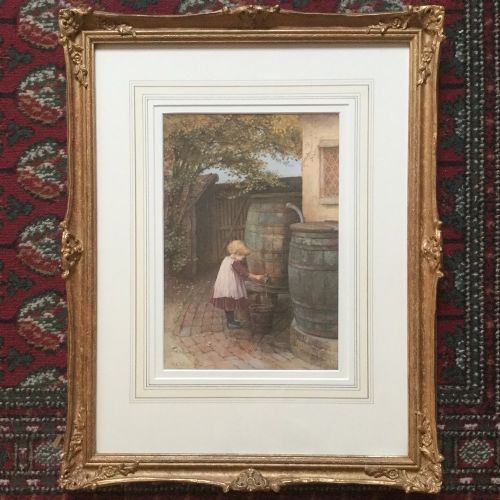
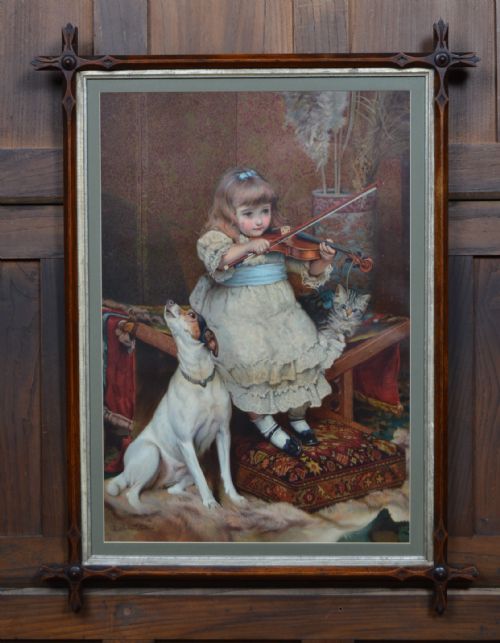
These victorian children art prints capture the sentiment and innocence of the nineteenth century through framed portraits and domestic genre scenes.
Victorian Children Art Prints
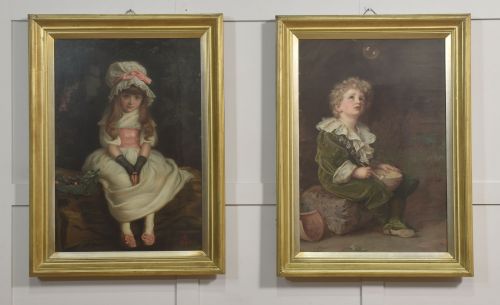
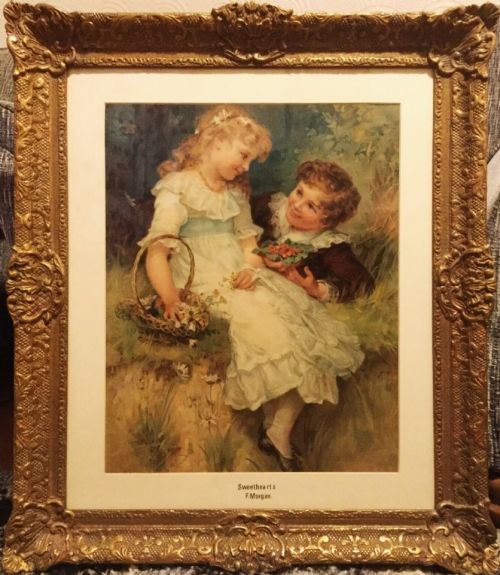
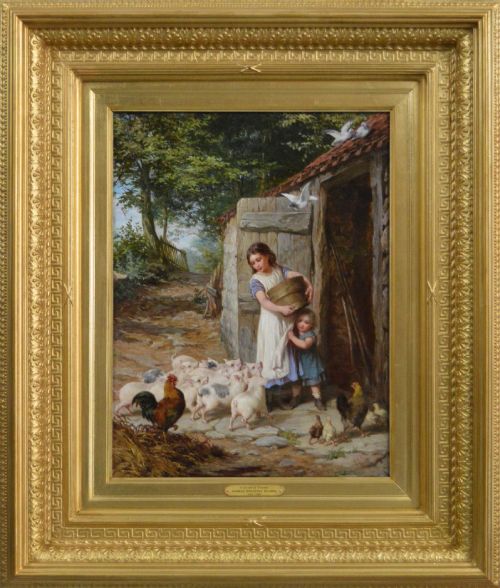
Victorian children art prints encompass framed portraits, advertising chromolithographs, and oleographs that celebrate youth within domestic settings. Buyers searching this phrase encounter subjects ranging from sentimental advertising pieces to fine art reproductions and original oil paintings.
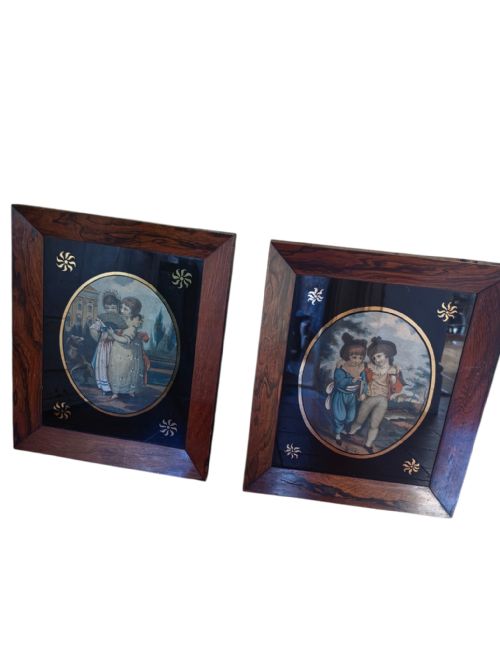
The material record includes paper prints housed behind glass within wooden, gesso, and gilt frames, alongside oil paintings and crystoleoms. Most examples derive from the Victorian and Edwardian eras, with occasional twentieth-century reproductions appearing in the selection.
The forms span from oval portraits of young girls to large narrative prints and pairs of decorative wall art. These images reflect the prevailing Victorian taste for sentimentality, familial warmth, and moral narrative.
Materials and methods
The physical objects rely primarily on paper printed via chromolithography or lithography, capturing fine tonal gradations and rich colour. These sheets are commonly mounted behind protective glass to preserve the delicate paper surfaces from environmental damage.
Frames play a structural and aesthetic role, constructed from wood, gesso, and gilt wood, often finished with gold leaf or rosewood veneers. Crystoleoms employ a distinct technique involving the application of oil paint to the rear of a convex glass plate placed over a print.
Pears Soap prints of children proved so popular that Victorian families routinely rescued them from bathroom advertisements to frame them for the parlour.
Judging the range
Quality separates mass-market advertising ephemera from master-engraved or hand-finished works through the crispness of the printing medium and the depth of the palette. Chromolithographs with distinct colour separation sit above faded or heavily retouched examples.
The integrity and originality of the surrounding frame heavily influence the standing of a piece, with period rosewood or gilded wood frames carrying more weight than modern replacements. The strength of the artist's attribution, whether linked to recognised painters like George Augustus Holmes or Charles Burton Barber, elevates the piece.
Frederick Morgans·George Augustus Holmes·Charles Edward Wilson·Charles Burton Barber·Emile Vernon
The Victorian Children Art Prints Glossary
- Chromolithography
- A planographic printing process that uses multiple stone plates to apply distinct colours sequentially onto paper. This technique produces vibrant, multi-coloured prints that defined Victorian commercial and fine art publishing.
- Oleograph
- A textured lithograph printed on canvas or heavy paper and varnished to simulate the appearance of an oil painting. Manufacturers often applied brushstrokes through a textured plate to enhance the illusion.
- Crystoleom
- A Victorian technique where a paper print is made transparent with chemicals, adhered to convex glass, and hand-painted from behind. This process gives the image a luminous, three-dimensional depth.
- Gesso
- A plaster-like mixture applied to wooden frame substrates to provide a smooth base for gilding or painting. Traditional formulations combine chalk or gypsum with animal glue.
Victorian Children Art Prints: Frequently Asked Questions
What are victorian children art prints?
These works are nineteenth and early twentieth-century images depicting children, created through lithography, chromolithography, or oil painting. They range from mass-produced advertising pieces to framed decorative portraits.
They reflect the domestic ideals and sentimental tastes of the Victorian era, preserved in period wood and gilt frames.
How were these prints used?
Victorian households displayed these framed images in parlours, hallways, and living spaces to add warmth and moral narrative to domestic interiors. Many served as household decor or promotional items for companies like Pears.
The framed pieces were designed to hang securely on walls, functioning as accessible fine art for middle-class homes.
How do I live with these prints?
Hang these works away from direct sunlight to prevent the paper and pigments from fading over time. Maintaining stable indoor humidity protects both the antique paper and the delicate wooden or gesso frames.
Pair them with traditional room settings where their period aesthetic and wooden frames complement existing decor.
How can I tell periods apart?
Victorian pieces often feature heavy gilding, dark wood frames, and subjects focused on sentimentality or moral instruction. Edwardian and later twentieth-century examples frequently show lighter framing choices and brighter, cleaner printing techniques.
Examining the backboards, framing nails, and paper types helps determine whether a piece originates from the nineteenth century or a later reproduction period.