



Victorian Figurative Print
These Victorian figurative print pieces bring character and narrative to a wall, capturing nineteenth-century scenes through varied illustrative techniques.
Victorian Figurative Print
A victorian figurative print encompasses framed works on paper, lithographs, mezzotints, etchings, and woodblock prints originating from the nineteenth century and associated eras. The selection on this page ranges from Victorian genre art and Pre-Raphaelite romantic subjects to Japanese ukiyo-e and Edwardian advertising prints.
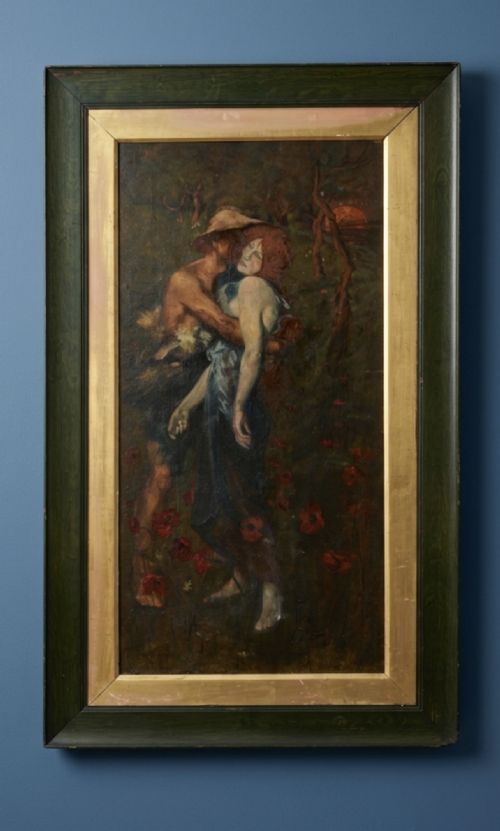
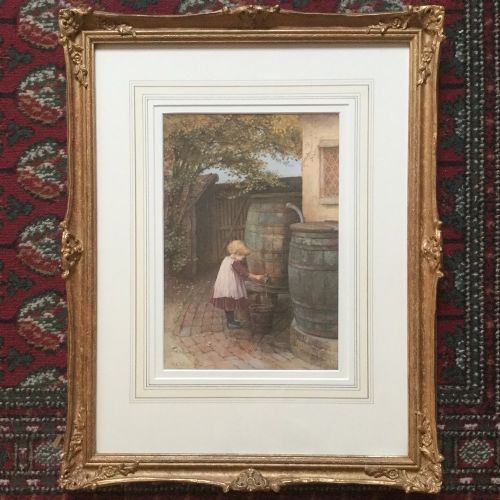
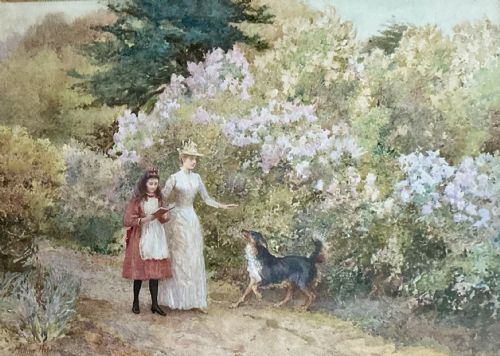
Buyers encounter framed wall art, watercolour paintings, and oil paintings alongside the prints, showing figures in intimate or narrative settings. Origins stretch across British Victorian production, European styles, and Japanese printmaking traditions adopted during the period.
How they were made
Production relies heavily on paper substrates for print methods such as lithography, mezzotint, etching, and woodblock printing, often incorporating card. Crystoleoms utilise glass layered over painted or printed surfaces.
Frames employ wood, gesso, and gilt wood, providing protective housings and decorative borders for the paper and canvas works.
Dolly Varden makes a cheerful appearance, stepping straight out of Charles Dickens into Victorian print and watercolour.
What varies in quality
Quality rests on the precision of the printing method, whether a sharp mezzotint, a detailed lithograph, or a fine woodblock impression. The skill of the original artist whose work is reproduced also dictates the visual depth.
The presentation matters greatly, distinguishing standard frames from period gilt wood and gesso surrounds. Crystoleoms and hand-finished watercolours show varying degrees of pigment preservation and execution.
Greiffenhagen·Charles Edward Wilson·Edward Stodart·ARTHUR HOPKINS·Kunisada·Charles Burton Barber·William Powell Frith
The Victorian Figurative Print Glossary
- Lithograph
- A print made from a planographic surface, typically stone or metal, where the image is applied with greasy medium. This technique allows for fine tonal gradation.
- Mezzotint
- A print process of the intaglio family where the copper plate is roughened to achieve rich dark tones. It creates velvety areas of shadow.
- Crystoleom
- A transparent print applied to glass, made convex and painstakingly hand-painted from the rear. This creates a luminous, dimensional finish.
- Ukiyo-e
- A genre of Japanese woodblock prints and paintings depicting scenes of everyday life. These works influenced nineteenth-century European aesthetic movements.
Victorian Figurative Print: Frequently Asked Questions
What is a victorian figurative print?
It is a printed image from the nineteenth century or related periods depicting human figures, often telling a story or capturing a genre scene.
These pieces include lithographs, mezzotints, and woodblock prints, usually framed for display as wall art.
How were these prints displayed originally?
They were framed behind glass within wooden mouldings, often enhanced with gesso and gilt finishes to suit domestic interiors of the era.
Many hung in parlours and studies as affordable ways to enjoy popular art and narrative scenes.
How do I care for framed paper prints?
Keep them away from direct sunlight to prevent fading of the paper and any hand-applied watercolours.
Maintain stable indoor humidity to protect the paper, card, and original wooden or gilt frames.
What is a crystoleom painting?
A crystoleom is a print placed on glass, made convex, and meticulously hand-painted from the back to achieve depth.
This technique produces a distinctive glowing quality quite different from standard paper prints.