


Victorian Advertising Print
These pieces of victorian advertising print material are surviving commercial ephemera from the nineteenth and early twentieth centuries that bring historic brand culture straight into a room.
Victorian Advertising Print
When you search for victorian advertising print material, you encounter surviving paper posters and framed plates that once promoted household commodities and household names in shops and public spaces. The examples on this page span from the late nineteenth century into the early twentieth century, reflecting the commercial expansion of the era.
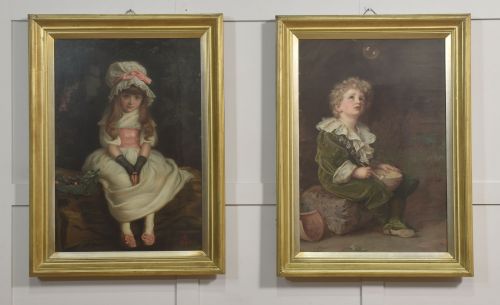
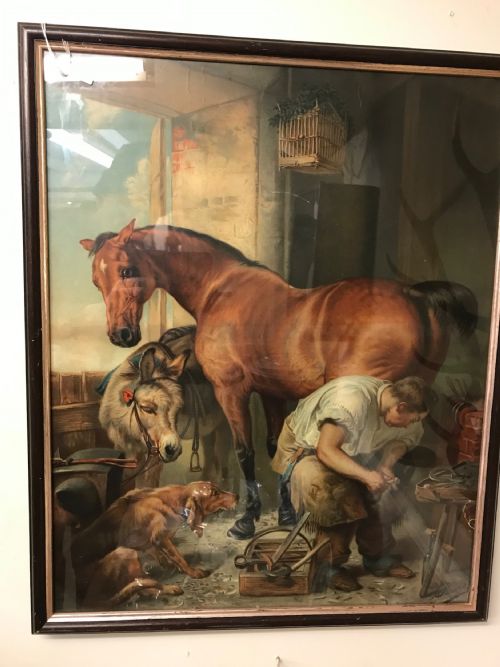
You meet framed paper prints after notable artists like Edwin Henry Landseer and Charles Burton Barber, originally issued by soap manufacturers such as Pears. These domestic images bridge the gap between fine art and commercial promotion, designed to hang in ordinary homes rather than galleries alone.
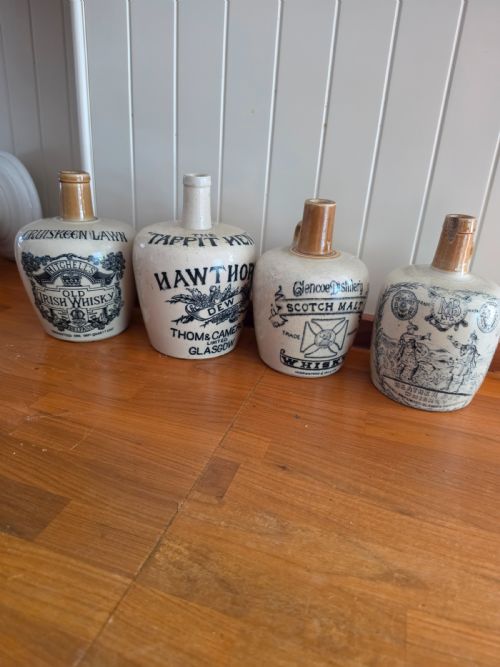
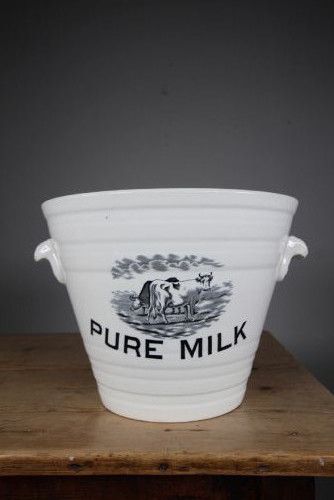
The category extends beyond flat paper to encompass related commercial wares and promotional objects from the same period, including glazed stoneware flasks, ironstone dairy pails, and decorative tile calendars. Such items demonstrate how businesses used everyday functional objects to keep their names before the public eye.
How they were made
The paper items rely on commercial printing techniques of the period to reproduce detailed illustrations with striking colour and definition. These prints were produced on sturdy paper stocks intended to withstand exposure when displayed in commercial premises or domestic parlours.
Associated promotional pieces utilise durable ceramic materials such as stoneware, earthenware, and ironstone, moulded into flasks, jugs, and dairy pails. These utilitarian objects were glazed and printed or impressed with company names and product details to ensure permanent branding.
Listings incorporate materials such as paper, wood, earthenware, and stoneware alongside ceramic items like dairy pails and apothecary boxes.
What varies in quality
Quality in these prints rests upon the crispness of the ink application and the preservation of the paper sheet against fading and foxing. Stronger examples retain their original framing and vivid pigments, showing minimal surface degradation from light exposure.
Among ceramic promotional wares, the clarity of the printed or impressed lettering and the soundness of the glaze distinguish standard utilitarian vessels from finer display pieces. Well-preserved makers' marks and clean surfaces elevate the visual interest of the object.
Minton Hollins·Peek Frean and Co·John Broadwood and Sons
The Victorian Advertising Print Glossary
- Ephemera
- Printed or written items created for a specific, limited use that were expected to be discarded afterwards. Surviving examples owe their existence to fortuitous preservation.
- Chromolithography
- A planographic printing method used to produce multicoloured images. It relies on multiple stone plates, one for each colour applied.
- Ironstone
- A type of durable earthenware patented in the nineteenth century. It combines pottery materials with slag iron to create a robust body suitable for commercial use.
- Stoneware
- A heavy, impermeable ceramic fired at high temperatures. It resists liquids and acids, making it ideal for carrying spirits and dairy products.
Victorian Advertising Print: Frequently Asked Questions
Are these prints original?
The listings comprise period pieces originating from the nineteenth and early twentieth centuries rather than modern reproductions. Paper posters and promotional items from this era carry the characteristic ageing and material traits associated with genuine historic manufacture.
Examination of the paper stock, printing method, and framing often helps confirm the period provenance of an individual piece.
How were these displayed originally?
Commercial prints were typically framed and hung in shops, offices, and domestic interiors to promote popular brands of soap, tea, and pianos. They served both as decorative wall art and as effective everyday marketing tools for the companies involved.
Other promotional items, such as stoneware flasks and tile calendars, sat upon counters or hung on walls in public view to advertise specific commodities.
How do I care for paper prints?
Paper items require protection from direct sunlight and excessive moisture to prevent fading and deterioration of the sheet. Keeping them behind suitable glazing helps shield the surface from atmospheric dust and environmental damage.
Stable indoor humidity levels also prevent the paper from warping or developing foxing spots over time.
What periods do these pieces cover?
The material spans the Victorian, Edwardian, and slightly later periods, capturing the visual culture of late nineteenth-century and early twentieth-century commerce. Dates range from the 1890s through the Edwardian decade up to the 1920s.
This timeframe represents the height of Victorian commercial expansion and the development of mass consumer branding.