


Late Victorian Dressing Chest
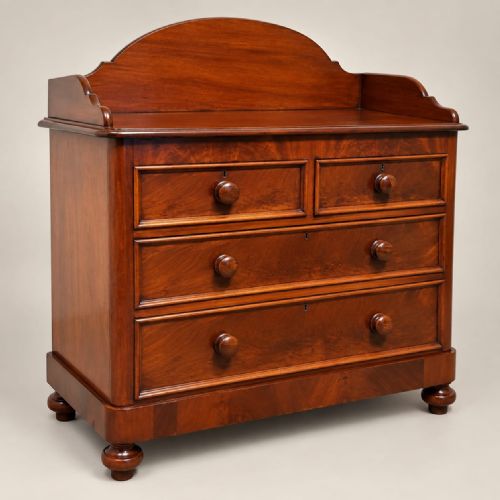
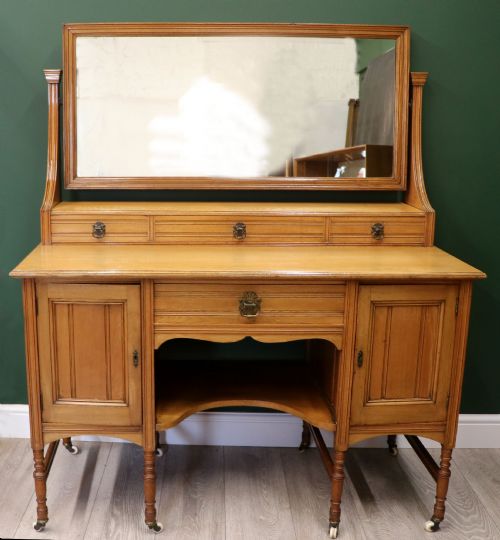
A late victorian dressing chest combines the deep drawers of a bedroom chest with the pivoting mirror and surface space of a dressing table.
Late Victorian Dressing Chest
A late victorian dressing chest unites storage and grooming in a single bedroom piece, typically combining lower drawers with an upper superstructure carrying a swing mirror. These pieces emerge from the final decades of the nineteenth century, spanning various regional workshops and design movements.
The versions most commonly met here range from traditional mahogany and walnut forms to lighter oak pieces shaped by the Arts and Crafts movement. Makers sometimes integrated jewellery compartments, small side drawers, and brass fittings into the design.
Surviving examples reflect the domestic habits of the period, offering compact surfaces for daily toilet alongside functional space for linens and garments. They appear in diverse woods, from figured veneers to painted pine.
How they were made
Cabinet makers constructed these chests using solid timbers like mahogany, oak, and walnut, frequently applying fine veneers such as burr walnut or flame mahogany to primary surfaces. Drawer construction relied on traditional dovetail joints to ensure durability under daily use.
Mirrors were set within adjustable wooden frames, supported by carved or turned uprights fixed to the chest top. Hardware typically included cast brass handles, escutcheons, and hinges tailored to the specific stylistic movement of the piece.
Listings feature mahogany, walnut, oak, and satinwood, spanning the Victorian period through to Arts and Crafts designs.
What varies in quality
The choice of primary timber and veneer selection dictates much of the visual character, with heavily figured burr walnut or select mahogany sitting above plain pine or painted surfaces. Cabinet-making finesse shows in the tightness of the drawer dovetails and the grain matching across the front.
Design ambition separates standard commercial production from pieces bearing the hallmarks of identifiable makers or distinct Arts and Crafts detailing. Original hardware, intact mirror glass, and stable structural joinery preserve the integrity of the piece.
Shoolbred and Co·Wright and Hunter·Harris Lebus·John Taylor of Edinburgh
The Late Victorian Dressing Chest Glossary
- Swing mirror
- A looking glass hung within a movable frame that tilts on pivots, allowing the user to adjust the angle during grooming. It forms the upper focal point of most dressing chests.
- Dovetail
- A joint formed by interlocking wedge-shaped fingers, used extensively in drawer construction for strength and longevity. Fine examples display small, neatly cut pins.
- Burr walnut
- A decorative wood veneer taken from the knotted growth of a walnut tree, prized for its swirling, organic patterns. It frequently covers the principal drawer fronts of high-end Victorian furniture.
- Arts and Crafts
- A design movement emphasising honest construction, simplified forms, and visible hand-craftsmanship rather than mass-produced ornamentation. Pieces in this style often utilise oak or ash.
- Escutcheon
- A small protective plate surrounding a keyhole, usually cast from brass. It prevents the wood around the lock from sustaining wear.
Late Victorian Dressing Chest: Frequently Asked Questions
Are mirrors usually original?
Many dressing chests retain their original bevelled or flat mirror glass, secured within the original wooden frame. Replacement glass does occur due to accidental breakage over a century of domestic use.
Oxidation spots or minor foxing on the glass surface often indicate age and originality. The mounting brackets and securing screws should match the period of the main chest.
Where were these chests placed?
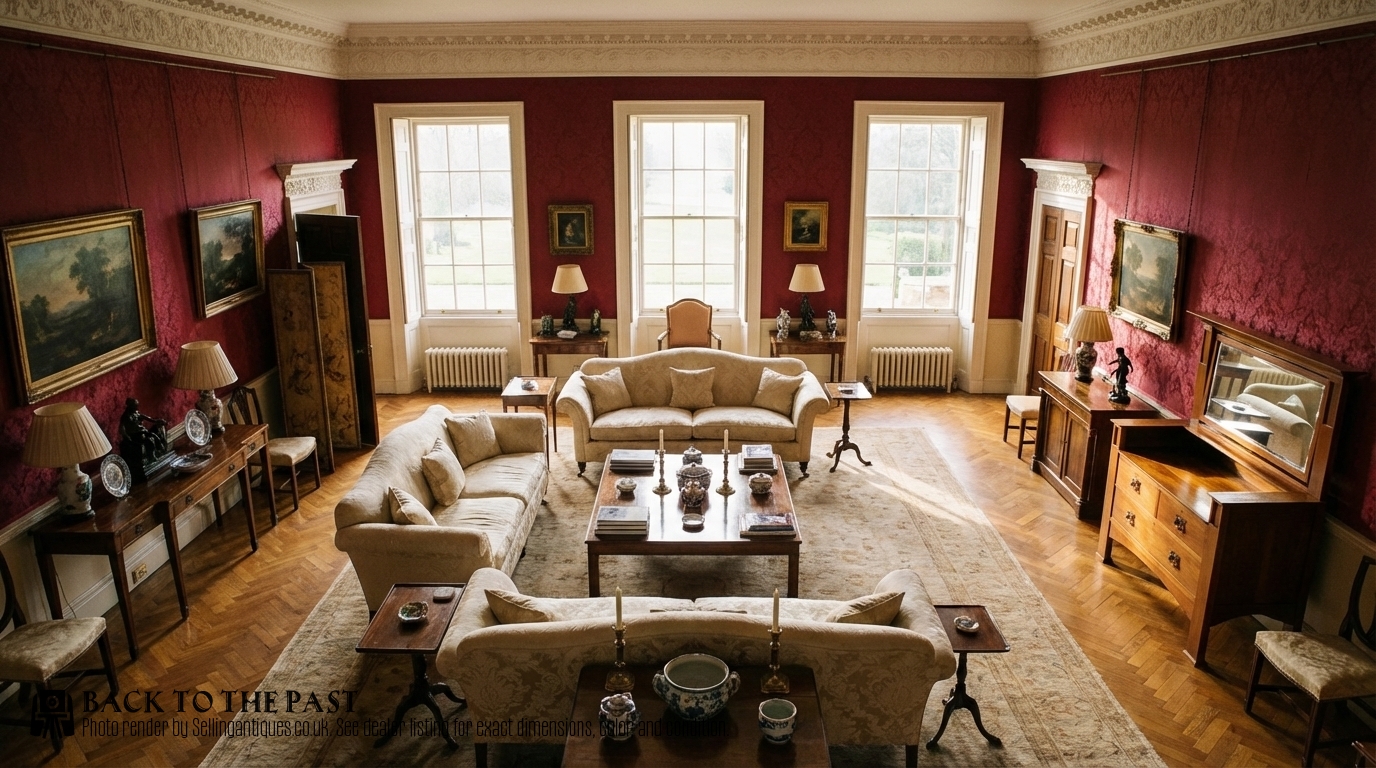
Bedrooms served as the primary location for these pieces, positioned to catch natural light from windows for grooming purposes. They frequently formed part of larger bedroom suites that included matching wardrobes and washstands.
Their substantial footprint required dedicated wall space, often between windows or opposite the bed. Smaller versions accommodated more compact Victorian chambers.
How do I care for the wood?
Maintenance involves keeping the timber away from direct heat sources and sudden humidity changes to prevent veneer lifting. Regular dusting with a soft, dry cloth preserves the polished surface.
Occasional application of appropriate wax feeds the antique wood without building up heavy residues. Brass fittings can be cleaned gently with a dry cloth, avoiding harsh chemical polishes.