




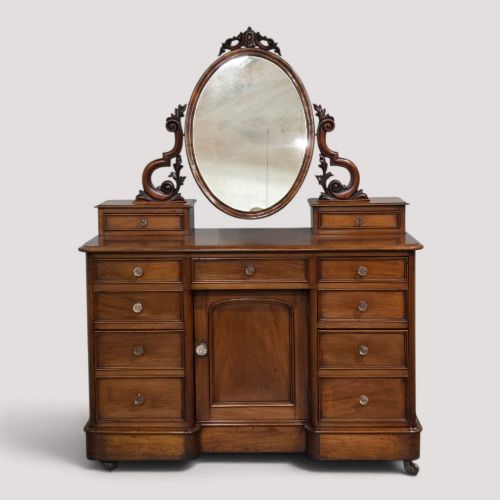
Dressing Desk Mirror
A dressing desk mirror sits quietly on the wood, bringing clear reflection and proportion to the room.
Dressing Desk Mirror
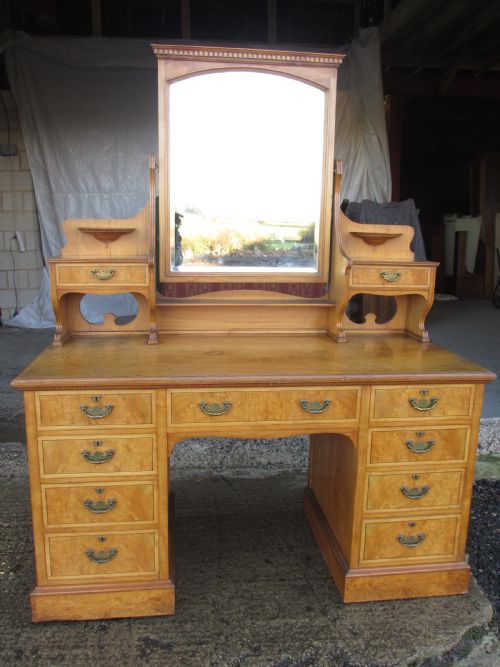
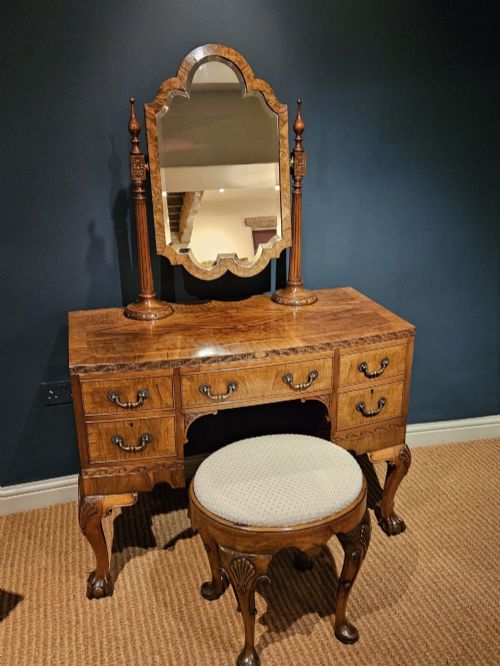
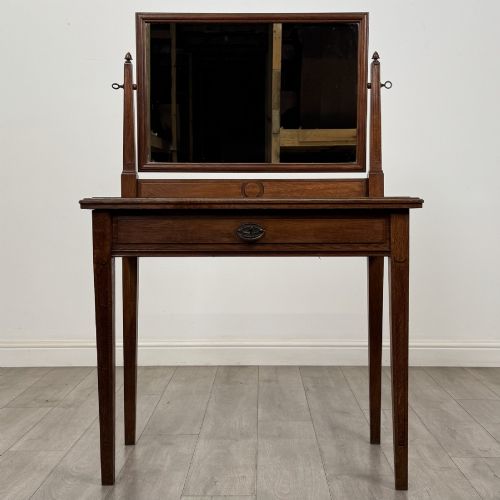
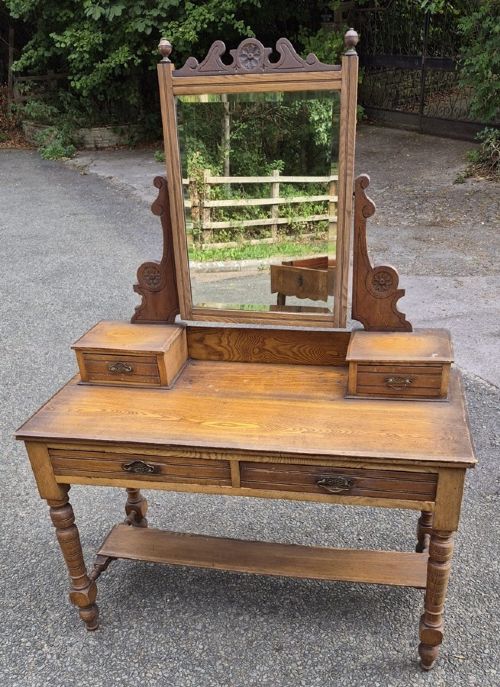
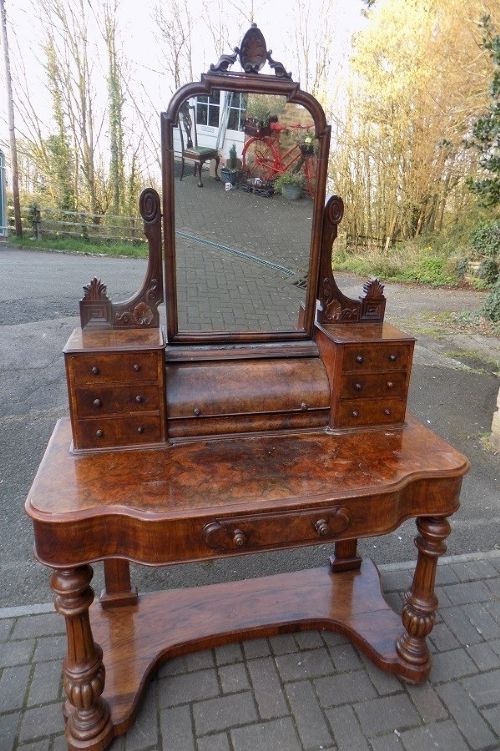
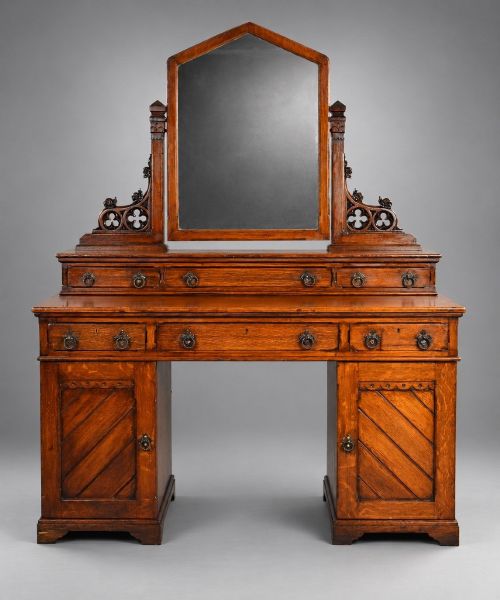
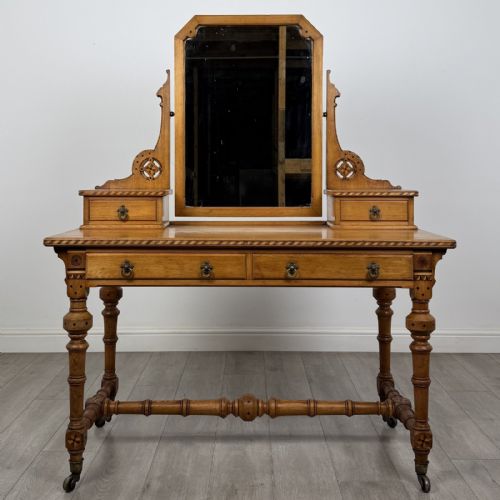
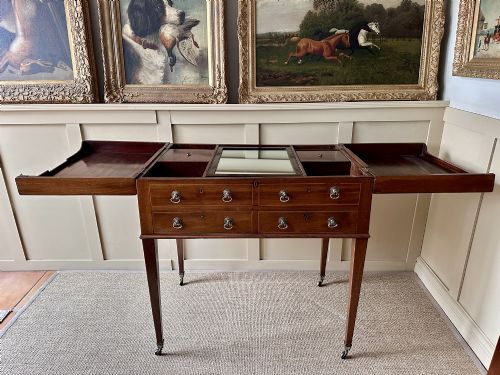
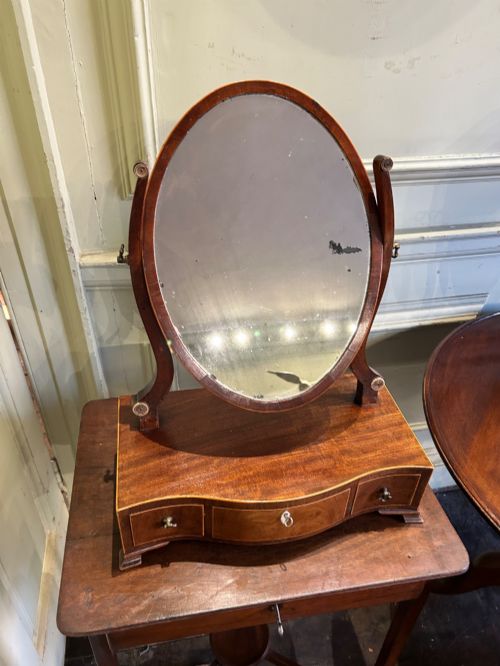
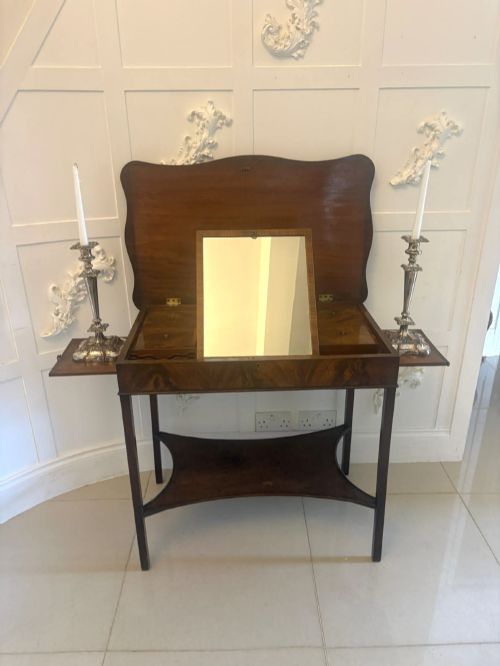
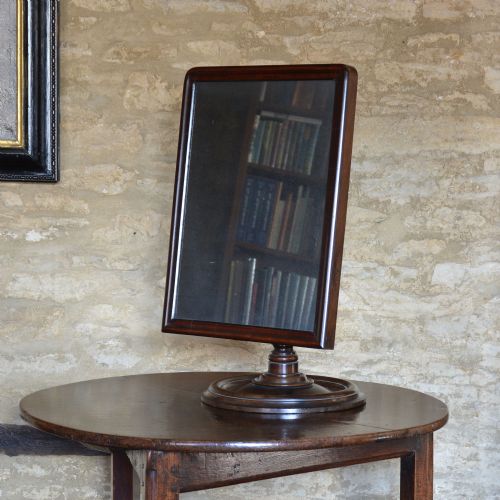
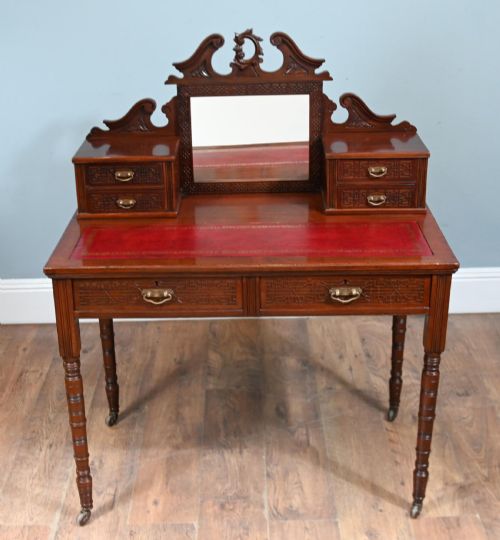
A dressing desk mirror combines the functional surface of a table with a swivelling or fixed glass plate, emerging in periods ranging from the eighteenth century through to the Art Deco nineteen-thirties. Buyers searching for a dressing desk mirror encounter pieces that span compact toilet mirrors designed for chests to larger dressing tables with integrated swing plates.
The earlier examples rely on Georgian serpentine or box-base compartments fitted with small drawers, whilst later Victorian and Edwardian iterations often scale up into full dressing chests and pedestal tables. By the nineteen-twenties and nineteen-thirties, the form shifts towards asymmetrical maple, burr walnut, and limed oak structures equipped with triple or shield mirrors.
Most pieces on this page originate from British workshops, though French manufacture and American light walnut variations also appear among the selection. The primary function remains consistent across all eras, providing a dedicated space for grooming and writing within the bedroom or dressing room.
Materials and construction methods
Makers construct these pieces predominantly from solid timbers and choice veneers, utilising mahogany, walnut, burr walnut, oak, and satinwood depending on the prevailing style of the period. Secondary woods support the internal drawer linings, whilst brass hinges, swing arms, and sometimes ormolu mounts secure the mirror frames to their bases.
Surface decoration relies heavily on figuring within the wood grain, enhanced by French polish or plain wax, alongside occasional painted finishes, boxwood stringing, and carved giltwood details. Mirror glass is set into rebated frames, sometimes supported by easel backs or pivoting side screws that allow the plate to tilt at different angles.
Dressing Desk Mirror Retail Price Guide 2026
Typical asking prices for dressing desk mirror among the pieces listed under this phrase on Sellingantiques today, from the lower quarter to the upper quarter. They describe what is for sale here now, not the wider market.
Distinctions in construction and material standard
Quality rests upon the selection of timber veneers and the integrity of the cabinet joints, where tightly fitted drawer dovetails separate standard domestic pieces from finer workshop productions. The depth of figure in burr walnut or mahogany veneers indicates the care taken by the maker in selecting materials for the most prominent surfaces.
The proportion of the mirror frame relative to the base dictates the visual harmony of the piece, as does the retention of original brass hardware and genuine mirror glass. Pieces that maintain their original surface finishes and structural stability without excessive timber shrinkage represent the higher end of the surviving range.
Edwards and Roberts·Heals
The Dressing Desk Mirror Glossary
- Toilet mirror
- A smaller tabletop mirror, usually fitted with small drawers in the base, designed to sit upon a chest of drawers or table.
- Serpentine
- A curved shape featuring a convex centre flanked by concave sides, frequently seen on Georgian drawer fronts.
- Burr walnut
- Timber taken from the warted growth of a walnut tree, yielding a highly swirled, decorative grain pattern prized for veneering.
- Ormolu
- Gilded bronze mounts applied to furniture, common in French Empire and continental pieces.
- Boxwood stringing
- Thin inlay lines of pale boxwood set into contrasting darker timbers to outline drawers and panels.
Dressing Desk Mirror: Frequently Asked Questions
How do I date a dressing desk mirror?
Dating relies upon timber choice, construction methods, and the style of the mirror supports. Georgian examples typically feature fine dovetailing and simpler plates, whereas Victorian and Edwardian pieces incorporate heavier mouldings or carved pedestals.
Later nineteen-thirty pieces introduce geometric Art Deco lines and asymmetrical maple or burr walnut veneers. Examining the backboards and drawer construction reveals further clues regarding the manufacturing period.
Were these mirrors originally attached to desks?
Many table mirrors and toilet glasses were designed to stand freely on top of existing desks, chests, or dressing tables rather than being permanently fixed. Some pieces integrated bureau compartments or small writing surfaces directly into the base structure.
This allowed users to write letters and attend to grooming at the same piece of furniture. Over time, mirrors and bases occasionally became separated and reunited based on proportion and wood type.
How do I care for the wood and glass?
Maintaining the finish requires regular dusting with a dry, soft cloth and occasional application of traditional beeswax to nourish the timber. Avoid placing the wood in direct sunlight or near heat sources to prevent veneer lifting and timber splitting.
Cleaning the mirror glass requires a gentle touch, using a minimal amount of glass cleaner applied to a cloth rather than sprayed directly onto the frame. This prevents moisture from seeping behind the silvered backing or into the wooden rebate.
What is the difference between a swing mirror and a toilet mirror?
A swing mirror specifically refers to a glass plate suspended on pivots between two upright arms, allowing the angle of reflection to change. A toilet mirror is the broader term for the entire tabletop assembly, which usually includes a swing mirror mounted above a small set of drawers.
Most period toilet mirrors utilise the swing mechanism within their design. The terminology often depends on whether the emphasis lies on the pivoting action or the base storage.