
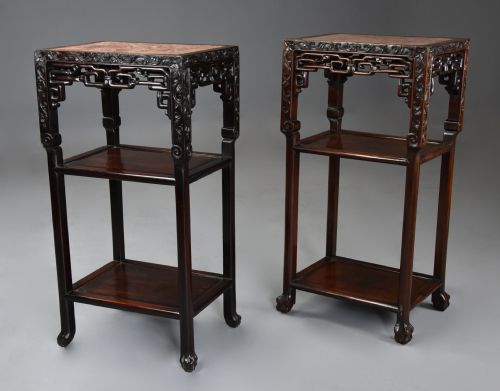


Late Qing Rosewood Table
A late qing rosewood table brings dense tropical timber and intricate carving together, offering a sturdy surface suited for displaying porcelain or plants.
Late Qing Rosewood Table
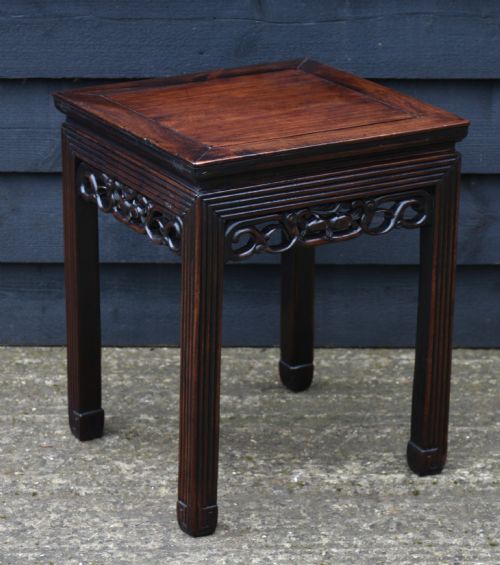
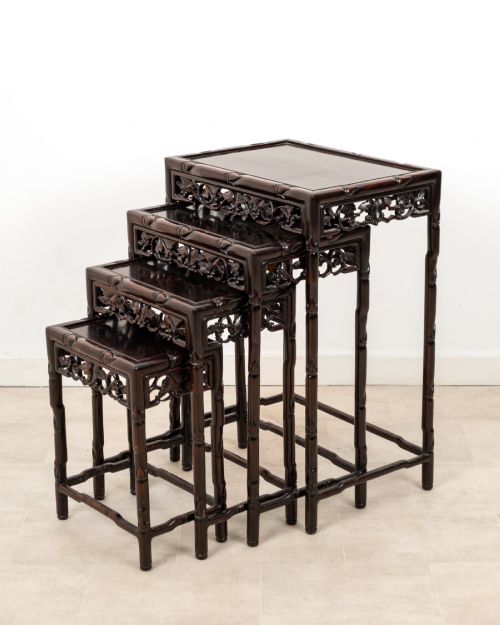
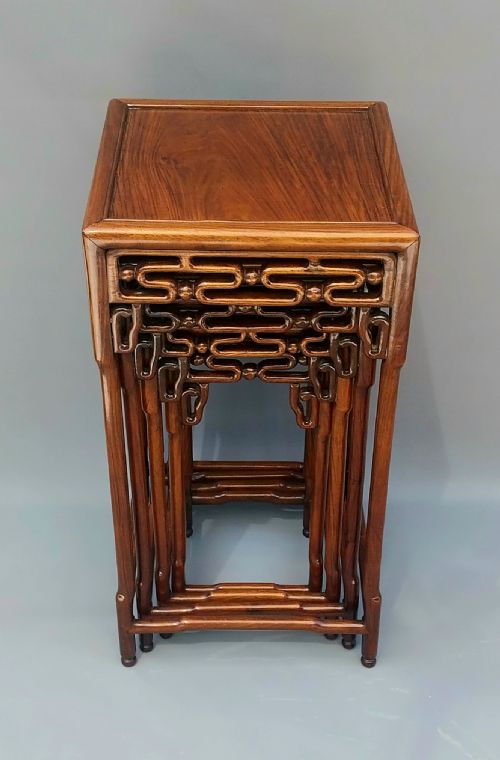
When someone searches for a late qing rosewood table, they encounter solid timber furniture created during the final decades of the Qing Dynasty, spanning the late nineteenth century and the early twentieth century. These objects typically take the form of compact stands, low tables, nests of four graduated tables, or larger centre and console tables designed for traditional interiors.
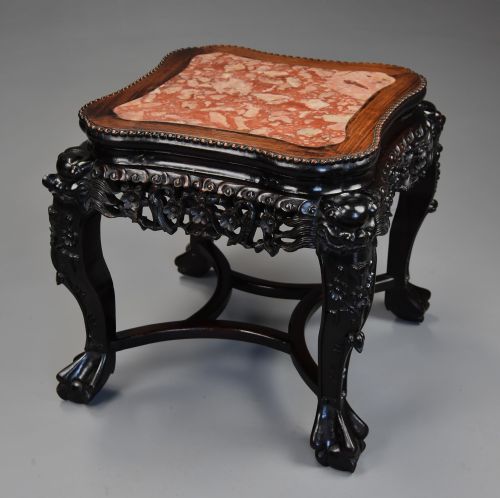
The versions most frequently met on this page include pot stands, vase pedestals, and square low tables featuring inset marble panels or scroll ends. Originating from Chinese export workshops and domestic production, these examples demonstrate the craftsmanship associated with the period through carved hardwood frames and tiered structures.
How they were made
Cabinetmakers utilised dense tropical timbers such as hongmu, huali wood, padouk, and general rosewood, selected for their weight and deep natural grain. These heavy hardwoods permitted precise joinery without relying on extensive metal fixings, allowing frames to endure decades of use.
Workshops integrated inset panels of rouge or shaped marble directly into the wooden framework of table tops, providing a cool, stable surface for ceramics. Carvers then applied deep relief work to the aprons and legs, rendering floral, scrolling, or geometric motifs directly into the hardwood.
Several tables include folding bases or nested sets, proving that space-saving furniture design existed long before modern apartments.
What varies in quality
The distinction between standard and superior pieces rests upon the crispness of the hand-carving and the selection of the timber. Dense, heavily figured huali or hongmu paired with deeply undercut botanical motifs separates finer scholarly tables from simpler utilitarian stands.
Construction fidelity also defines the upper range, particularly the tightness of the joinery in nested tables and the flawless fitting of marble panels into rebated frames. Heavier gauges of hardwood and balanced proportions indicate greater workshop investment during the manufacturing process.
The Late Qing Rosewood Table Glossary
- Hongmu
- A translation meaning red wood, referring to a category of dense, heavy tropical hardwoods prized by Chinese cabinetmakers for dark furniture. This material forms the primary structure of many high-status tables.
- Huali
- A fragrant, highly figured hardwood utilised in Qing Dynasty furniture for its distinct grain patterns and warm tone. Artisans frequently selected this timber for scholar's pieces and display stands.
- Kang table
- A low table traditionally placed upon a heated brick bed or raised platform for dining, writing, or resting. These pieces often feature characteristic scroll ends and compact dimensions.
- Padouk
- A heavy, durable reddish timber belonging to the rosewood family, employed in export furniture for its strength and resistance to splitting. It takes a smooth, polished finish.
- Quartetto
- A matched set of four graduated tables designed to slide neatly beneath one another when not in use. This form became popular for entertaining in both Chinese and Western interiors.
Late Qing Rosewood Table: Frequently Asked Questions
What is a rosewood vase stand used for?
These elevated surfaces were built to display prized ceramic vessels, bronze items, or potted plants at an optimal viewing height within a room.
Their sturdy hardwood construction and compact footprints allowed them to sit securely in corners or beside seating areas without dominating the floor space.
How do I identify a late Qing table?
Look for dense tropical hardwoods like hongmu or huali combined with traditional Qing Dynasty carving styles that often incorporate floral motifs and scroll ends.
Many examples also incorporate inset marble panels or tiered configurations typical of late nineteenth-century export production.
Are nest of tables traditional in China?
Sets of graduated tables gained popularity during the late nineteenth century to serve practical hosting needs in domestic and export markets.
They allowed multiple surfaces to be deployed for tea or scholars' objects and stored compactly when not required.
Can I place a lamp on a rosewood stand?
The dense tropical hardwoods used in these pieces provide a stable, heavy base capable of supporting modern lighting or decorative objects.
Care should be taken to protect the polished timber and inset marble surfaces from moisture or heat.