




Oriental Square Table
An oriental square table brings architectural form and dense grain to a room, offering a versatile surface rooted in centuries of Asian and colonial design.
Oriental Square Table
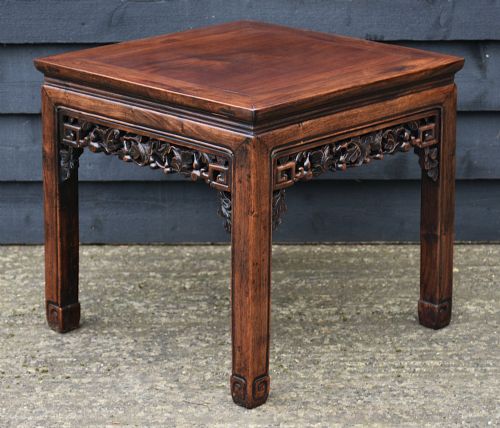
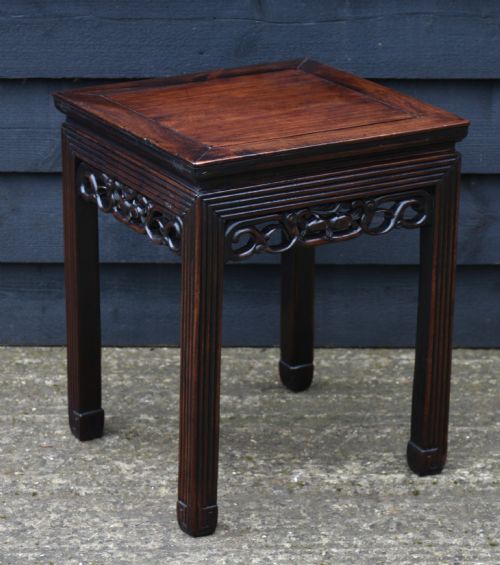
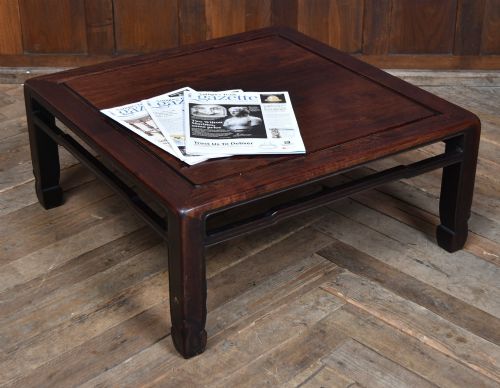
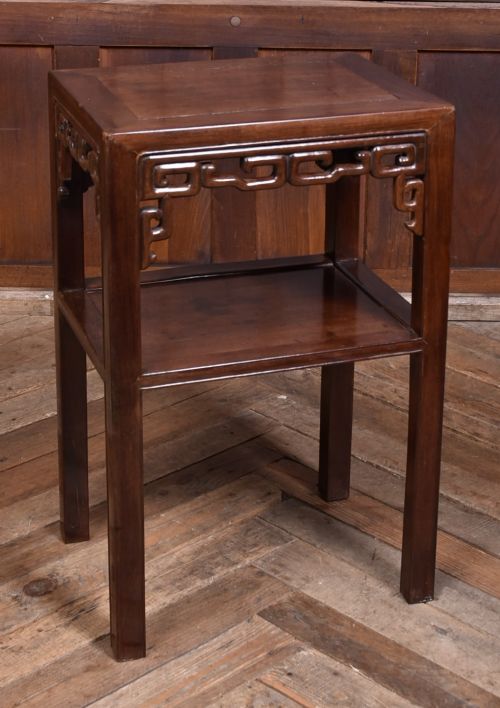
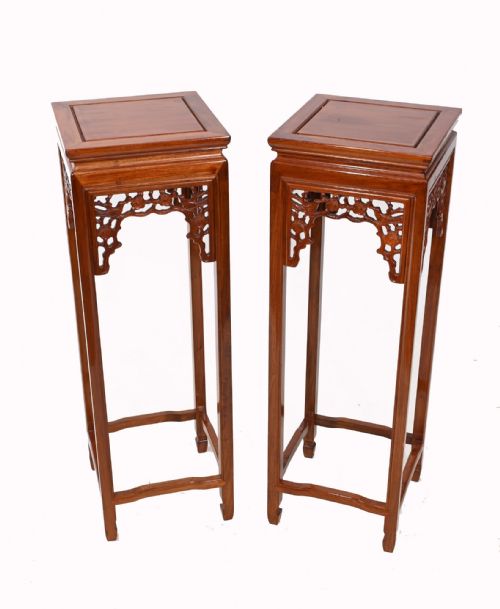
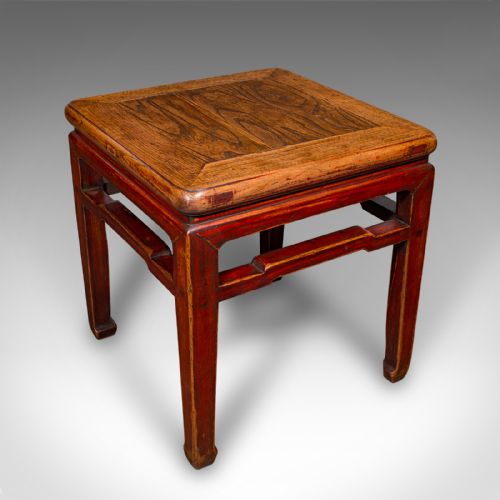
When you search for an oriental square table, you are looking at low tables, occasional tables, coffee tables, and plant stands produced across various Asian and colonial traditions. These pieces range from compact stands to broader centre tables, often designed with distinct geometric proportions that suit modern and traditional interiors alike.
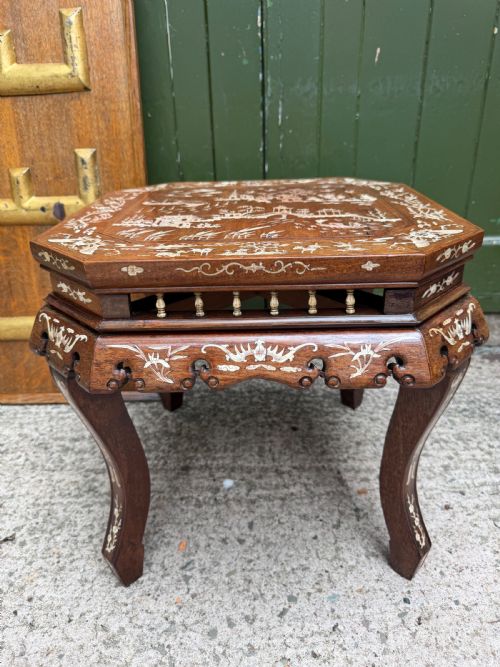
On this page, you are most likely to meet pieces originating from the nineteenth century, including examples from the Qing dynasty and the Meiji period. Forms vary from simple side tables to intricately carved two-tier stands and marble-inset centre tables.
Materials span dense hardwoods such as rosewood, padouk, and hongmu, occasionally paired with marble inserts or porcelain elements. The styles reflect traditional Chinese craftsmanship, Chinoiserie interpretations, Japanese furniture forms, and Anglo-Indian colonial production.
Materials and Construction
Construction relies heavily on dense exotic hardwoods such as rosewood, teak, padouk, and hongmu, chosen for their structural strength and deep natural colour. Artisans utilised traditional joinery techniques to accommodate the timber's movement over time without relying on metal fasteners.
Surface decoration frequently involves intricate hand carving, depicting traditional motifs and geometric patterns directly into the hardwood frame. Certain examples incorporate contrasting insets, including smooth marble panels or hand-painted porcelain sections integrated into the top surface.
Several tables are designed low to the floor for kneeling tea ceremonies, requiring guests to stretch their legs under the frame.
Assessing Quality
Quality in an oriental square table rests on the selection and seasoning of the hardwood, where heavier, tightly grained timbers denote superior stock. The crispness and depth of the hand carving indicate the skill of the maker, with sharper details showing greater control over dense material.
The precision of the joinery and the stability of the frame differentiate finer examples from standard production. Integrated elements, such as fitted marble tops or porcelain panels, must sit flush within the timber framework with careful attention to proportion.
The Oriental Square Table Glossary
- Hongmu
- A category of dense, dark Asian hardwoods prized for furniture production. It translates literally to red wood and develops a rich patina with age and handling.
- Padouk
- A heavy, durable tropical hardwood with a distinct reddish hue that darkens over time. It provides a stable base for detailed hand carving on tables and stands.
- Chabudai
- A short-legged traditional Japanese table used while sitting on tatami mats. These low tables form part of the Meiji period output found in domestic interiors.
- Meiji
- The period in Japanese history spanning from the late nineteenth to the early twentieth century. Pieces from this era show a continuation of traditional craftsmanship alongside emerging export styles.
Oriental Square Table: Frequently Asked Questions
What is an oriental square table used for?
These tables function as low coffee tables, side tables, plant stands, or occasional surfaces within a room. Their compact proportions make them adaptable for displaying objects or serving tea.
Larger versions operate as centre tables or low display platforms, bringing distinct architectural lines to seating areas.
How do I care for a hardwood oriental table?
Maintain the timber by dusting regularly with a dry cloth and avoiding placement near direct heat sources or strong sunlight. This prevents the dense wood from drying out and cracking.
Apply a suitable wax polish occasionally to nourish the grain and protect the surface from minor moisture marks.
How can I tell the period of a table?
Dating relies on examining the timber type, tool marks, joinery methods, and the style of the carving. Nineteenth-century examples often exhibit hand-cut joints and denser native hardwoods.
Comparing the decorative motifs to documented Qing dynasty or Meiji period designs helps narrow down the origin and approximate age.
Are marble inserts original to these tables?
Marble and porcelain inserts were commonly integrated into nineteenth-century hardwood stands to provide a cool, durable surface. They were fitted directly into recessed frames during the initial construction.
Inspect the seating of the stone or ceramic panel within the surrounding wood to confirm its original integration.