
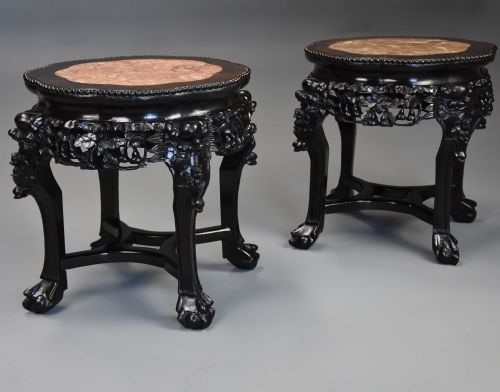


Late Qing Hardwood Furniture
Late qing hardwood furniture brings dense rosewood and huali wood forms into rooms, uniting nineteenth-century craftsmanship with enduring utility.
Late Qing Hardwood Furniture
Late qing hardwood furniture comprises tables, chairs, stools, and stands produced during the final decades of the nineteenth century and the opening years of the twentieth century. These pieces reflect traditional Chinese forms alongside export styles destined for Western markets during the late nineteenth century and the qing dynasty.
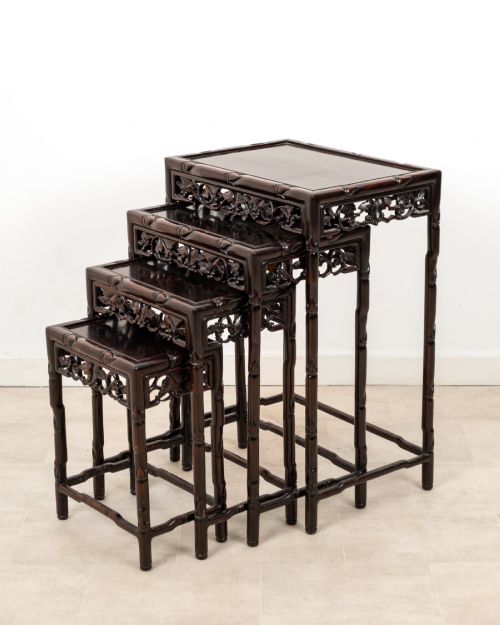
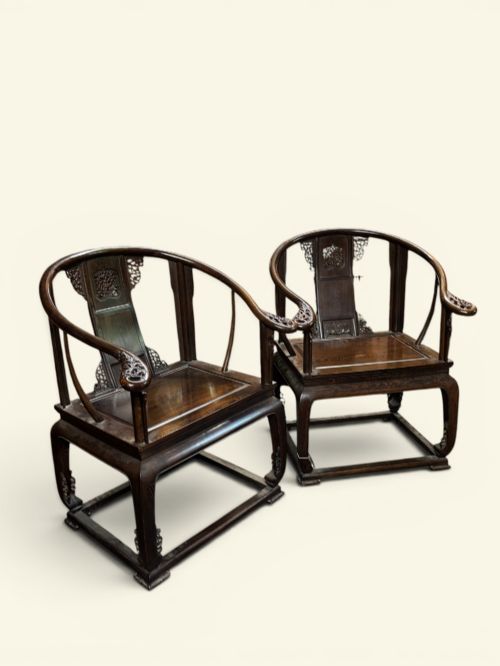
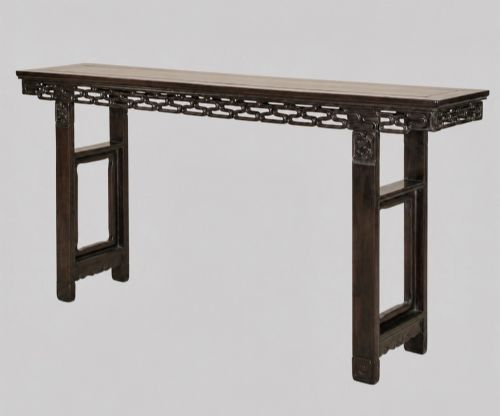
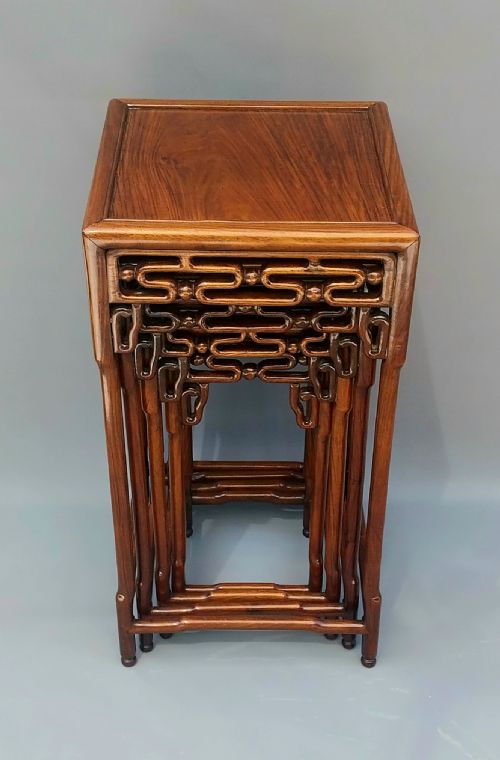
Buyers encounter numerous forms on this page, dominated by plant stands, vase stands, nests of four tables, and low kang or opium tables. Side tables, console tables, armchairs, stools, and occasional compound cabinets also appear, representing the varied output of this period.
How late qing hardwood furniture was made
Workshops utilised dense timbers such as rosewood, hongmu, huali wood, padouk, and zitan to construct these items. Many surfaces incorporate inset marble panels, including rouge marble, providing a contrasting cool texture to the dark wood.
Joinery relied on traditional framing and interlocking joints rather than metal fasteners, allowing dense tropical hardwoods to expand and contract naturally. Carvers applied intricate relief work directly to the solid timber, shaping scroll ends, dragons, and floral motifs.
Listings feature items dated across the nineteenth century, Victorian era, and circa nineteen hundred, constructed from hongmu, huali wood, padouk, and inset marble.
What varies in quality
The depth and crispness of the carved ornamentation determine the standard of an individual piece, distinguishing sharp, deliberate chisel work from softer, shallower execution. Timber selection also matters, as heavier, more richly figured hongmu and huali command greater attention than plainer dark hardwoods.
Proportion and structural balance separate standard production items from superior examples. Pieces that maintain a harmonious scale and retain their original inset marble panels demonstrate greater integrity than altered or poorly proportioned equivalents.
The Late Qing Hardwood Furniture Glossary
- Huali wood
- A fragrant, richly grained tropical hardwood utilised for Qing dynasty seating and tables. This timber displays varied colouration and took polish exceptionally well.
- Hongmu
- A category of dense, heavy Asian hardwoods translated literally as red wood. Craftsmen employed hongmu for tables, stands, and cabinets requiring substantial strength.
- Kang table
- A low table traditionally placed upon a heated brick platform or bed in Chinese domestic interiors. These low tables served for writing, dining, or holding tea.
- Padouk
- A durable, heavy timber possessing a reddish hue that darkens with age and exposure to light. Makers valued padouk for stands and occasional furniture.
Late Qing Hardwood Furniture: Frequently Asked Questions
What is a kang table used for?
Kang tables served as low surfaces for dining, writing, or serving tea within traditional domestic interiors. Their compact scale suited placement on raised platforms or seating areas.
Today, buyers utilise these low pieces as coffee tables or decorative display platforms in contemporary living spaces.
How do I identify huali wood?
Huali wood is a dense tropical hardwood characterised by distinct figuring and a natural warmth of tone. It often displays rich grain patterns beneath a polished finish.
Examining the underside or unpolished areas reveals the weight and dense cellular structure typical of this specific Qing dynasty timber.
Are marble inserts original to these stands?
Marble inserts were commonly integrated into the tops of nineteenth-century plant stands, jardiniere tables, and side tables. These smooth stone panels provided a stable, heat-resistant surface for heavy ceramic vases.
Inspect the fit between the stone and the surrounding timber rebate to understand how the panel sits within the structural frame.
What distinguishes hongmu from other hardwoods?
Hongmu is a collective term for dense, heavy red hardwoods utilised by traditional Chinese cabinetmakers. The material possesses considerable weight and darkens naturally over time.
Pieces designated as hongmu typically exhibit substantial construction and deep colouration, distinguishing them from lighter or plainer domestic timbers.