



Late Qing Carved Table
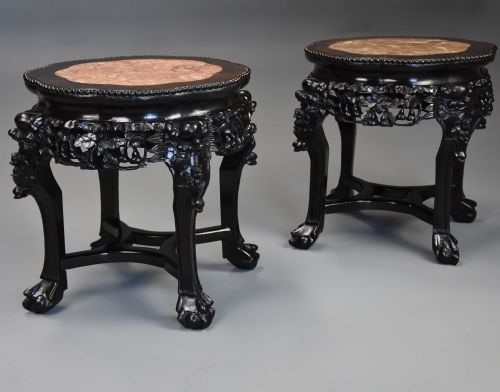
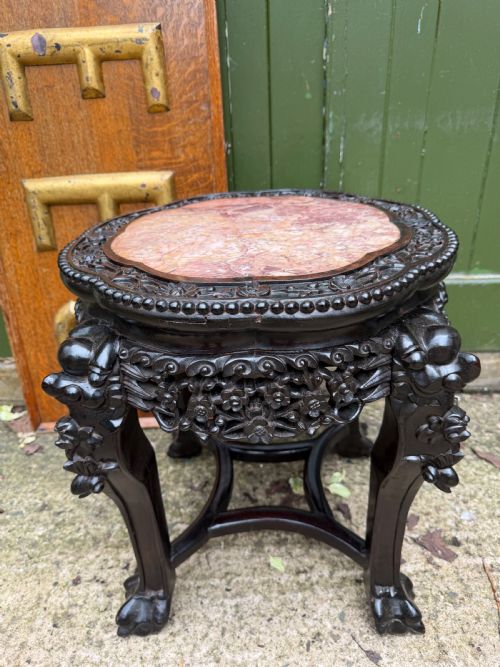
A late qing carved table brings dense hardwoods, inset marble panels, and intricate floral motifs into an interior as a functional display piece.
Late Qing Carved Table
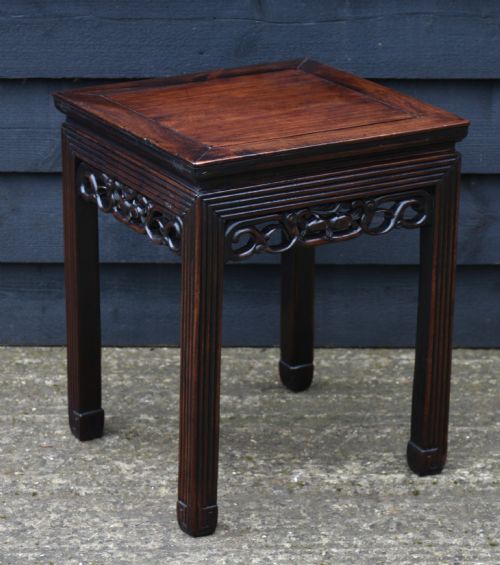
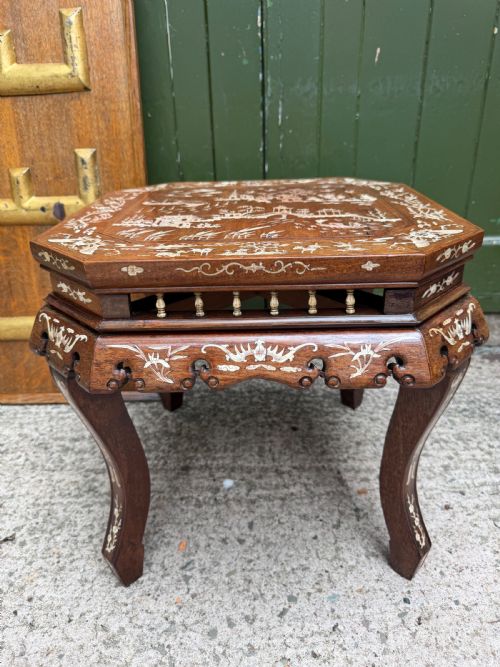
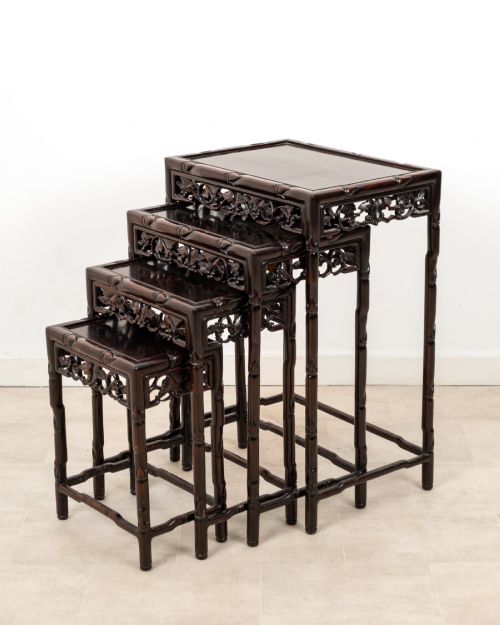
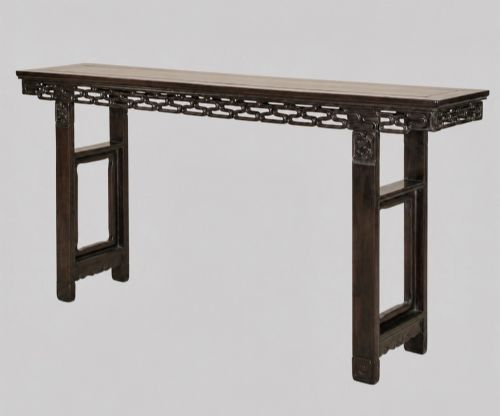
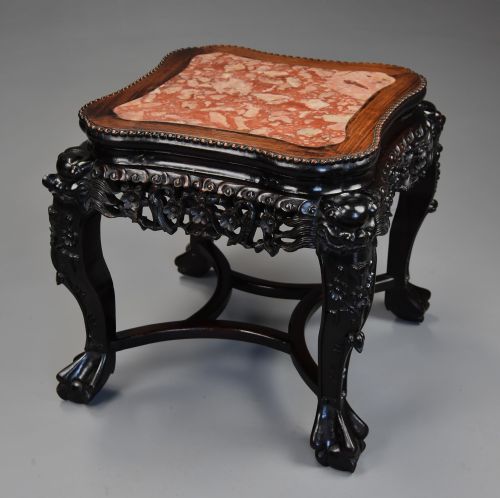
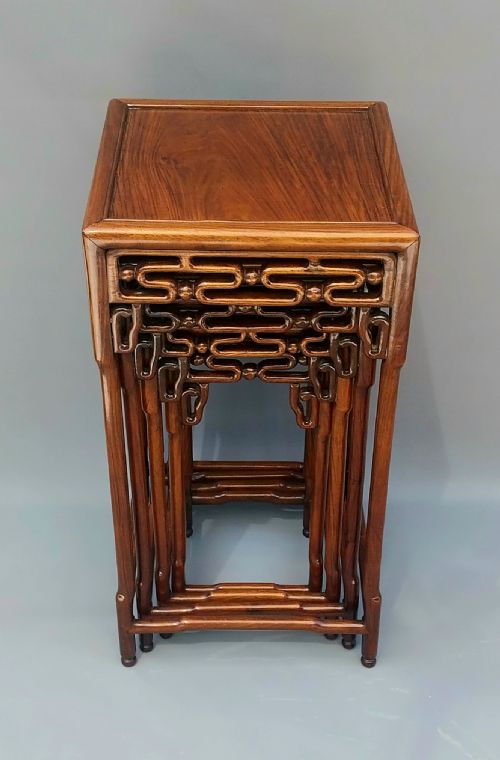
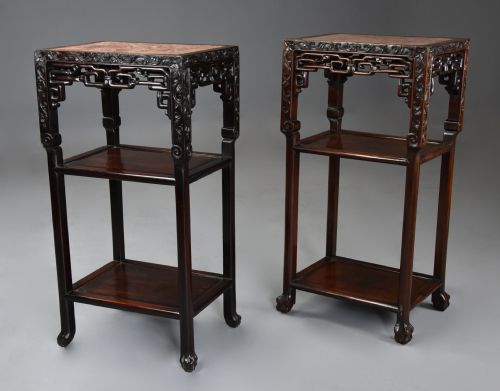
When searching for a late qing carved table, buyers encounter a wide array of occasional furniture originating from late nineteenth and early twentieth century China. The selection spans compact pot stands, nesting tables, low kang tables, and altar tables designed for domestic display.
Many examples incorporate inset panels of rouge marble, quartz, or ceramic tiles directly into the wooden framework. This combination of heavy timber and cool stone surfaces defines the aesthetic of the period's export and domestic production.
How they were made
Maker-craftsmen utilised dense, heavy timbers such as hongmu, huali wood, padouk, and rosewood for their structural frames. These durable hardwoods allowed for deep, crisp relief carving without compromising the integrity of joints and legs.
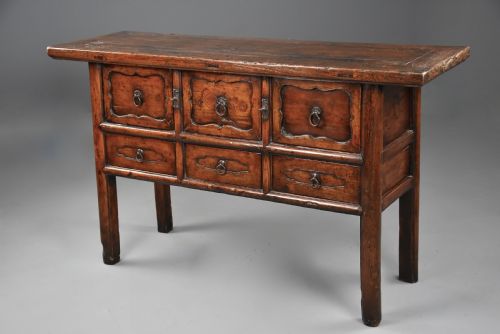
Many tabletops incorporate natural stone elements like variegated rouge marble or quartz inset securely into the wooden surrounds. Alternative constructions feature rootwood formations shaped into organic lamp bases and rustic elm for sideboards.
Joinery relied on traditional techniques that accommodated the dense nature of the woods and the inclusion of stone panels. Surfaces were frequently polished to a fine patina that highlighted the natural grain of the rosewood or padouk.
Some rootwood stands use natural tree gnarling so creatively that every knot feels like a tiny forest creature peering back at you.
What varies in quality
The depth and crispness of the hand-carving separate standard utility furniture from exceptional examples. Superior pieces display finely detailed scrolling foliage, pierced aprons, and undercut relief that remains sharp across every visible surface.
The selection of the inset stone panel significantly influences the overall character of a piece. Well-matched variegated rouge marble or deeply coloured quartz with dramatic natural veining represents a higher grade of manufacture than plain or uniform inserts.
Proportion and structural harmony distinguish better examples from simpler provincial work. Balanced leg placement, tight joinery without excessive movement, and the heavy weight of solid hongmu or huali timber indicate superior workshop origin.
The Late Qing Carved Table Glossary
- Hongmu
- A traditional Chinese term for dense, heavy hardwoods, literally translating to red wood. It encompasses several heavy species used for high-status furniture.
- Kang table
- A low table designed to be used on a heated brick bed or placed on the floor for dining and tea. These typically feature scroll ends or short cabriole legs.
- Huali wood
- A fragrant and highly decorative Chinese hardwood prized for its rich grain patterns. It was frequently utilised for fine display stands and tables during the Qing dynasty.
- Padouk
- A heavy, durable tropical hardwood with a distinctive reddish hue that darkens with age. It provides a stable base for heavily carved occasional furniture.
- Quartetto
- A matched set of four graduated nesting tables designed to slide neatly beneath one another. This form became popular for export and domestic use in the late nineteenth century.
Late Qing Carved Table: Frequently Asked Questions
What is a kang table used for?
A kang table is a low-profile surface traditionally placed upon a heated domestic sleeping platform in northern China for serving tea or eating meals.
In modern interiors, these compact tables function well as coffee tables or display platforms for ceramics and small sculptures.
How do I identify huali wood?
Huali wood displays a distinctive, highly figured grain pattern with varied tones ranging from golden brown to deep reddish hues. It is notably heavy and dense to the touch.
Examining the underside or unpolished areas helps reveal the natural grain and weight characteristic of genuine Qing dynasty specimens.
Why do some tables have marble tops?
Inset marble panels provided a cool, durable surface that resisted moisture from tea sets, flower pots, and hot vessels. The stone also added significant weight and decorative contrast to the dark wood frames.
Variegated rouge marble and pale stone inserts were commonly chosen to complement the intricate carvings of the surrounding timber.
Are nesting tables an export design?
Sets of graduated tables, often called quartetto tables, were produced both for domestic Chinese use and for the bustling export market in the late nineteenth century. Their practical design allowed multiple surfaces to occupy a minimal footprint.
Western demand for adaptable furniture made these sets particularly popular among Victorian collectors and interior decorators.