



Late Nineteenth Century Enamel
Late nineteenth century enamel items bring together vibrant vitreous colour and metalwork from diverse global traditions.
Late Nineteenth Century Enamel
When you search for late nineteenth century enamel, you encounter a varied selection of decorative objects originating from different international workshops. The pieces span domestic ornaments and timepieces, often reflecting the distinct aesthetic movements of the Victorian era.
Vessels and clocks dominate the selection, ranging from large Japanese chargers and vases to French carriage clocks featuring enamel dials or inlays. Buyers most frequently meet Japanese cloisonne works and French horology on this page.
The origins stretch across Japanese, Chinese, French, and Russian makers from the 1880s and 1890s. Each region employed traditional vitreous techniques suited to its specific domestic or export markets.
How they were made
The primary technique relies on fusing powdered glass to a metal or ceramic base through high-temperature firing. Cloisonne examples utilise thin wire partitions soldered to a brass or copper body to contain the coloured enamel pastes.
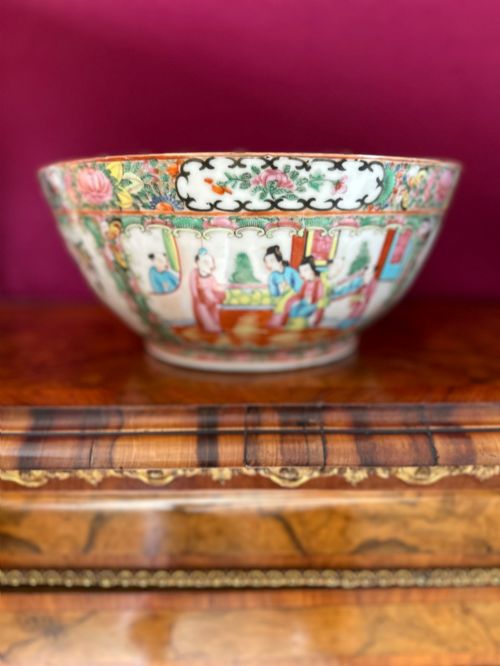
Other items incorporate enamel directly onto porcelain surfaces or apply it as decorative dials and inlaid panels within gilt bronze clock cases. Artisans often enhanced these compositions with gold leaf and detailed hand-painted motifs.
Late Nineteenth Century Enamel Retail Price Guide 2026
Typical asking prices for late nineteenth century enamel among the pieces listed under this phrase on Sellingantiques today, from the lower quarter to the upper quarter. They describe what is for sale here now, not the wider market.
Materials recorded across the inventory include brass, copper, porcelain, earthenware, and solid silver alongside enamel.
What varies in quality
The precision of the metalwork and the uniformity of the fired glass surface set finer examples apart from standard production. Artisans who achieved smooth, evenly coloured enamel fields without pitting or discoloration demonstrated superior technical control.
Complexity of design and the integration of precious metals like gold leaf influence the distinction of individual items. The refinement of the surrounding mounts, whether bronze cases or silver spoon handles, further elevates the overall standard.
Vasily Agafonov·Nanzan
The Late Nineteenth Century Enamel Glossary
- Cloisonne Enamel
- A decorative technique where thin metal wires are affixed to a base to form compartments filled with vitreous paste. This method creates intricate patterns separated by fine metallic lines.
- Moriage
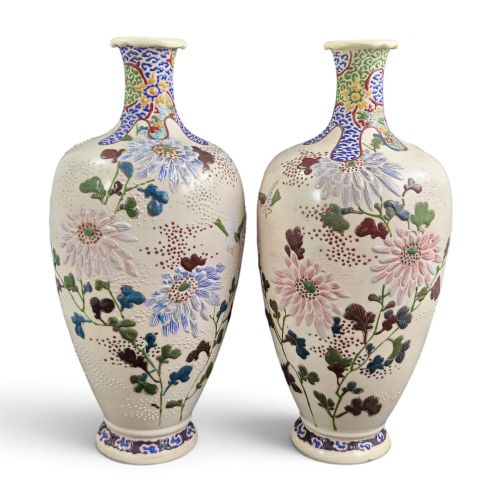
- A Japanese ceramic technique using raised slip decoration to build dimensional designs on pottery surfaces. It frequently appears alongside enamel and gilt highlights on Satsuma wares.
- Grand Sonnerie
- A complex clockwork striking mechanism that chimes the hours and quarters automatically. These movements are typically housed within carriage or mantel clocks featuring enamel components.
- Kutani Ware
- Japanese porcelain characterised by bold colour palettes and detailed overglaze painting. Pieces often incorporate rich pictorial scenes set against traditional grounds.
Late Nineteenth Century Enamel: Frequently Asked Questions
How do I clean enamel?
Dust surfaces gently with a soft, dry cloth to remove everyday particles without abrasive friction. Avoid liquid cleaners and chemical solvents that could seep into hairline fractures or degrade metal mounts.
Keep pieces away from direct sunlight and excessive moisture to protect the integrity of the vitreous paste and underlying metal base.
Where were these made?
The items originate from several distinct global manufacturing centres active during the late Victorian period. Japanese workshops produced extensive cloisonne and Satsuma ceramics for international export.
European hubs, particularly in France, focused on decorative horology incorporating enamel dials and panels. Russian silversmiths also contributed specialised tablewares during the same decades.
Are these items fragile?
Vitreous enamel shares characteristics with glass and can chip or fracture if subjected to sharp impacts or sudden temperature changes. Careful handling during relocation helps prevent surface damage.
The underlying copper, brass, or silver structures provide solid support, but the glazed glass layers require mindful placement away from table edges.