




Late Meiji Satsuma Pottery
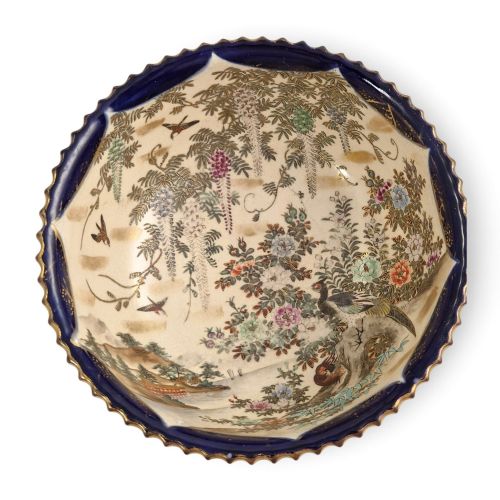
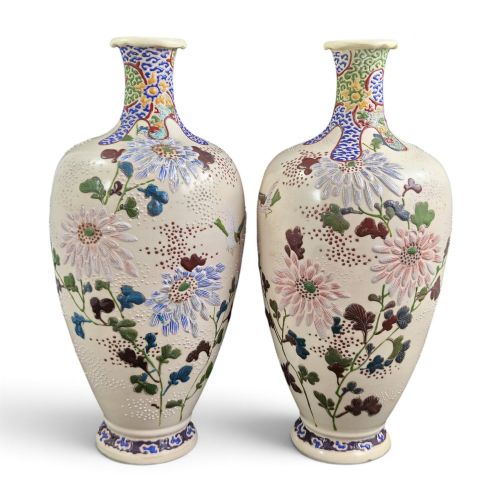
Late Meiji Satsuma pottery delivers the intricate hand-painted narratives and rich gilding that collectors value for cabinet display.
Late Meiji Satsuma Pottery
Late Meiji Satsuma pottery encompasses Japanese ceramic works produced during the late nineteenth and early twentieth centuries, spanning the Meiji and Victorian periods. Buyers exploring this category encounter earthenware vessels characterised by detailed pictorial scenes and intricate ornamentation.
The objects on this page take several distinct forms, most commonly vases, decorative bowls, and miniature incense burners known as koro. Figures, sculptures, and plates also appear in the record, often featuring traditional Japanese subjects executed in enamel and gold leaf.
Originating from production centres such as Kyoto and Yokohama, these pieces reflect the aesthetic standards of an era that catered both to domestic tastes and Western export markets. The examples available here demonstrate the characteristic motifs of the period, including court figures, landscapes, and floral arrangements.
What varies in quality
The precision and density of the hand-painted brushwork separate standard production from exhibition-quality works. Superior examples display exceptionally fine facial expressions on figures and meticulous registration of gilt patterns against the cobalt ground.
The handling of the moriage relief work and the richness of the gold leaf application determine the visual depth of a piece. Finer ceramic bodies and well-balanced forms indicate the careful output of prominent workshops and named makers.
Late Meiji Satsuma Pottery Retail Price Guide 2026
Typical asking prices for late meiji satsuma pottery among the pieces listed under this phrase on Sellingantiques today, from the lower quarter to the upper quarter. They describe what is for sale here now, not the wider market.
The documented objects span multiple object types, including miniature incense burners, lidded vases, plates, and figurative sculptures depicting traditional subjects.
Maruni Kobe·Nanzan·Hododa·Kinkozan·Kotobuki do·Hayakawa·Ryokuzan
The Late Meiji Satsuma Pottery Glossary
- Moriage
- A decorative technique where slip is piped onto the ceramic surface in raised dots or lines before firing and gilding. This creates a tactile, three-dimensional effect that catches the light on vases and bowls.
- Shimazu mon
- The heraldic crest of the Shimazu clan, featuring a cross within a circle. It frequently appears on Satsuma pottery as a mark of regional provenance.
- Koro
- A traditional Japanese incense burner, often fitted with a pierced lid. These vessels appear in miniature forms within late Meiji ceramics.
- Baluster
- A vase shape characterised by a rounded body that tapers toward a narrow neck and flares at the rim. Many ceramic pieces in this category utilise this classic silhouette.
Late Meiji Satsuma Pottery: Frequently Asked Questions
How do I identify late Meiji Satsuma?
Late Meiji Satsuma pieces are typically identified by their fine earthenware bodies, crackle glaze, and dense application of enamel and gold leaf. The decoration often includes court scenes, landscapes, and raised moriage work characteristic of the late nineteenth and early twentieth centuries.
Many pieces carry maker marks, signatures, or regional crests such as the Shimazu mon on the base. Comparing the style of painting and the weight of the gilding helps place a piece within this specific historical production period.
Were these pieces made for export?
A significant proportion of Satsuma pottery produced during the Meiji period was created specifically for Western export markets following the opening of Japan. Workshops tailored their output to European and American tastes by producing elaborate decorative vases, plates, and incense burners.
Despite their export destination, these ceramics retained traditional Japanese motifs and craftsmanship techniques. Master makers signed their work to appeal to foreign collectors and international exhibitions.
How should I display Satsuma pottery?
Display these ceramic pieces away from direct sunlight to preserve the vibrancy of the hand-painted enamels and gold leaf. Placing them on stable surfaces in cabinet settings protects their delicate raised moriage details from accidental knocks.
Because many examples feature intricate painted scenes, positioning them where adequate lighting can reveal the fine brushwork enhances their visual impact. Gentle placement ensures the earthenware and glaze remain undamaged over time.
What is the Shimazu crest?
The Shimazu crest, or mon, depicts a cross enclosed within a circle and relates to the historical daimyo that ruled the Satsuma Domain. Its presence on pottery indicates a connection to the region where this distinct ceramic tradition originated.
Finding this crest on the base or body of a piece links the object to the ancestral patrons of Satsuma ware. It serves as a traditional marker of authenticity for collectors studying these ceramics.