



Late Georgian Lamp Table
These late georgian lamp table pieces offer compact surfaces for illumination and display, prized for their fine timber construction and elegant proportions.
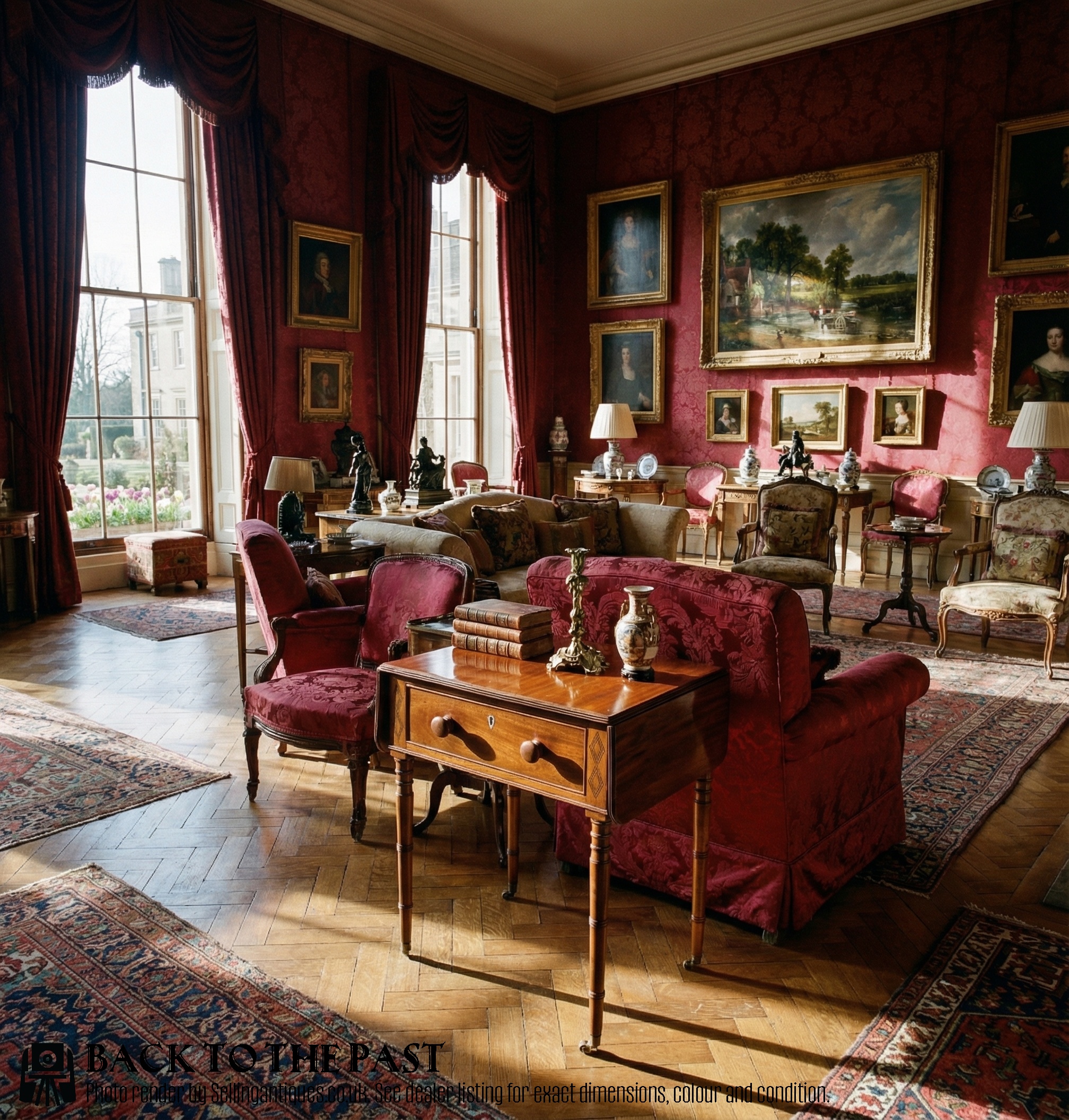
Late Georgian Lamp Table
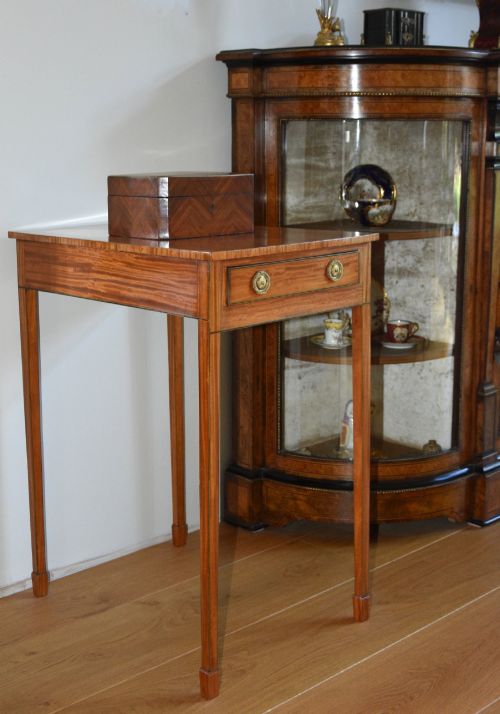
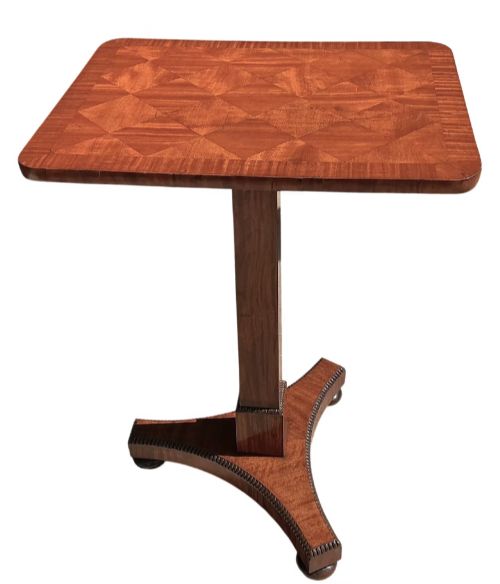
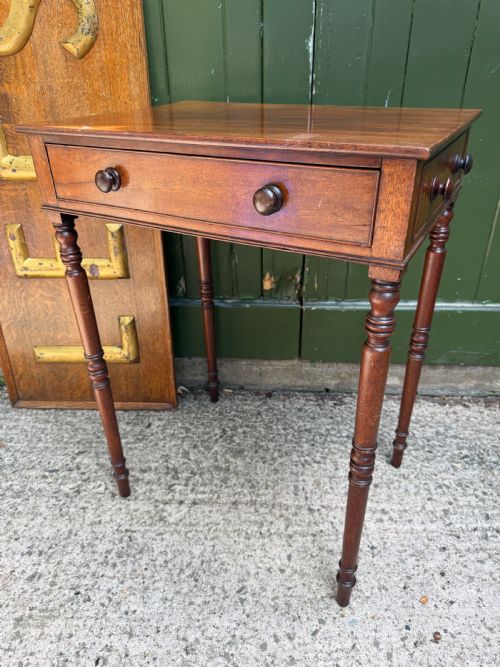
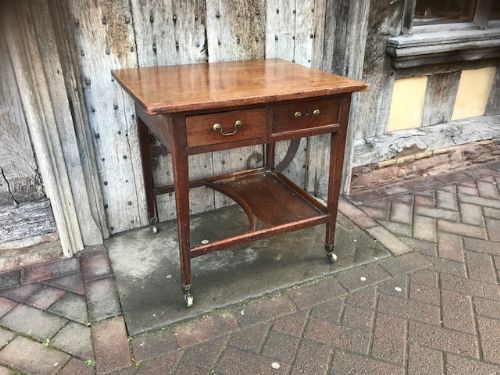
A late georgian lamp table provides a sturdy yet portable surface originally designed to hold lighting or small decorative objects in the principal rooms of a house. These pieces appear in various forms, including tripod designs, side tables with drawers, and small occasional or wine tables.
The versions most commonly met on this page date from around eighteen hundred and the late eighteenth century, spanning the Georgian, George III, and Regency periods. Makers also produced later revivals, meaning buyers will encounter both genuine period pieces and later nineteenth-century interpretations.
Origins and materials vary across the selection, reflecting the preferences of the period for figured timbers and compact utility. Alongside standard side tables, specialised forms such as kettle stands and work tables share the characteristic scale expected of a late georgian lamp table.
Materials and Construction
Makers relied primarily on mahogany, often selecting solid stock for structural elements and timber veneer or burr elm for decorative surfaces. Walnut, satinwood, and elm also appear, occasionally enhanced by brass fittings or bone inlay.
Joinery techniques matched the functional demands of these small tables, employing stable tripod bases or four-legged frames with freestanding proportions. Details such as tilt mechanisms and fitted drawers required precise hand woodworking to ensure smooth operation.
Late Georgian Lamp Table Retail Price Guide 2026
Typical asking prices for late georgian lamp table among the pieces listed under this phrase on Sellingantiques today, from the lower quarter to the upper quarter. They describe what is for sale here now, not the wider market.
Markers of Quality
Quality in a late georgian lamp table rests upon the choice of timber and the crispness of its execution. Superior pieces display carefully matched veneers, finely drawn legs, and restrained carving rather than heavy ornament.
Proportion and stability separate the finer examples from simpler workshops. A well-balanced frame, original brass hardware, and tight joinery indicate a higher standard of manufacture from the period.
The Late Georgian Lamp Table Glossary
- Tripod base
- A support structure comprising three legs radiating from a central pillar. This configuration ensured stability on uneven floors.
- Tilt top
- A tabletop mounted on a catch mechanism that allows the surface to pivot vertically when not in use. It saved valuable floor space in smaller rooms.
- Satinwood
- A durable hardwood with a lustrous, golden-yellow sheen. Cabinet makers utilised it for contrasting veneers and fine inlay work.
- Burr elm
- Timber taken from the gnarled growths of an elm tree, showing intricate swirling grain patterns. It provided a highly decorative surface for tabletops.
- Pembroke table
- A small drop-leaf table with hinged flaps on either side. These pieces offered adaptable surface area for domestic tasks.
Late Georgian Lamp Table: Frequently Asked Questions
What is a lamp table?
A lamp table is a small, portable piece of furniture designed to hold a candle, oil lamp, or small decorative object within reach of a seat.
In domestic settings, these versatile tables sat beside armchairs or against walls where larger surfaces were impractical.
How do I date these tables?
Dating relies on examining the timber species, construction methods, and stylistic cues such as leg profiles and stretcher design.
Earlier examples from the eighteenth century typically show hand-cut joinery and solid timber construction, whereas nineteenth-century pieces may incorporate machine-sawn elements or revival styles.
Where were they placed?
These pieces found their places primarily in drawing rooms, parlours, and libraries where additional surface space was required.
Their compact scale allowed them to be moved easily around the room to support lighting or needlework.
Are they sturdy enough for daily use?
Most surviving examples remain structurally sound for gentle everyday placement of lamps or decorative items.
Buyers should appreciate that centuries of use require respectful handling, particularly regarding tilt mechanisms and tripod joints.