
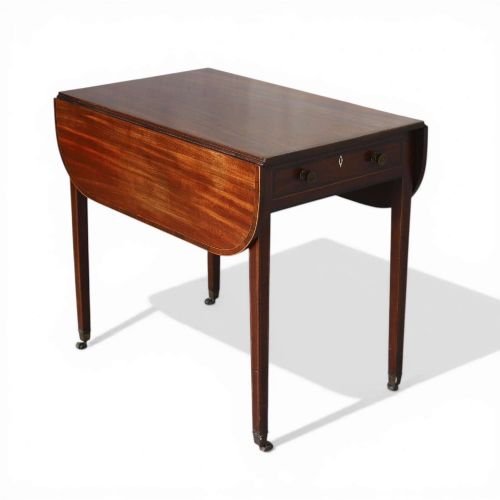
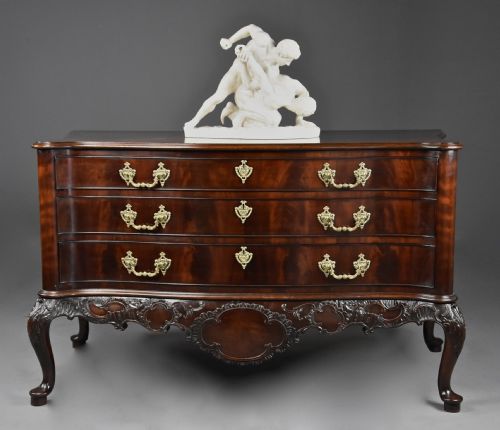


Late Georgian Drawers
Late georgian drawers encompass the classic mahogany chests, tallboys, and side tables that defined late eighteenth and early nineteenth-century domestic storage.
Late Georgian Drawers
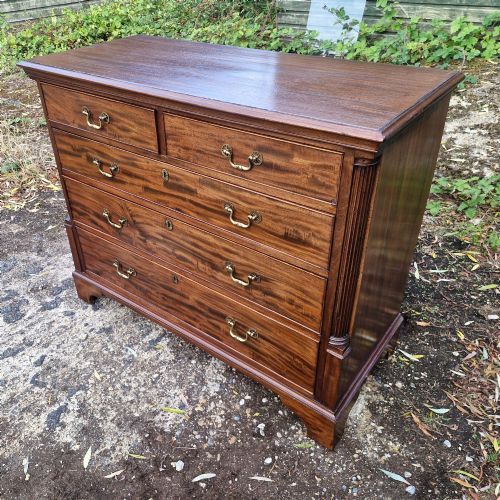
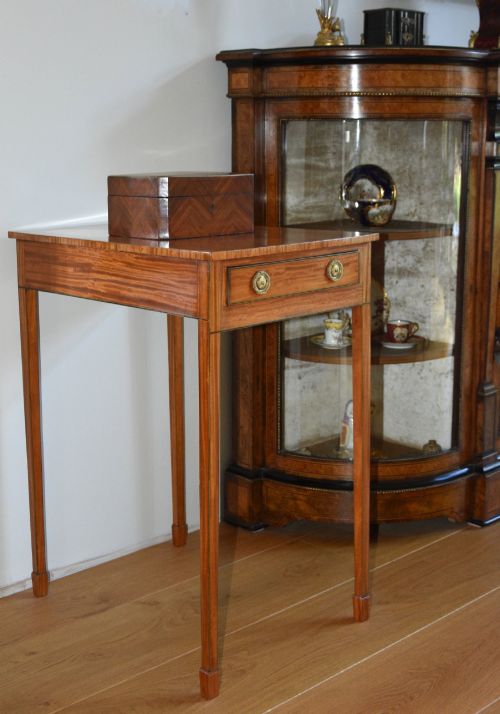
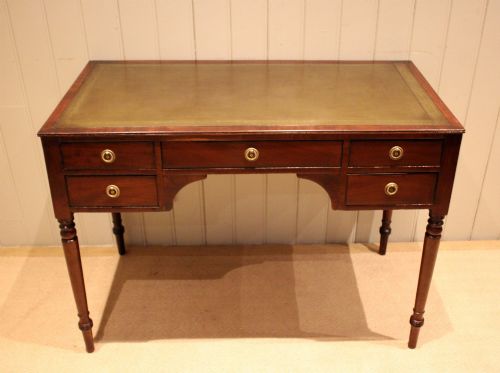
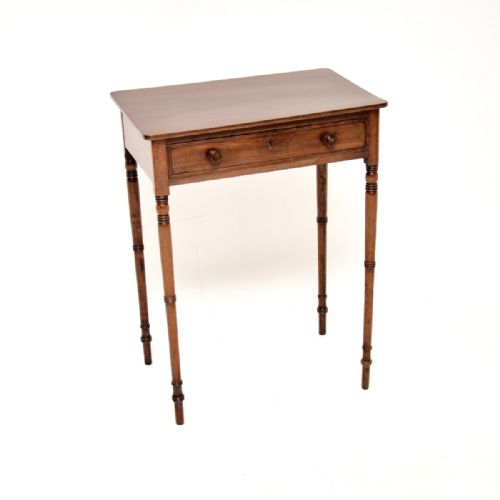
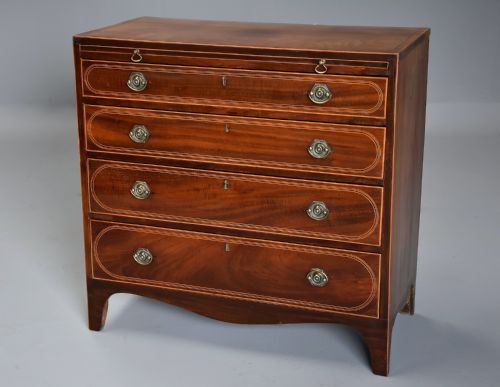
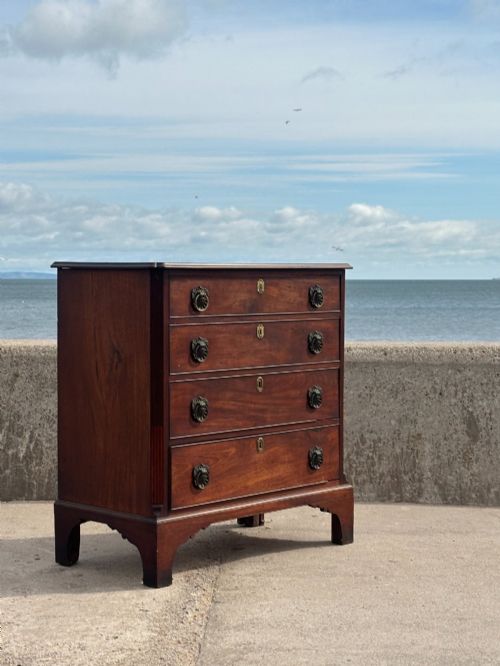
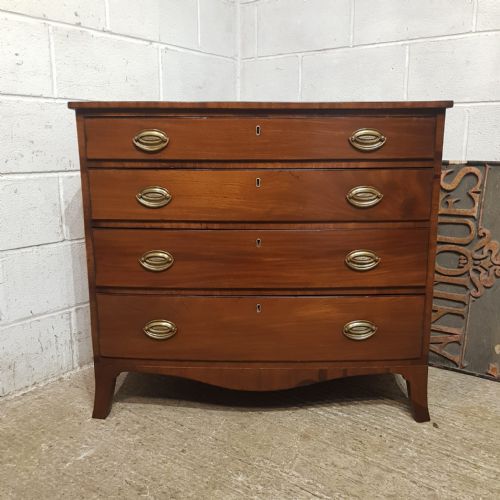
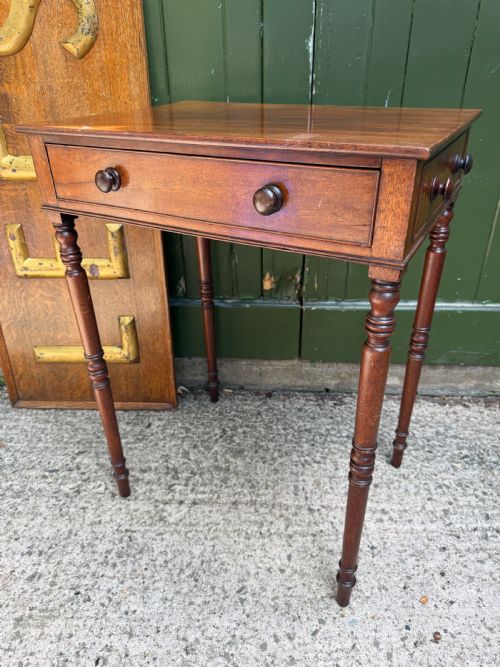
When you search for late georgian drawers, you are looking at utilitarian storage furniture produced during the reigns of George III and the Regency period. The most common form on this page is the straight-front or bow-front chest of drawers, alongside tallboys, secretaires, and side tables fitted with functional storage.
These pieces originated in domestic settings ranging from provincial houses to grand country residences, built to hold linen, clothing, and writing materials. While mahogany remains the dominant timber, versions in oak, walnut, and elm also appear regularly across the listings.
The category extends beyond standard chests to encompass specialised forms such as bureau chests, writing slopes, and housekeeping cupboards. Buyers encounter various configurations, including the traditional two-over-three drawer arrangement and compact tall slim models designed for smaller chambers.
How They Were Made
Cabinet makers constructed these pieces primarily using solid and veneered timbers, utilising mahogany as the main structural and decorative wood. Artisans applied flame mahogany and satinwood veneers to drawer fronts, often enhancing the timber with boxwood stringing and cross-banding.
Hardware played an integral part in the construction, with brass drop handles, oval plates, and escutcheons fixed to the drawer faces. Dovetail joints secured the drawer carcases, while secondary softwoods like pine served for internal partitions and drawer linings.
Listings feature mahogany, oak, walnut, satinwood, and elm chests alongside brass, leather, and bone details.
What Varies in Quality
The standard of timber selection largely dictates the worth of these pieces, separating simple provincial work from high-end cabinet making. Premium examples display carefully matched flame mahogany veneers and intricate inlay work, whereas simpler items utilise plain, straight-grained boards.
Proportion and execution of detail mark the distinction between ordinary utility items and exceptional pieces. Finely drawn bracket feet, well-executed cockbeading around drawer edges, and original brass hardware elevate a piece far above standard workshop production.
Druce And Co·Gillows
The Late Georgian Drawers Glossary
- Bow front
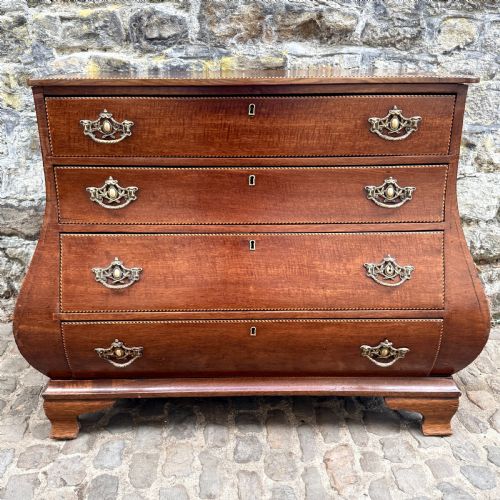
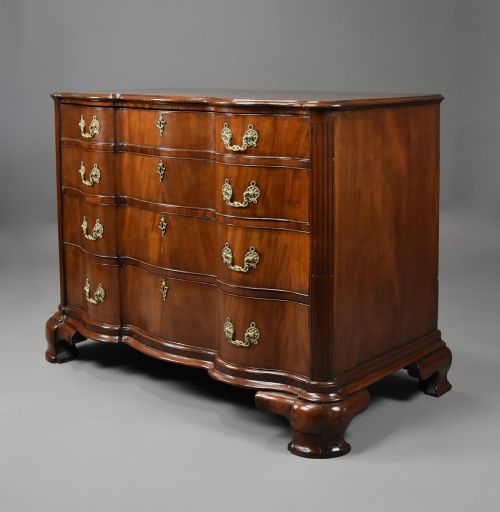
- A convex curved chest front that swells outward at the centre. This shape gained popularity during the late eighteenth century to soften the strict lines of rectangular furniture.
- Tallboy
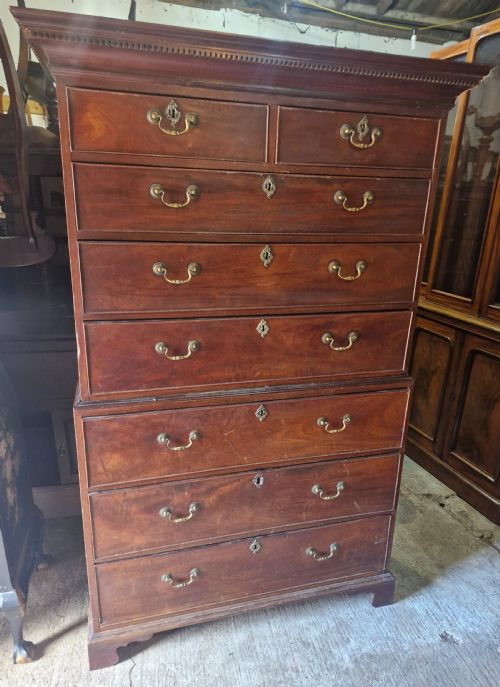
- A tall chest of drawers constructed in two sections, typically a double chest or a chest on chest. These pieces maximised vertical storage space in bedrooms.
- Caddy top
- A tabletop with a raised, moulded edge resembling the lid of a tea caddy. This profile frequently appears on late eighteenth-century chests and lamp tables.
- Brushing slide
- A pull-out shelf housed immediately beneath the top surface of a chest. It provided a temporary writing or clothes-brushing surface.
- Secretaire
- A cabinet or chest featuring a fitted pull-out writing drawer containing small compartments and secret drawers. It combined everyday clothing storage with a compact desk facility.
Late Georgian Drawers: Frequently Asked Questions
What is a tallboy chest on chest?
A tallboy is a stacked storage unit featuring a smaller chest sitting directly on top of a larger base chest. This configuration provided substantial vertical storage without occupying excessive floor space.
Cabinet makers built them in two distinct sections to allow easier transport through narrow staircases and domestic hallways.
How do I spot original brass handles?
Original brass hardware typically leaves distinct impressions in the wood grain and matches the expected wear of the surrounding surface. The fixing pins inside the drawer fronts should also show appropriate age and handmade characteristics.
Replacement handles often utilise existing pilot holes, but close inspection of the interior timber reveals filled previous screw paths.
What timber was used most often?
Mahogany stands out as the predominant timber used across these listings, favored for its rich dark colour and stability. Cabinet makers frequently utilised figured veneers like flame mahogany on the primary drawer surfaces.
Oak and elm appear regularly in provincial and country pieces, while secondary woods such as pine were reserved for internal drawer linings and carcase backs.
How do I care for antique drawer surfaces?
Maintaining these surfaces requires simple dusting with a dry cloth and avoiding modern silicone-based polishes. Traditional wax applied sparingly helps preserve the existing patina and protects the dry timber.
Keeping the furniture away from direct sunlight and steady heat sources prevents the old veneers from drying out and lifting.