
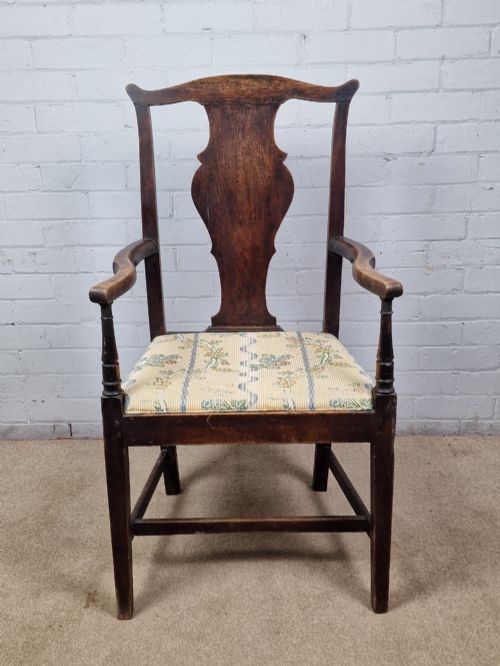
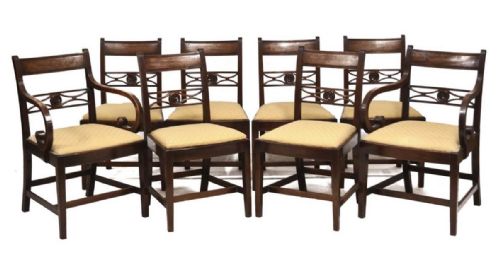
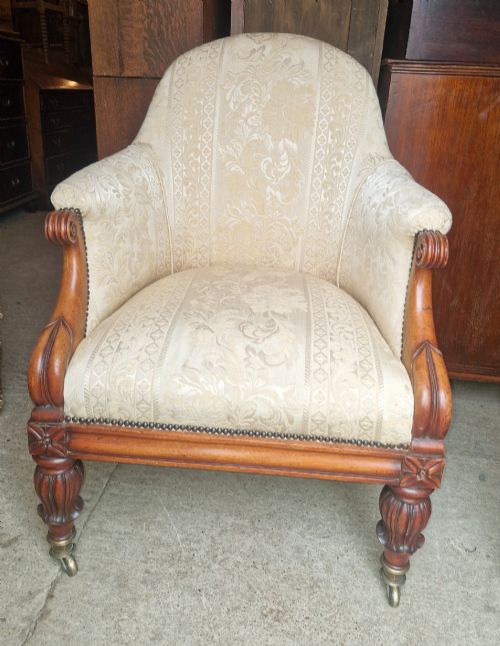
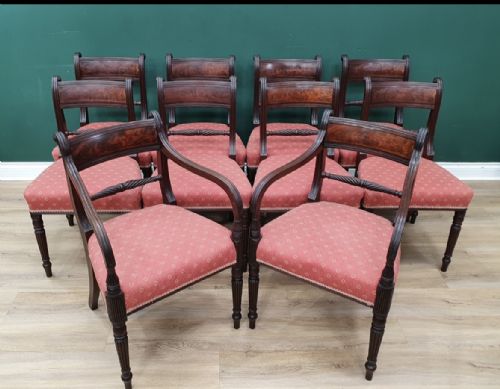
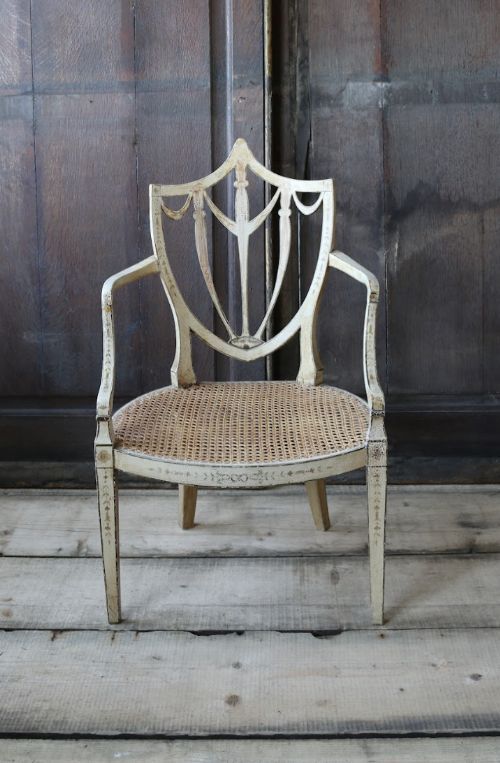
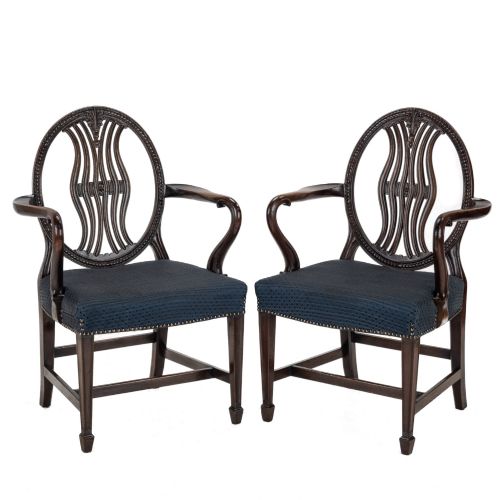


Late Georgian Armchair
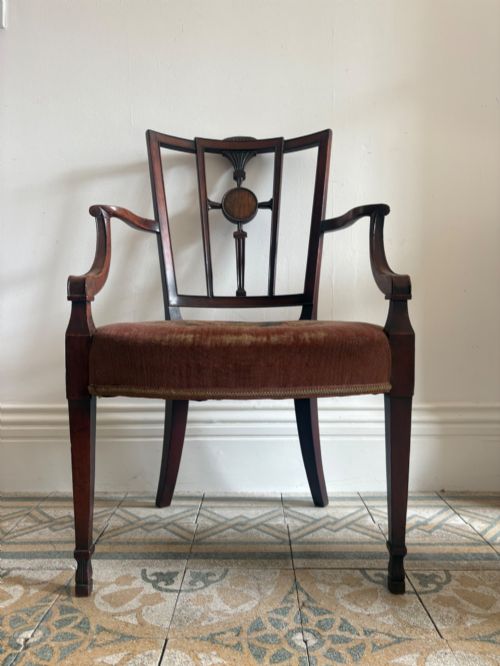
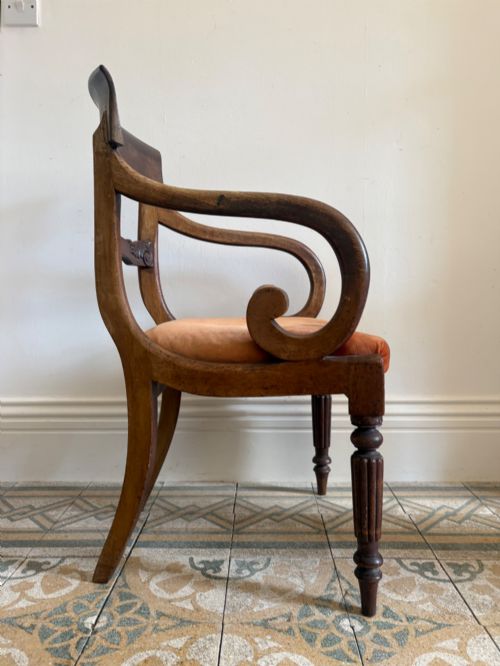
A late georgian armchair brings solid timber, generous proportions, and classical design directly into a room.
Late Georgian Armchair
When you search for a late georgian armchair, you encounter seating originating from the late eighteenth and early nineteenth centuries, spanning Georgian, Regency, and revival periods.
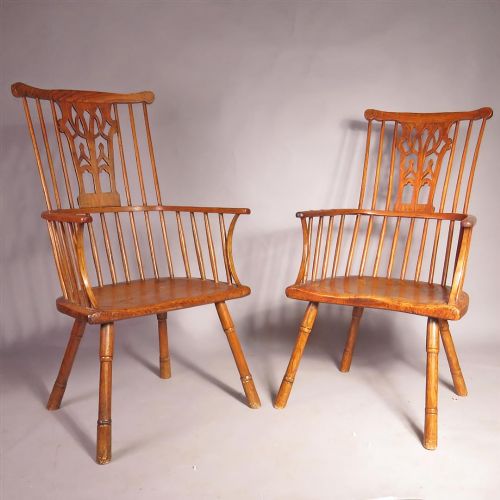
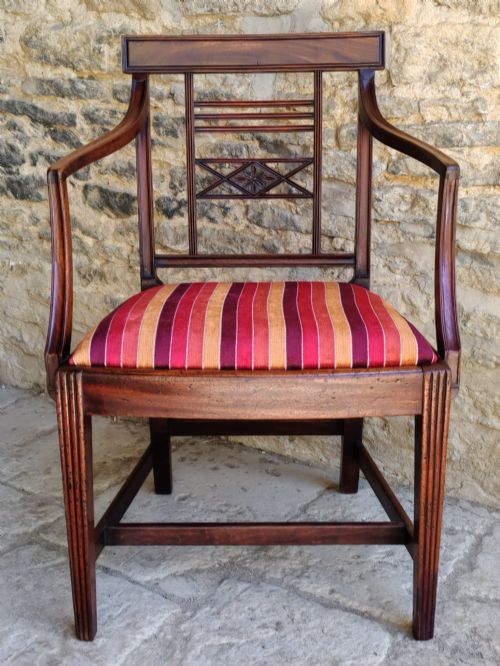
The selections on this page range from formal mahogany dining carvers and library chairs to country Windsor and elm corner chairs.
Most examples date from the late eighteenth century into the regency era, offering distinct regional and formal variations.
How they were made
Cabinet makers built these frames primarily in mahogany, oak, elm, and walnut, often shaping solid wood for legs, arm supports, and crest rails.
Upholstered seating incorporated drop-in seats, leather, velvet, and fabric coverings, while Windsor variants relied on traditional turned spindles and bentwood parts.
Materials across the selection include mahogany, oak, elm, walnut, fruitwood, leather, velvet, and brass.
What varies in quality
The calibre of a piece rests on the crispness of carved details, the choice of timber figure, and the integrity of the frame construction.
Original surfaces, period brass castors, and untouched joinery elevate an example above later revivals or heavily restored pieces.
Gillows·Morgan and Sanders
The Late Georgian Armchair Glossary
- Carver
- An armchair designed to match a set of dining chairs, usually featuring open arms. These pieces sat at the heads of dining tables.
- Windsor
- A chair constructed with a solid wooden seat into which legs and back spindles are wedged directly. Regional variations include Thames Valley and West Country styles.
- Library chair
- A heavy, substantial armchair designed for reading rooms, frequently framed in mahogany and occasionally incorporating writing surfaces or steps.
- Drop-in seat
- A removable upholstered frame that drops into the wooden rebate of a chair seat. This technique allowed for easy re-covering over generations.
- Shield-back
- A chair back shaped like a heraldic shield, popularized during the neoclassical period by designers like Hepplewhite.
Late Georgian Armchair: Frequently Asked Questions
How do I identify a late georgian armchair?
Look at the timber selection, leg shapes, and joining techniques typical of the late eighteenth and early nineteenth centuries. Period details like hand-dyed leather, drop-in seats, and classical carving styles distinguish these frames from later reproductions.
Examine the underside and frame construction for signs of age, such as hand-cut screws, traditional joinery, and patination on the wood surfaces.
Where were Windsor armchairs made?
Windsor armchairs originated in rural English workshops, with notable regional centres in the Thames Valley and the West Country. Makers utilised local timbers like elm, yewwood, and fruitwood.
These country pieces relied on a solid carved seat base combined with steam-bent spindles and bows.
What is the difference between a carver and a library chair?
A carver is typically a lighter armchair designed to accompany a set of dining chairs around a table. A library chair is a heavier, deeply upholstered seat intended for sustained reading and comfort.
Library chairs often feature enclosed arms and generous proportions suited to studies and parlours.
Can I use these armchairs daily?
These seating pieces were built to withstand generations of domestic use, utilising robust timbers like mahogany and oak. Many examples remain structurally sound for everyday seating in modern homes.
Ensure joints remain stable and upholstery webbing is secure before placing them into active daily rotation.