

Late 19th Century Furniture
Late 19th century furniture encompasses diverse tables, cabinets, and seating spanning Victorian, Arts and Crafts, and international stylistic revivals.
Late 19th Century Furniture
Late 19th century furniture covers an expansive range of household and decorative objects created during a period of prolific design experimentation. Buyers exploring this category encounter utilitarian items alongside elaborate statement pieces suited to period interiors.
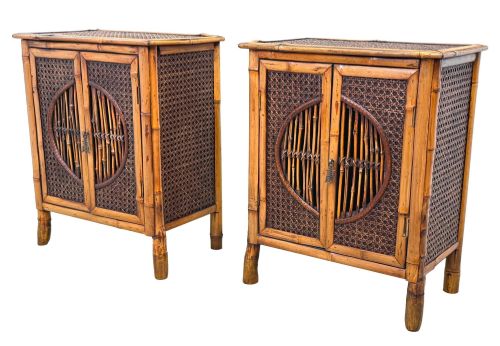
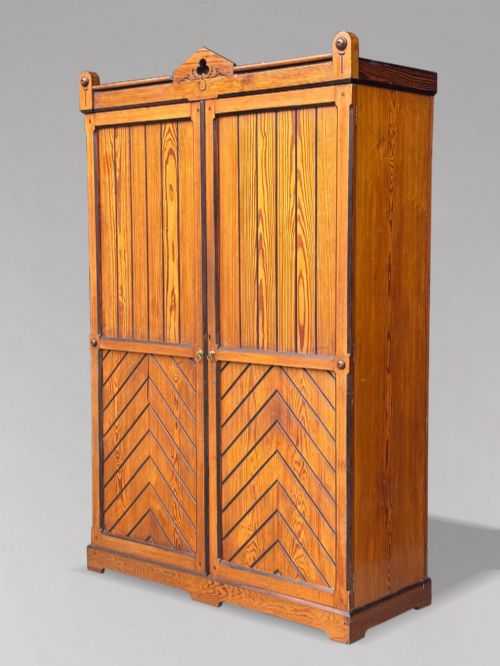
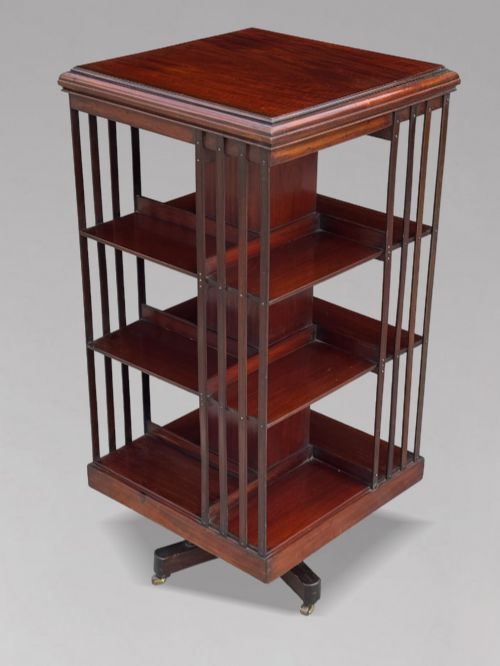
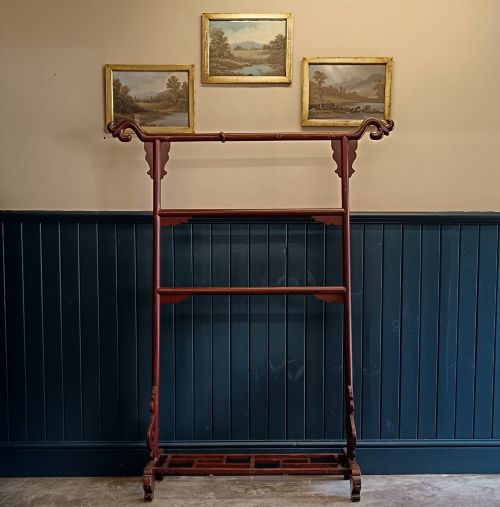
The selection on this page leans heavily toward Victorian domestic furnishings, complemented by distinct regional variations such as Anglo-Indian occasional tables, Chinese lacquer cabinets, and French bedroom suites. Side tables, bookcases, and washstands form the core of the current offerings.
Makers and workshops from this era drew upon established historical idioms, reinterpreting styles like Queen Anne and Hepplewhite while simultaneously embracing the modern aesthetics of the Arts and Crafts movement and the Aesthetic Movement.
Materials and construction
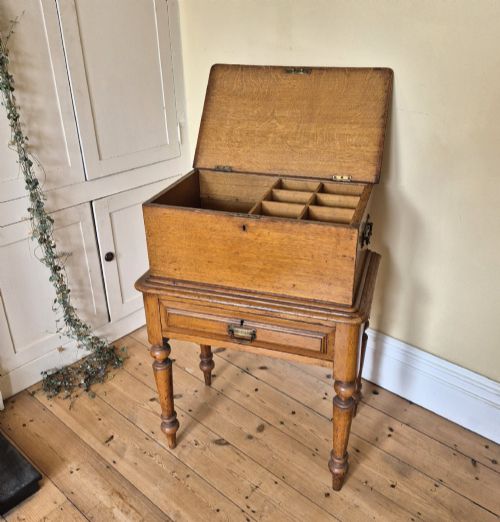
Makers utilised a wide palette of dense hardwoods, predominantly mahogany, oak, walnut, and rosewood, alongside decorative options like bird's-eye maple and kingwood. Secondary timbers such as pine appear frequently in internal and structural components.
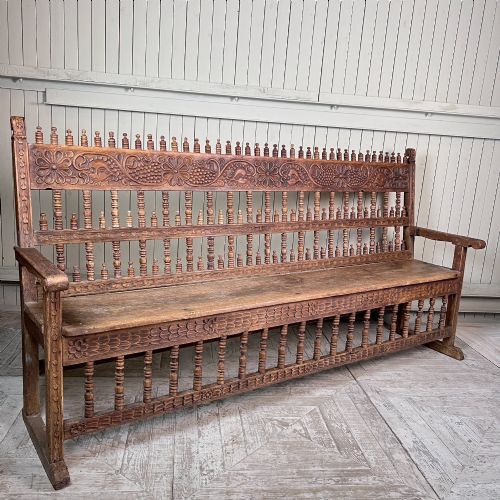
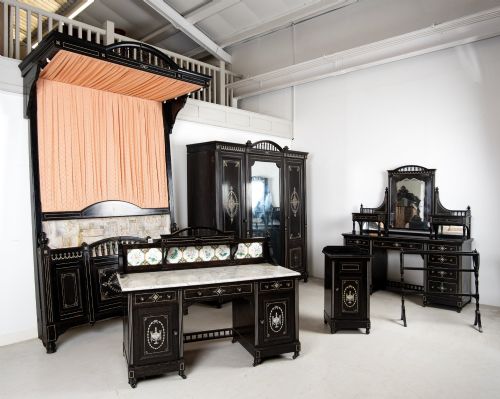
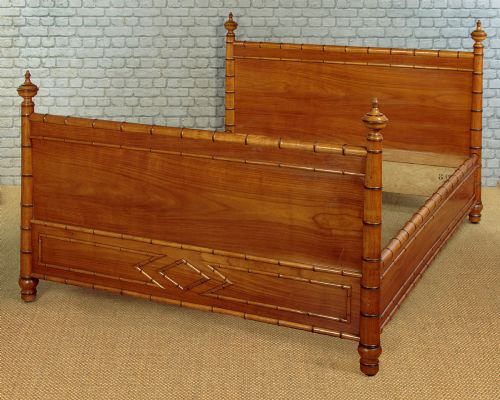
Surface ornamentation defined much of the production, incorporating intricate brass inlay, ebonised finishes, parcel gilding, and profuse hand-carving in woods such as linden and teak. Specialised techniques like faux-bamboo turning and lacquering demonstrate the varied artisanal skills of the period.
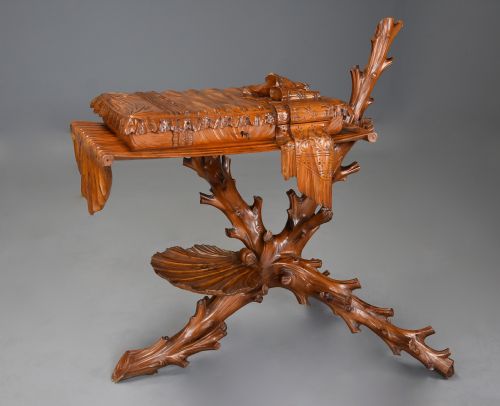
German cow horn tables from this era prove that Victorians would turn almost any unusual natural material into household seating.
Distinctions in quality
Quality in this category rests on the precision of the joinery and the integrity of the materials employed by the workshop or maker. Fine examples display crisp, deep hand-carving and careful timber selection rather than mass-produced uniformity.
The sophistication of decorative details, from intricate brass wire inlay to original hardware and surface patination, separates standard utility items from exceptional artistic commissions by notable firms.
Corneau Frères Charleville·Druce and Co·Antoine Lampre·Liberty and Co·E. Kahn
The Late 19th Century Furniture Glossary
- Étagère
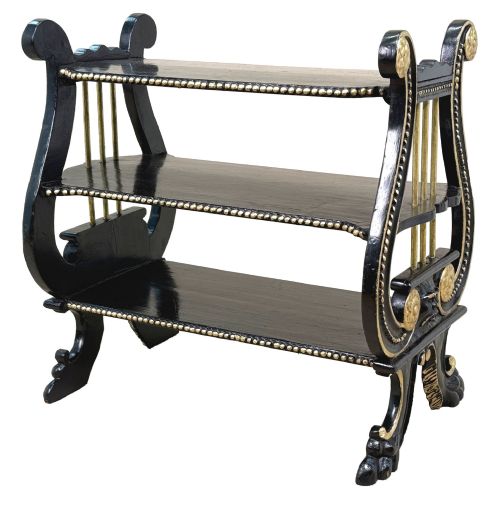
- A set of open shelves for displaying small objects or ornaments. These tiered stands frequently appeared in Victorian and Aesthetic Movement interiors.
- Campaign table
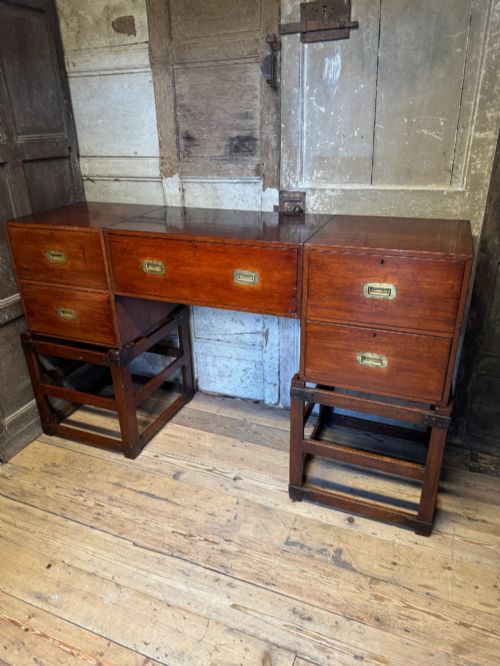
- Portable furniture designed for easy dismantling and travel by military officers. These pieces often feature folding bases and brass mounts.
- Grotto work
- Highly decorative carved furniture taking inspiration from natural shell and rock formations. This style is particularly associated with ornate pine tables from the era.
- Ormolu
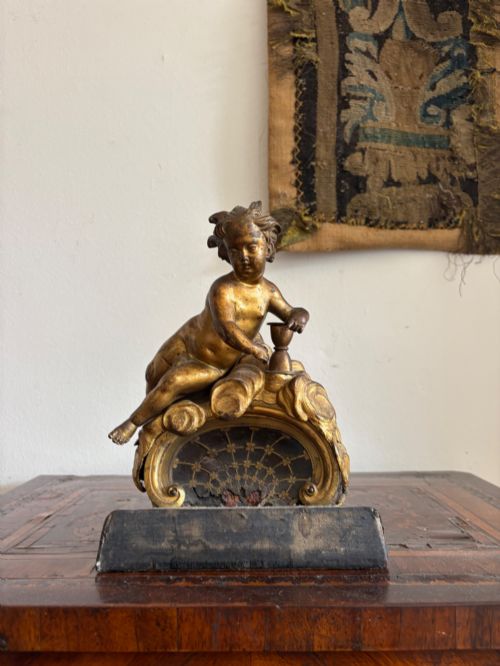
- Gilded bronze mounts applied to furniture for decorative effect. French cabinets and decorative items frequently utilise these cast metal ornaments.
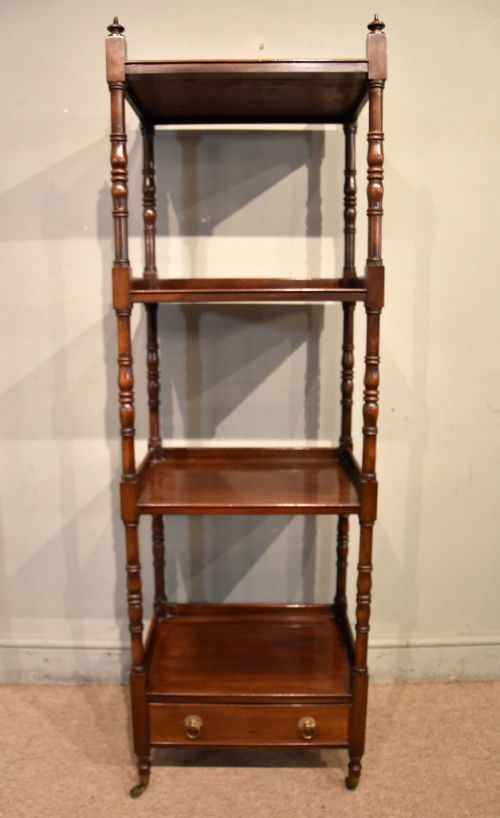
- Whatnot
- A multi-tiered shelving unit used for storage and display. These upright pieces typically feature slender turned supports.
Late 19th Century Furniture: Frequently Asked Questions
How do I identify a late 19th century piece?
Examine the timber choices, construction methods, and stylistic cues present in the item. Many pieces combine traditional forms with characteristic period ornamentation like ebonising or specific revival motifs.
Maker marks, stamps, or labels can further assist in confirming the exact period of manufacture.
Where were Anglo-Indian tables used?
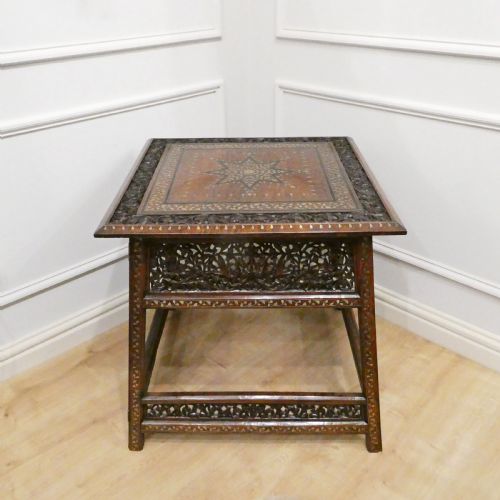
These decorative tables were produced in India for export to British homes during the colonial period. Their intricate brass inlay and folding frames made them popular for drawing rooms.
Today, they function well as occasional tables in varied interior settings.
What is an Aesthetic Movement table?
Aesthetic Movement furniture prioritised visual beauty over rigid historicism, often featuring clean structural lines and Japanese-inspired motifs. These pieces frequently utilise ebonised wood and contrasting gilt highlights.
They serve as striking focal points in contemporary or traditional rooms.
How do I care for antique mahogany furniture?
Maintain stable room humidity levels and keep wooden surfaces away from direct heat sources and strong sunlight. Regular dusting with a soft, dry cloth preserves the finish and natural patina.
Avoid silicone-based polishes that can build up and damage the historic surface over time.