







Large Woven Wall Panel
A large woven wall panel brings historic textile art into a room, offering rich texture and narrative depth.
Large Woven Wall Panel
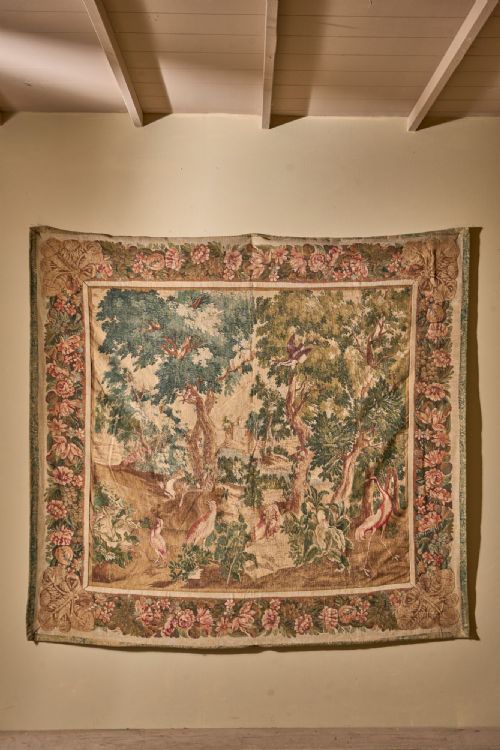
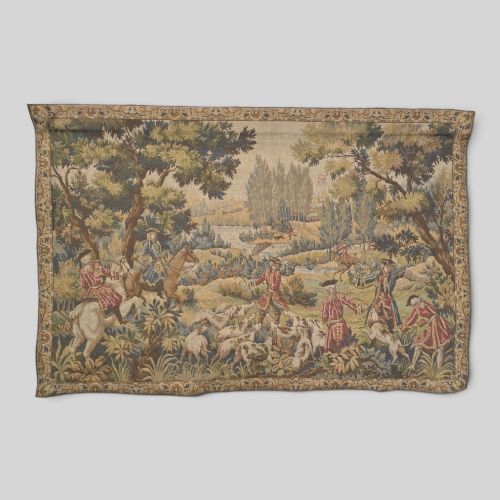
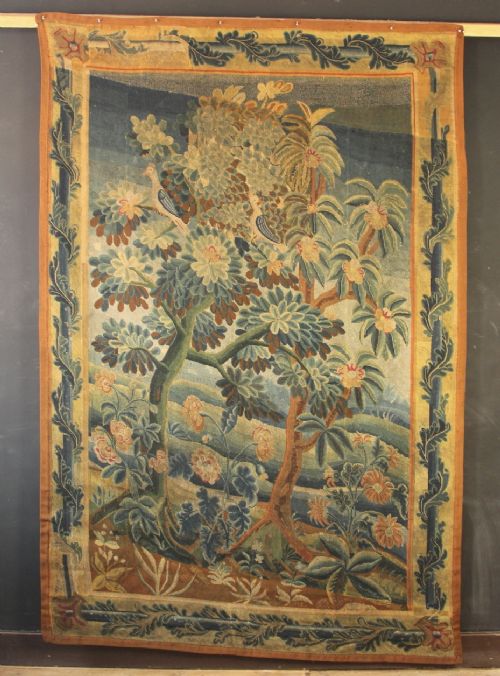
A large woven wall panel encompasses historic tapestries, needlework panels, and tribal hangings designed to decorate domestic interiors. These textile pieces originate from European workshops and tribal traditions spanning the seventeenth century through to the early twentieth century.
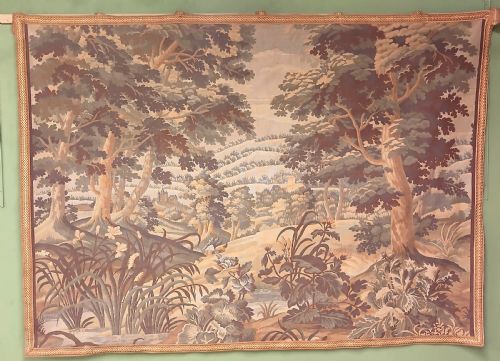
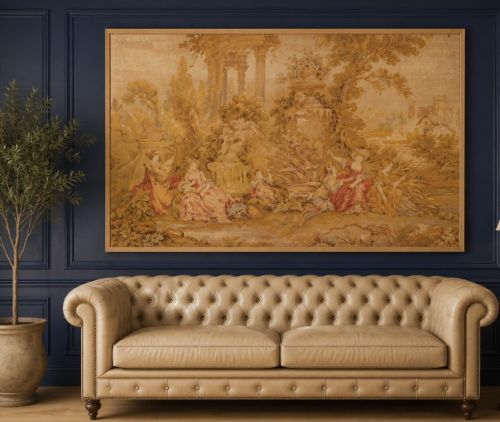
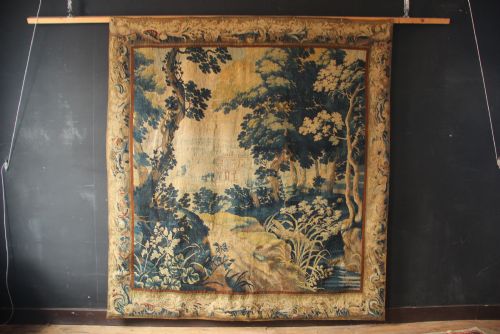
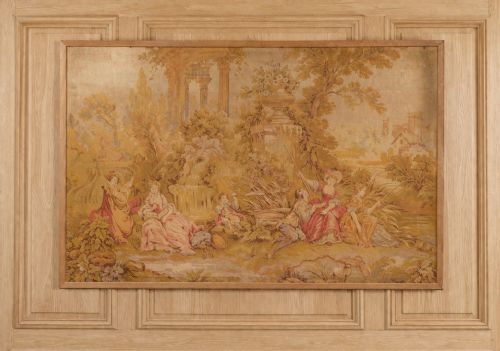
The selections available lean heavily towards French verdure tapestries and Flemish wall hangings, alongside Persian tribal bags, Turkmen chuvals, and Indonesian ikat panels. Buyers frequently encounter framed pastoral scenes and verdure landscapes depicting foliage, trees, and distant architecture.
Formats range from monumental horizontal room lengths to tall vertical panels housed in timber frames or displayed as flexible fabric hangings. Each piece serves as a substantial focal point that introduces muted earth tones and intricate figural or botanical iconography to a wall.
How they were made
These textiles rely on natural fibres such as wool, silk, cotton, and linen, spun and dyed into complex palettes. Selected pieces incorporate metallic thread to introduce reflective highlights within the woven design.
Creation involved manual weaving techniques on vertical or horizontal looms, or meticulous needlework stitching on ground fabrics. Finished textiles were frequently mounted onto timber frames, wood backings, or simple hanging sleeves for structural support.
Listings feature periods spanning from the seventeenth century through to 1940, incorporating European tapestries, timber frames, and tribal textiles.
What varies in quality
Quality rests on the density of the weave, the intricacy of the pictorial design, and the survival of the original dyestuffs. Finer examples display subtle tonal gradations and precise delineation of botanical or figural details.
The integrity of the textile substrate and the presence of any historic framing or mounting elements also define the tier of the piece. Superior execution ensures the composition remains visually coherent and balanced across the entire expanse.
The Large Woven Wall Panel Glossary
- Verdure tapestry
- A wall hanging dominated by landscape and foliage motifs, typically featuring trees, plants, and sometimes birds or animals. These designs were immensely popular in Flemish and French workshops.
- Needlework tapestry
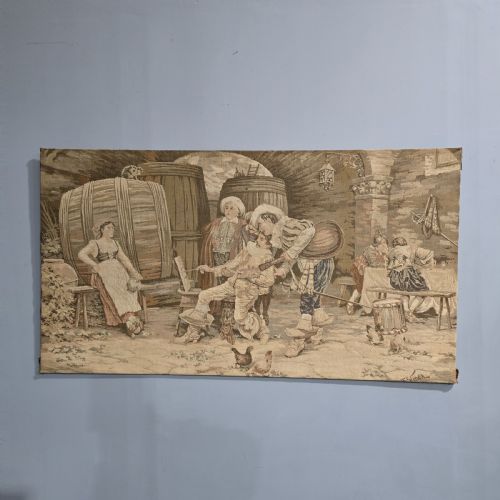
- A textile created by stitching yarn onto an existing foundation fabric rather than weaving the pattern on a loom. This technique allowed for dense pictorial detail.
- Ikat panel
- A textile decorated using a resist-dyeing process applied to yarns before weaving. Indonesian examples present distinct geometric and symbolic patterns.
- Chuval face
- The decorative front of a large storage bag produced by Turkmen nomadic tribes. These items feature distinctive tribal guls and geometric motifs.
- Metallic thread
- Fine strands of metal, often silver or gilt, woven into textiles to catch the light. They add a layer of texture and opulence to European panels.
Large Woven Wall Panel: Frequently Asked Questions
How do I hang a heavy tapestry?
Large woven wall panels require even weight distribution across a sturdy wooden batten or hidden metal support bracket.
Screwing the support directly into wall studs ensures the hanging stays secure without straining the historic fabric.
Can I put a tapestry in direct sunlight?
Direct sunlight causes natural dyes in wool, silk, and cotton to fade significantly over time.
Placing the panel on a shaded wall or using UV-filtering glass for framed pieces protects the colours.
How do I clean an antique wall panel?
Vacuuming on a very low suction setting through a protective mesh screen removes surface dust safely.
Water and chemical cleaning agents should be avoided unless handled by a professional textile conservator.
How can I tell a Flemish panel from a French one?
Flemish panels from the seventeenth century often emphasise dense verdure and heavy botanical layering.
French pieces from later centuries frequently lean towards lighter pastoral scenes and refined architectural elements.